Monday, February 28, 2022

Data-driven study digs into the state of U.S. farm livelihoods

"Farmers are fundamental to our survival, their work is risky and difficult, and ensuring their quality of life is necessary for U.S. agriculture to persist," says Emily Burchfield, Emory assistant professor of environmental sciences and lead author of the study.

By Carol Clark

U.S. agricultural systems are world leaders in the production of food, fuel and fiber. This high level of production enables U.S. consumers to spend an average of only 8.6 percent of their disposable income on food, a percentage that has been trending downward since 1960. Growing evidence, however, shows that many hidden costs of cheap food may be passed on through factors such as reduced nutritional content, environmental degradation and the diminishing livelihoods of U.S. farm operators. 

A major new study led by Emory University digs deeper into the question of why, despite the extraordinary productivity of U.S. agriculture, U.S. farm operators are systematically losing money. The journal Frontiers of Sustainable Food Systems published the analysis, which drew from publicly available data from the U.S. Department of Agriculture, the U.S. Bureau of Economic Analysis and other sources. 

“It’s not that agriculture as a sector is not profitable,” says Emily Burchfield, assistant professor in Emory’s Department of Environmental Sciences and lead author of the study. “It’s that, despite hard work and significant financial risk, many of the people who operate U.S. farms are not able to make a decent living at it.” 

Rising input costs, shrinking production values, commodity specialization and challenges to land access all appear to be connected to declining farm operator livelihoods, the study concludes. 

“We’ve shown in a quantitative, systematic way the extent to which these trends are happening and, in many cases, how they appear to be worsening,” Burchfield says. 

An online data repository

“People who work in the agricultural space already know that it is difficult to make a living as a farmer,” she adds. “In this paper, we’ve cleaned and merged tremendous amounts of data from multiple sources to bring key information together into one place. This allows us to tell a more complete and clear story about how and why this is happening at a national scale.” 

The researchers deposited the cleaned and merged data into a free, online repository (https://github.com/blschum/US-Farming-Data-Narrative) so that other agricultural stakeholders can easily access it. They hope that their “one-stop,” centralized data hub on farmer livelihoods will serve as an educational tool and inspire more research into the topic. 

The USDA reported in 2020 that the average funds generated by farm operators to meet living expenses and debt obligations, after accounting for production expenses, have been negative for nine out of the last 10 years. In 2017, for instance, median net-cash farm income was $1,035 in the red per farm household in the country. 

Paying to farm

In many regions of the United States, the authors write, farm operators actually have to pay to engage in the labor- and time-intensive act of operating a farm. 

“What we were really surprised to find in the data is that the low, or negative, median farm operator income applies even when you factor in government subsidies,” Burchfield says. “Given that the federal government is subsidizing farming with billions of dollars annually, it raises the question of how we might do so more effectively. How are we going to convince folks to continue growing our food if they are locked into a system where they can’t make money?” 

Burchfield’s research combines spatial-temporal, social and environmental data to understand the future of food security in the United States, including the consequences of a changing climate. 

Co-authors of the current paper include: Britta Schumacher, a former Emory research assistant in Burchfield’s lab; Andrea Rissing, an Emory post-doctoral fellow in the lab; and Kaitlyn Spangler, a post-doctoral fellow at Penn State. 

Relying on off-farm income

Understanding how much income individual farms are losing on average is complicated by farm households often having a family member bringing in income through a non-farm occupation, Burchfield notes. In 2019, the USDA reported that on-farm production contributes to less than 25 percent of farm household income, on average, with the remaining 75 percent earned off-farm. This suggests that many farmers rely on off-farm income to stay afloat. 

“Farming is one of the hardest jobs on the planet,” Burchfield says, “and it’s going to get even harder due to climate change. The combination of more gradual shifts in average climate conditions, and the increased prevalence of extreme weather events, presents a serious challenge to farmers.” 

These ongoing challenges, the authors argue, require an urgent rethinking of how federal subsidies can play a role in encouraging and supporting new, adaptive approaches to agriculture. 

U.S. farm operations currently cover approximately 900 million cultivated acres, more than half of the nation’s land area. And three crops — corn, soy and wheat — are cultivated exclusively on more than two thirds of agricultural acres. 

“A lack of crop diversification can make farming increasingly brittle and less adaptable,” Burchfield says. “Climate change, meanwhile, makes the need for innovation and adaptation more crucial and inevitable.” 

The paper also highlights the lack of diversification among farm operators. Statistically, the “average” U.S. farmer is a 58-year-old white male. Those not identifying as white currently operate about 7 percent of farmland representing just 5 percent of operations. Only 1.4 percent of operators identify as Black, and these operators are heavily concentrated in the Southeast. And, on average, white operators receive twice as much from federal subsidy programs ($14,000 per farm) as Black operators ($6,400 per farm). 

A call for diversity of people, plants and practices

“We need better data to track the persistent inequities at the intersection of race, class and livelihoods in the agriculture space,” Burchfield says. 

She recommends finding ways to support the diversity of people, plants and practices in the national farm landscape to help address the growing issues of agricultural sustainability and climate change. “Small-scale experimentation and the emergence of grassroots alternatives along with technical innovations are all needed in order to better weather the challenges,” she says. 

Burchfield also cites the need for the availability of more fine-scale data on the livelihoods of farmers that goes beyond yields and acreage to cover issues such as access to health insurance. “Farmers are fundamental to our survival, their work is risky and difficult, and ensuring their quality of life is necessary for U.S. agriculture to persist,” she says. 

As Burchfield and her co-authors conclude: “Measuring and monitoring agricultural progress using only metrics of production, efficiency and revenue masks the lived realities of the humans operating our farms.” 

The research was supported in part by the U.S. Department of Agriculture and the National Science Foundation.

Related:

Diverse landcover boosts yields for major U.S. crops, study finds

Wednesday, February 23, 2022

Snail competition leads to fewer parasites that cause schistosomiasis

Field research was conducted in the Mwanza region of Tanzania where schistosomiasis is endemic. Running water is often not accessible in the area and many people use surface water ponds and hand-dug open wells that dot the clay-soil landscape. (Civitello Lab)

By Carol Clark

Schistosomiasis is a debilitating disease caused by a parasitic worm that develops in freshwater snails before infecting people. Knocking back snail populations with pesticides is one method to control the spread of the disease, also known as “snail fever.” 

A new study led by Emory University, however, shows that schistosome transmission can actually be highest when freshwater snail populations are low. The Proceedings of the National Academy of Sciences published the study, the first to demonstrate how the size of a freshwater snail population relates to its parasitic infection rate. 

“We’ve shown that the more snails you have in a freshwater source, the less dangerous each individual snail is, in terms of the number of parasites they’re releasing,” says David Civitello, an Emory assistant professor of biology and lead author of the study. “The incredible strength of our finding is that we’ve demonstrated the effect both in the field, using natural transmission sites, and in an experimental context, through outdoor laboratory experiments.” 

The research carries important implications for policies aimed at reducing the transmission of schistosomiasis. Considered one of the most significant of the neglected tropical diseases, the parasites that cause schistosomiasis currently infect more than 200 million people. 

“Our results suggest that if you apply a heavy dose of pesticides to reduce a snail population, the infectivity of the remaining snails might actually skyrocket,” Civitello says. “It’s basically impossible to kill every snail and so you set the stage for a rebound in infection risk. As the snail population begins to recover, our data tells us that this is a time with extremely high potential for transmission of the parasites to humans.” 

Click on the image for a detailed view of the transmission cycle of schistosomiasis. (CDC)

Previous laboratory experiments had found that when an individual freshwater snail infected with the parasite is well fed, it can generate as many as thousands more parasites per day compared to an underfed snail. In fact, an underfed infected snail may generate as few as a single parasite per day. 

“In general, when an animal needs to fight off an infection of some kind, it helps to have good nutrition to support the immune system,” Civitello says. “It appears to be the opposite case in these freshwater snails. When the snails are full of energy, it provides more nutrients for the parasites to steal from them and to reproduce.” 

Chronic infections of schistosomiasis cause considerable morbidity in sub-Saharan Africa and parts of the Middle East, South America and Southeast Asia. The disease cycles between humans and freshwater snails that live in water sources where people may bathe, wash their clothes and dishes and collect water for household use. Children, who like to play in water, are at especially high risk for infection. 

When eggs of the parasitic worms hatch in water, the larvae burrow into snails. Once the larvae develop into free-swimming worms, they burrow back out of their snail hosts and return to the water. These swimming worms can then burrow into the skin of people who come into contact with the water. 

Inside their human hosts, the worms enter blood vessels where they eat red blood cells for fuel as they mature into adults, pair up and mate. The female lays hundreds of thousands of eggs per day. Many of the eggs are excreted through feces and urine that re-enters water sources, continuing the cycle of infection. Some of the eggs, however, become lodged in the tissues and organs of their human hosts, leading to immune reactions and progressive damage to organs, such as the liver, the bladder, kidneys and the urogenital tract. One of the classic symptoms of a chronic infection is blood in the urine. 

"It's important to unite the ecology of a pathogen with human disease interventions and control measures," says David Civitello (center), shown in the field in Tanzania.

The prescription medication Praziquantel treats schistosomiasis but has limitations. “One problem is that the drug kills the mature adult schistosomes in humans, but not schistosomes that are only five or six weeks old and still maturing,” Civitello says. 

And a follow-up drug treatment does not eliminate the infection in the environment. 

“There is growing recognition in recent years that effective control of freshwater snails is needed, along with treatment of people, in order to disrupt transmission of schistosomiasis,” Civitello says. “In many cases, however, snail control policies have not been updated for decades.” 

For the PNAS paper, the researchers wanted to test whether the effect of food intake seen on the infection rate of individual freshwater snails in a laboratory would scale up to a population in the wild. Their hypothesis was that the larger the snail population, the more the snails would have to compete for food resources, lowering their energy levels along with their infectivity rate. 

They conducted field research in the Mwanza region of Tanzania where schistosomiasis is endemic, in collaboration with Tanzania’s National Institute for Medical Research Mwanza Center. Running water is not accessible in villages in the area and many people use surface water ponds and hand-dug open wells that dot the clay-soil landscape. 

The researchers found that snails collected from these water sources where the snail populations were dense were poorly infectious. In contrast, in the water sources where the snail population was low, their parasitic infection rate was high. 

The outdoor laboratory experiments, conducted in collaboration with the University of South Florida, further showed how the growth of a snail population from low to high density creates a burst of infectivity among the population before competition once again forces the infectivity to subside. 

“Our results suggest that, if you treat water bodies infrequently with a pesticide to control snails, you are likely to soon get a rebound of the snail population with a higher infectivity rate, potentially creating a surge of transmission to people,” Civitello. “It may be better either to not apply a pesticide at all, or else to apply the pesticide more frequently to prevent the snails rebounding.” 

The Civitello Lab plans to continue to collaborate with colleagues in Tanzania to gather more detailed data to help develop the most effective methods of freshwater snail control, for use in combination with other preventative methods for schistosomiasis. 

“It’s important to unite the ecology of a pathogen with human disease interventions and control measures,” Civitello says. 

Co-authors of the PNAS include: Safair Kinung’hi, Teckla Angelo, Moses Mahalila and Jenitha Charles (National Institute for Medical Research Mwanza Center); Jason Rohr (University of Notre Dame); Karena Nguyen, Rachel Hartman, Naima Starkloff and Lynda Bradley (Emory Department of Biology); Andres Manrique (University of Florida); Bryan Delius (Duquesne University); and Roger Nisbet (University of California, Santa Barbara). 

The work was supported by the U.S. National Institute of Allergy and Infectious Diseases, the National Science Foundation, the National Institutes of Health, and the Indiana Clinical and Translational Sciences Institute.

Related:

Water temperature key to schistosomiasis risk and prevention strategies

Thursday, February 17, 2022

Antibiotic used on food crops affects bumblebee behavior, lab study finds

A wild bumblebee visits a blossom. The current study involved lab experiments on a different species of bumblebee as a first step to understanding the potential effects of the agricultural use of streptomycin on pollinators.

By Carol Clark

An antibiotic sprayed on orchard crops to combat bacterial diseases slows the cognition of bumblebees and reduces their foraging efficiency, a laboratory study finds. Proceedings of the Royal Society B published the findings by scientists at Emory University and the University of Washington. 

The research focused on streptomycin, an antibiotic used increasingly in U.S. agriculture during the past decade. 

“No one has examined the potential impacts on pollinators of broadcast spraying of antibiotics in agriculture, despite their widespread use,” says Laura Avila, first author of the paper and a post-doctoral fellow in Emory’s Department of Biology. 

The current study was based on laboratory experiments using an upper-limit dietary exposure of streptomycin to bumblebees. It is not known whether wild bumblebees are affected by agricultural spraying of streptomycin, or whether they are exposed to the tested concentration in the field. 

“This paper is a first step towards understanding whether the use of streptomycin on food crops may be taking a toll on pollinators that benefit agriculture,” says Berry Brosi, senior author of the paper. Brosi began the work as a faculty member in Emory’s Department of Environmental Sciences and is currently with the University of Washington. 

Funded by a U.S. Department of Agricultural grant, the researchers will now conduct field studies where streptomycin is sprayed on fruit orchards. If a detrimental impact is found on bumblebees, the researchers hope to provide evidence to support recommendations for methods and policies that may better serve farmers. 

“Production of our food, farmer livelihoods and the health of pollinators are all tied together,” Brosi says. “It’s critically important to find ways to maintain agricultural production while also conserving the ecosystem services — including pollination — that a biodiverse ecosystem provides.” 

"I decided to become a bee biologist because I wanted to understand how the natural environment can influence agriculture and vice versa," says Laura Avila, above. Her work spans experiments in both the lab and field.

Based on established evidence, the researchers hypothesize that the negative impact of streptomycin on bumblebees seen in the lab experiments may be due to the disruption of the insects’ microbiome. 

“We know that antibiotics can deplete beneficial microbes, along with pathogens,” Avila says. “That’s true whether the consumers of the antibiotics are people, other animals or insects.” 

Avila is a member of the lab of Nicole Gerardo, Emory professor of biology and an entomologist who studies the co-evolution of insect-microbe systems. 

During the past decade, the spraying of antibiotics on U.S. crops has increased exponentially as farmers battle a rise in plant bacterial infections. “Fire blight” can turn the blossoms and shoots of apple and pear trees black, making them appear scorched by fire, and can also kill entire trees. “Citrus greening,” also known as “yellow dragon disease,” turns citrus fruits green, bitter and unusable and has devasted millions of acres of crops throughout the United States and abroad. 

“I’ve seen the struggle of making a living by producing crops, how expensive and difficult it can be to control diseases and pests,” says Avila, who grew up in a coffee-producing region of Costa Rica. 

Largely untouched forests bordered her family farm. “The diversity all around us fascinated me,” Avila says. “I decided to become a bee biologist because I wanted to understand how the natural environment can influence agricultural production and vice versa.” 

Seventy-five percent of the world’s food crops depend on pollination by at least one of more than 100,000 species of pollinators, including 20,000 species of bees, as well as other insects and vertebrates like birds and bats. And yet, many of the insect pollinator species, particularly bees, face risks of extinction. 

Previous studies have shown that the antibiotic tetracycline, used to treat pathogens in managed honeybee hives, can alter the gut microbiome of the insects and indirectly increase susceptibility to pathogens and mortality. Exposure to high oxytetracycline concentrations has also been found to have a similar effect on the bumblebee gut microbiome, decreasing their immunity to pathogens. And exposure to high doses of tetracycline have been found to affect honeybee learning, while oxytetracycline slows the onset of foraging in managed colonies. 

For the current paper, the researchers conducted lab experiments with managed bumblebees, Bombus impatiens, to test the effects of an upper-limit dietary exposure to streptomycin. Half of the bees were fed on plain sucrose, or sugar water, to simulate nectar. The remaining bees were fed on sucrose dosed with streptomycin. 

After two days on this diet, the bees were presented different-colored cardboard strips — one yellow and the other blue. One color was saturated with plain water and the other was saturated with sucrose. In a series of training trials, each bee was presented a single, colored strip until it touched it with its antennae or proboscis. 

The researchers measured the number of trials it took for a bee to show a preference for the color strips saturated with sucrose. The bees fed streptomycin often required roughly three times as many trials to make the association, relative to the other bees. The antibiotic-treated bees were also more likely to display avoidance behavior towards either of the stimuli. 

Those bees that passed a training threshold were given a short-term memory test five minutes later. Each bee was presented with both of cardboard strips simultaneously and allowed to select one. The rate at which the bees dosed with streptomycin selected the sucrose reward was around 55 percent, while the untreated bees selected the sucrose at a rate of nearly 87 percent. 

To assess foraging ability, trials were conducted in a foraging chamber containing an experimental array of artificial flowers that dispensed sucrose or plain water. The flowers were either blue or yellow but were identical in size and shape. Each bee was outfitted with a tiny, ultra-lightweight radio frequency identifier “backpack” to monitor its movements among the artificial flowers, which were each equipped with a short-range antenna and tracking system. 

The computer-analyzed results showed that the antibiotic-exposed bees visited far fewer sucrose-rewarding flowers relative to the control bees. 

In the spring, Avila and Brosi will launch field studies to determine if broadcast spraying of streptomycin affects bumblebees in pear orchards. 

“I was surprised at how strong an effect we found of streptomycin on bumblebees in the laboratory experiments,” Brosi says. “That makes it imperative to learn if we see similar effects in an agricultural setting.” 

The timing of antibiotic application, the amount applied and possible alternatives to the use of an antibiotic may be potential mitigation methods should the field research identify harmful impacts on bumblebees of agricultural spraying of streptomycin, the researchers note. 

Co-authors of the current study include Elizabeth Dunne, who did the work as an Emory environmental sciences major and has since graduated; and David Hofmann, a former post-doctoral fellow in Emory’s Department of Physics.

Related:

Pollinator extinctions alter structure of ecological networks

Evolutionary ecology could benefit beekeepers battling diseases

Wednesday, January 26, 2022

New approach in quest for cancer vaccines nets Emory chemist a Michelson Prize

"I love doing research and trying to solve problems to help people," says Rong Ma, shown receiving her PhD in chemistry at Emory in 2021. "Nothing can compare to the joy I get from doing science."

By Carol Clark

Emory chemist Rong Ma received a $150,000 Michelson Prize for her proposal to harness the mechanical processes of cells as a new approach in the long-running quest to develop cancer vaccines. Ma, who received her PhD from Emory in 2021, is a post-doctoral fellow in the lab of Khalid Salaita, Emory professor of chemistry. 

The Michelson Prizes: Next Generation Grants are annual awards to support young investigators who are “using disruptive concepts and inventive processes to significantly advance human immunology and vaccine and immunotherapy discovery research for major global diseases,” according to the Michelson Medical Research Foundation and the Human Vaccine Project, the organizations administering the awards. 

Ma was one of three scientists selected through a rigorous global competition to receive a 2021 Michelson Prize for immunotherapy research. 

“We need disruptive thinkers and doers who dare to change the trajectory of the world for the better,” says Gary Michelson, founder and co-chair of the Michelson Medical Research Foundation. “Yet promising young researchers too often lack the opportunities, resources and freedom to explore their bold ideas. The pandemic has created additional roadblocks for many of them. With the Michelson Prizes, we aim to provide early-career investigators a vital boost for their forward-thinking approaches.” 

“Rong Ma is a spectacular, highly motivated scientist,” Salaita says. “Sometimes I will tell her that a goal she sets it too lofty or difficult to pull off, but she will look back at me and say, ‘I want to do really big, difficult things.’” 

“To find specific antigens on cancer cells for cancer vaccine development is extremely challenging, partly because of the ambiguity in predicting what antigens the body’s immune cells can recognize,” Ma says. “Many researchers are focused on using genetic sequencing techniques to find genetic mutations and predict tumor-specific antigens to achieve this goal.” 

Ma’s proposal, however, is to use the mechanical forces transmitted by immune cells to antigens as a marker to identify and evaluate whether an antigen can trigger a potent immune response. If the method works in a mouse-model system, Ma explains, the long-range vision would be to isolate the immune cells that are mechanically active when recognizing cancer-specific antigens. The identified antigens and isolated immune cells could then be used to train the body to defend against cancer cells. 

A love of complex systems 

As an undergraduate in her native China, Ma majored in environmental sciences. The interdisciplinary nature of environmental sciences taught her to think about complex problems from different perspectives and to integrate knowledge across specialties. 

During a masters’ program in environmental science and technology at City University in Hong Kong, Ma came across cancer research and decided to shift her focus to medicinal chemistry. “I love working on complex systems,” Ma says, “but I realized that I had a better chance of making a valuable contribution by focusing on a smaller-scale complex system, like the immune cells.” 

She was especially intrigued by research published in 2016 by the lab of Khalid Salaita, which specializes in the mechanical forces of cellular processes. The Emory researchers found that T cells, the security guards of the immune system, use a kind of mechanical “handshake” to test whether a cell they encounter is a friend or a foe. The lab had developed special tools to make this discovery — DNA-based tension sensors that light up, or fluoresce, in response to a minuscule mechanical force of a piconewton — about one million-millionth the weight of an apple. 

Ma came to Emory for her PhD in chemistry, so that she could work in the Salaita lab and help advance this technology. “At that point, it was a relatively new perspective to investigate the mechanical forces of cells and begin to understand these processes,” Ma says. “It opened up a whole new world of research for me.” 

Harnessing molecular forces 

The Salaita lab has continued to develop the tension sensors and further observe and characterize the mechanical forces of T cells. “We’ve advanced our understanding to the point where we can start exploring how to harness the molecular forces in cells for mechanically triggered therapeutics,” Ma says. 

T cells continuously patrol through the body in search of foreign invaders. They have molecules known as T-cell receptors (TCR) that can recognize specific antigenic peptides on the surface of a pathogenic or cancerous cell. When a T cell detects an antigen-presenting cell (APC), its TCR connects to a ligand on the APC. If the T cell determines the ligand is foreign, it becomes activated and starts a signaling chain to recruit other cells to come and help mount an immune response. 

The human body contains millions of different T cells and they specialize in recognizing specific antigenic peptides and binding with them. A current approach for research into cancer vaccines is to painstakingly try to identify which peptides are antigenic and which T cells are activated by them.

Studying the binding process in a laboratory solution, however, turns out not to be the most reliable method for pairing a cancer peptide with the T cell that it triggers. That’s because, in the body, cells are moving and sliding past each other’s surfaces. A T cell receptor needs to grab on to a cancer peptide and give a strong “handshake” in order for it to stick. 

“It turns out that testing the binding in solution is not the same as binding in more dynamic, real-world conditions,” Salaita explains. “Rong Ma has figured out a way to measure the duration of the binding ‘handshake tug’ at the interface of the cell and a glass slide presenting these antigens. We believe this method may be further developed into a much better way to determine which particular cancer peptides are going to trigger a response in which particular T cell, and even which T cell receptor is doing the tugging.” 

Testing the method 

In experiments, Ma will try to establish a proof-of-concept of this method. If it proves effective, then it may be possible to amplify those cancer-specific T cells and T cell receptors in a laboratory to help cancer immunotherapy development. The challenge of pairing the body’s millions of different T cell receptors with the billions of different antigens that may exist remains daunting. 

“Some of the preliminary data we have gathered looks promising, and the Michelson award will help us get the remaining data we need to test our method.” Ma says. “A cancer vaccine is the ultimate vision. We still have a long way to go to achieve that, but we hope that our method may provide another step forward.” 

This year’s Michelson Prize winners will receive their rewards in a virtual ceremony on March 10. “It is inspiring to see their passion for innovation and their courage to think out of the box,” says Wayne Koff, CEO and president of the Human Vaccines Project. “I look forward to their future breakthrough discoveries and how their research can contribute to the Human Vaccines Project’s mission of developing the first AI model of human immunity.”

Related:

T cells use 'handshakes' to sort friends from foes

Chemists reveal the force within you

Molecular beacons shine light on how cells 'crawl'

Wednesday, January 19, 2022

First genome-wide ancient human DNA from Sudan shines new light on Nile Valley past

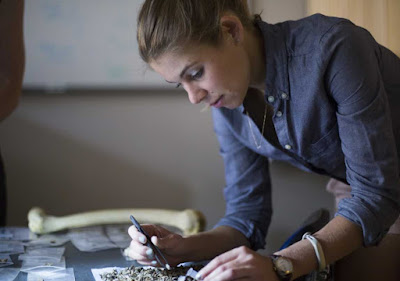
"Ancient DNA is difficult to recover from areas that are extremely hot, because DNA tends to degrade in heat," says Kendra Sirak, shown in 2017 when she was an Emory PhD student of anthropology. While still a student, she began developing new techniques for extracting ancient DNA samples that are opening new vistas into the human past.

By Carol Clark

The first genome-wide, ancient human DNA data from Sudan reveals new insights into the ancestry and social organization of people who lived more than 1,000 years ago in the Nile Valley, an important genetic and cultural crossroads. 

Nature Communications published the analyses of the DNA of 66 individuals from a site in ancient Nubia known as Kulubnarti, located on the Nile River in Sudan, just south of the Egyptian border. 

“Before this work, there were only three ancient genome-wide samples available, from Egypt, for the entire Nile Valley,” says first author Kendra Sirak, who began the project as a PhD student at Emory University. “And yet the region was, and still is, an incredibly important part of the world in terms of the movement, meeting and mixing of people.” 

Sirak was the last graduate student of the late George Armelagos, former professor of anthropology at Emory and a pioneer in bridging the disciplines of archeology and biology. While still a graduate student in the 1960s, Armelagos was part of a team that excavated ancient skeletons from Sudanese Nubia, so the bones would not be lost forever when the Nile was dammed. 

“Nubia was a place of human habitation for tens of thousands of years,” says Sirak, who is now a staff scientist at Harvard University. “This ancient genetic data helps fill in some major gaps in our understanding of who these people were.” 

The 66 individuals date back from 1,080 to 1,320 years ago, during the Christian Period of Sudanese Nubia, prior to the genetic and cultural changes that occurred along with the introduction of Islam. The analyses showed how the Kulubnarti gene pool formed over the course of a least a millennium through multiple waves of admixture, some local and some from distant places. They had ancestry seen today in some populations of Sudan, as well as ancestry that was ultimately West Eurasian in origin and likely introduced into Nubia through Egypt. 

“A key finding is that social status did not have a strong relationship to biological relatedness or to ancestry in this ancient population, who lived during a period of cultural and social change,” says Jessica Thompson, a co-senior author of the paper. Thompson, a former PhD supervisor of Sirak in Emory’s Department of Anthropology, is now at Yale University. 


During a field visit, Sirak took the above photo of a sunrise on the Nile River. The Nile Valley region "was, and still is, an incredibly important part of the world in terms of movement, meeting and mixing of people," she says.

The remains of the individuals came from two cemeteries with Christian-style burials that previous evidence indicated were socially stratified. In one cemetery, located on an island in the Nile, the skeletal remains bore more markers of stress, disease and malnutrition and the average age of those buried was just over 10 years old. By contrast, the average age at death in the other cemetery, located on the mainland, was 18 years. 

One hypothesis that grew out of this skeletal evidence was that the island cemetery was for a Kulubnarti “underclass,” possibly laborers for members of landowning families buried in the mainland cemetery. It was a mystery whether the social stratification may have developed because one population came from a different origin. 

A genome-wide analysis suggests that was not the case — the people buried in the separate cemeteries came from a single genetic population. 

“It seems that people in this area did not use biological ancestry as a basis for social differentiation,” Thompson says. “This reinforces the point that dividing people up socially on the basis of their genetic ancestry is a recent phenomenon, with no basis in universal human tendences.” 

Another key finding of the genetic analyses shows that some people as close as second-degree relatives were buried across the cemetery divide. Examples of second-degree relationships include grandparents to grandchildren, aunts and uncles to nieces and nephews, and half siblings. 

“That indicates that there was some fluidity among the two groups of people,” Sirak says. “There wasn’t an intergenerational caste system that meant someone was prescribed to being in the same social group as all of their relatives.” 

A further interesting twist is that much of the Eurasian-derived ancestry within the population came from women. “Often when you think of ancestry and how genes move, you think of males who are trading or conquering or spreading religion,” Sirak says. “But the genetic data here reveals that female mobility was really crucial to shaping the gene pool in Kulubnarti.” 

One possible explanation is that Kulubnarti was a patrilocal system, meaning that males tended to stay where they were born and females moved away from their homelands. 

“The Christian Period Nubians from Kulubnarti are fascinating,” Sirak says. “They survived in a barren, isolated, desolate region where life was never easy. I like to think that the ancient DNA research is giving a new life to these people from 1,000 years ago by providing a more nuanced view of them. Anytime you’re studying someone’s remains, their physical being, you owe it to them to tell the most accurate, respectful and meaningful story that you can.” 

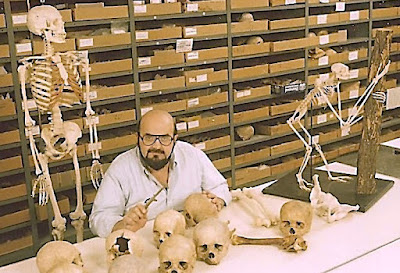
The late George Armelagos during the 1980s. He and fellow faculty members built Emory's Department of Anthropology into a powerhouse of the biocultural approach to the field.

Sirak came to Emory as a graduate student in 2012 to study human bones and paleopathology under Armelagos. By that time, he and fellow faculty members had built Emory’s Department of Anthropology into a powerhouse of the biocultural approach to the field. In particular, Armelagos, his colleagues and graduate students studied the remains of the Sudanese Nubians to learn about patterns of health, illness and death in the past. 

A long missing piece in the studies of this population, however, was genetic analysis. So, in 2013, Armelagos sent Sirak to one of the best ancient DNA labs in the world, University College Dublin, with samples of the Nubian bones. 

“I had no interest in genetics,” Sirak recalls, “but George was a visionary who believed that DNA was going to become a critical part of anthropological research.” 

Sirak soon became hooked when she saw how she could combine her interest in ancient bones with insights from DNA. She formed collaborations not just in Dublin but at Harvard Medical School’s Department of Genetics and elsewhere, investigating mysteries surrounding deaths going back anywhere from decades to ancient times. 

Armelagos was 77 and still mentoring Sirak, his last graduate student, when he died of pancreatic cancer in 2014. Dennis Van Gerven, an emeritus professor of anthropology at the University of Colorado at Boulder, took over Sirak’s mentorship, along with Thompson. Van Gerven was among Armelagos’ first group of students, and he also spent decades studying the Sudanese Nubians. 

Sirak stuck with her PhD dissertation project of trying to collect enough ancient DNA from the Nubian remains for analysis. 

“Ancient DNA is difficult to recover from areas that are extremely hot, because DNA tends to degrade in heat,” she explains. 

Genetic sequencing techniques kept improving, however, and Sirak was working at the forefront of the effort. In 2015, while still an Emory graduate student, she was among the researchers who realized that a particular part of the petrous bone consistently yielded the most DNA. This pyramid-shaped bone houses several parts of the inner ear related to hearing and balance. In addition, Sirak developed a technique to drill into a skull and reach this particular part of the petrous bone in the most non-invasive way possible, while also getting enough bone powder for DNA analysis. The use of this part of the petrous bone is now the gold standard in ancient DNA analysis. 

In 2018, Sirak received her PhD from Emory and went on to work in the lab of David Reich, a geneticist at Harvard Medical School who specializes in the population genetics of ancient humans. 

She and her colleagues continued to push the boundaries of what’s possible with ancient DNA sequencing. They managed to get whole-genome samples from the petrous bones of 66 of the Sudanese Nubians, ushering in a whole new era of bioarchaeology for the Nile Valley. “I don’t think we would have succeeded in this work had we not known to focus on the specific part of the petrous bone,” Sirak says. 

“It’s incredible to me that George asked me to focus on ancient DNA back in 2012, long before these techniques were developed,” she adds. “He had a way of making anyone who was working with him really feel important and powerful and that gave me the confidence to strike out on a pioneering path.”

“George Armelagos’ influence is everywhere,” adds Thompson, explaining that he also advised many senior people who mentored her early in her career. 

Funded by National Geographic Explorer grants, Sirak is now working with Sudanese colleagues to gather and analyze ancient DNA samples from other geographic locations in the Nile Valley, going even deeper into its past, to add more details to the story of how people moved, mixed and thrived in the region across millennia. 

As the last graduate student of Armelagos — and then a mentee of Van Gerven, one of Armelagos’ first students — Sirak feels like she is completing a circle. The publication of the current paper is the realization of Armelagos’ last wishes for the project. 

“It’s really special for me to be able to use ancient DNA to build on decades of anthropological and archeological research for the region,” Sirak says. “I know that George would be proud and thrilled. I’m part of this amazing lineage of researchers now. And the desire to continue what they started is a huge motivation for me.” 

In addition to Reich, Thompson and Van Gerven, senior authors of the Nature Communications paper include Nick Patterson (Broad Institute of Harvard and MIT) and Ron Pinhasi (University College, Dublin). Co-authors include researchers from these institutions as well as the University of Vienna, the University of Coimbra in Portugal, the Howard Hughes Medical Institute, the University of Pompeu Fabra in Barcelona, the University of Georgia, the University of California, Santa Cruz, and the University of Michigan.

Related:

Emory students help unravel prehistoric mysteries

Malawi yields oldest-known DNA from Africa

Pioneering techniques in anthropological genetics

Ancient DNA lab maps little-explored human lineages