Monday, February 20, 2023

Study shows long-term trend of undocumented Mexican immigrants most at risk for deportation from U.S.


No matter the U.S. political climate, young, single and less educated men seemed to be at higher risk for deportation than other undocumented Mexican immigrants from 2001 to 2019, a study led by Emory University finds. 

The Proceedings of the National Academy of Sciences (PNAS) published the study analyzing deportation and voluntary return migration data encompassing the administrations of U.S. Presidents George W. Bush, Barack Obama and Donald Trump. 

“Even through the Trump administration’s anti-immigrant rhetoric advocated deporting all undocumented immigrants, particularly from Mexico, the characteristics of Mexican immigrants deported during the Trump years were not dramatically different from previous administrations,” says Heeju Sohn, Emory assistant professor of sociology and lead author of the study. 

Co-authors include Anne Pebley and Amanda Landrian Gonzalez from the University of California Los Angeles and Noreen Goldman of Princeton University. 

The researchers examined trends in socio-demographic characteristics of undocumented Mexican immigrants deported by the U.S. along with those who chose to return to Mexico. 

While the study does not predict or offer any absolute probabilities, it provides insight into relative potential risks. 

On average, each administration annually deported about 893,000 people with the majority of them Mexican citizens. 

“Despite each administration’s differing approach and rhetoric, who was actually being deported or deciding to leave didn’t change all that much,” Sohn said. “Just because an undocumented person voluntary leaves the U.S. doesn’t always mean they felt they had a choice in that decision either.” 

Fewer immigrants were deported annually during the Trump administration than under Obama or Bush who had the highest number of deportations. During Obama’s first term, there was an increase in deportation of Mexican immigrants with criminal convictions but that percentage decreased in the last two years of his presidency. 

While Trump’s administration prioritized all undocumented immigrants for deportation, the result shows deportation focused more on young adults and those with less education, groups which already face higher deportation risks. 

"Policy makers and the public need to understand the consequences of the immigration policies that are implemented – whether they work or not,” says Pebley, a UCLA California Center for Population Research faculty fellow. “While the Trump administration's anti-immigrant rhetoric and policies had many negative effects on immigrants and Americans, they did not do what they were apparently intended to in terms of deporting a larger and more diverse group of undocumented immigrants.” 

The Trump administration’s anti-immigrant rhetoric and heightened enforcement didn’t appear to motivate a more diverse group of undocumented immigrants to leave voluntarily. Rather, voluntary return migration to Mexico was a trend that began early in the Obama administration after the great recession of 2007-2009, according to the study. 

“People who are leaving or being deported do not exist in a vacuum,” Sohn says. “You can’t isolate them separately from the social and family connections they have interwoven in U.S. society. So, what happens to undocumented people that society has neglected has a direct effect on the well-being of U.S. citizens. We have a duty to not discriminate and there is a need for additional research.” 

The experiences of undocumented children living in the U.S. is a blind spot in national data; the youngest age group in this study is 18 to 31. 

“Moving across countries is a disruptive life event,” Sohn says. “This is an age group where people take major steps as adults—finding a partner, having children or establishing a career. This can have reverberating consequences for the rest of their lives.” 

For the study, Sohn and the other researchers combined deportees’ and voluntary returnees’ data from both sides of the border—the Migration Survey on the Borders of Mexico-North (EMIF-N) and U.S. Current Population Survey’s Annual Social and Economic Supplement (ASEC). It’s the first time these two major sets of data were combined for research purposes and studied in a novel way. 

“It was critical that we understood the nuances of the data and sampling strategy. We took a lot of timand effort making sure our method accounted for the differences,” Sohn says. 

“This is part of a bigger desire to make sure the lives of underrepresented groups have adequate representation,” she adds. “A lot of the research in social sciences are based on large data sets that don’t put much focus on the smaller groups or ones that are harder to measure. I hope getting this important topic published will get visibility to a wider audience.” 

Funding for the story was provided by the NIH Eunice Kennedy Shriver National Institute of Child Health and Human Development (ROOHDO96322).

Genomic study reveals signs of TB adaptation in ancient Andeans

"Human-pathogen co-evolution is an understudied area that has a huge bearing on modern-day public health," says Sophie Joseph, first author of the study and an Emory graduate student in anthropology.

By Carol Clark

People have inhabited the Andes mountains of South America for more than 9,000 years, adapting to the scarce oxygen available at high altitudes, along with cold temperatures and intense ultraviolet radiation. A new genomic study suggests that Indigenous populations in present-day Ecuador also adapted to the tuberculosis bacterium, thousands of years before the arrival of Europeans. 

The journal iScience published the findings, led by scientists at Emory University. 

“We found that selection for genes involved in TB-response pathways started to uptick a little over 3,000 years ago,” says Sophie Joseph, first author of the paper and an Emory graduate student in anthropology. “That’s an interesting time because it was when agriculture began proliferating in the region. The development of agriculture leads to more densely populated societies that are better at spreading a respiratory pathogen like TB.” 

The investigators had originally set out to investigate how the Indigenous people of Ecuador adapted to living at high altitude. 

“We were surprised to find that the strongest genetic signals of positive selection were not associated with high altitude but for the immune response to tuberculosis,” says John Lindo, Emory assistant professor of anthropology and senior author of the study. “Our results bring up more questions regarding the prevalence of tuberculosis in the Andes prior to European contact.” 

The Lindo lab specializes in mapping little-explored human lineages of the Americas. 

Previously published research found evidence of the tuberculosis bacterium in the skeletal material of 1,400-year-old Andean mummies, contradicting some theories that TB did not exist in South America until the arrival of Europeans 500 years ago. 

The current paper provides the first evidence for a human immune-system response to TB in ancient Andeans and gives clues to when and how their genomes may have adapted to that exposure. 

A graphic from the iScience paper
 

“Human-pathogen co-evolution is an understudied area that has a huge bearing on modern-day public health,” Joseph says. “Understanding how pathogens and humans have been linked and affecting each other over time may give insights into novel treatments for any number of infectious diseases.” 

Co-authors of the paper include scientists at Central University of Ecuador, Technical University of Manabi in Ecuador, University of Pavia in Italy, University of Iowa and Florida Atlantic University. 

The researchers sequenced whole genomes using blood samples from 15 present-day Indigenous individuals living at altitudes above 2,500 meters in several different Ecuadorian provinces. They performed a series of scans to look for signatures of positive selection for genes in their ancestral past. 

“Computational techniques for sequencing genomes and modeling ancestral selection keep improving,” Joseph says. “The genomes of people living today give us a window into the past.” 

Among the strongest signals detected were for biomarkers that are switched on in modern humans during an active TB infection. The researchers modeled the timing of selection for several of the genes involved in the TB-response pathways. 

Although they were not as strong as for exposure to TB, some signals were also detected for biomarkers related to adaptation to hypoxia, or low levels of oxygen in the blood that result from living at high altitude. 

Previous research has revealed stark differences in how high-altitude populations in Tibet, Ethiopia and the Peruvian Andes adapted to hypoxia. 

“For the Ecuadorean samples, we did see a couple of overlaps with studies from the Peruvian Andes in the overarching genes involved in the selection for hypoxia, although the variants were slightly different,” Joseph says. “To me, that suggests that there may have been independent adaptations within even small populations, at the community level. It shows the robustness of the genome to solve adaptive problems through different pathways.” 

Joseph plans a career focused on mapping ancestral data for Indigenous populations from the Americas. 

“South America has far fewer genomic studies and publications compared to Europe and I’d like to help close that gap,” she says. 

“I want to understand human evolution and health from an integrated biological perspective,” Joseph adds. “The genome can reveal many fascinating things and yet it is just one aspect of a human being. You also have to consider the environment and social-cultural aspects.” 

Related:

Genomic mapping of little-explored human lineages

Ancient DNA analyses add new complexity to South America settlement

 Ancient DNA from Sudan shines new light on Nile Valley past 

Thursday, February 9, 2023

Extracts from two wild plants inhibit COVID-19 virus, study finds

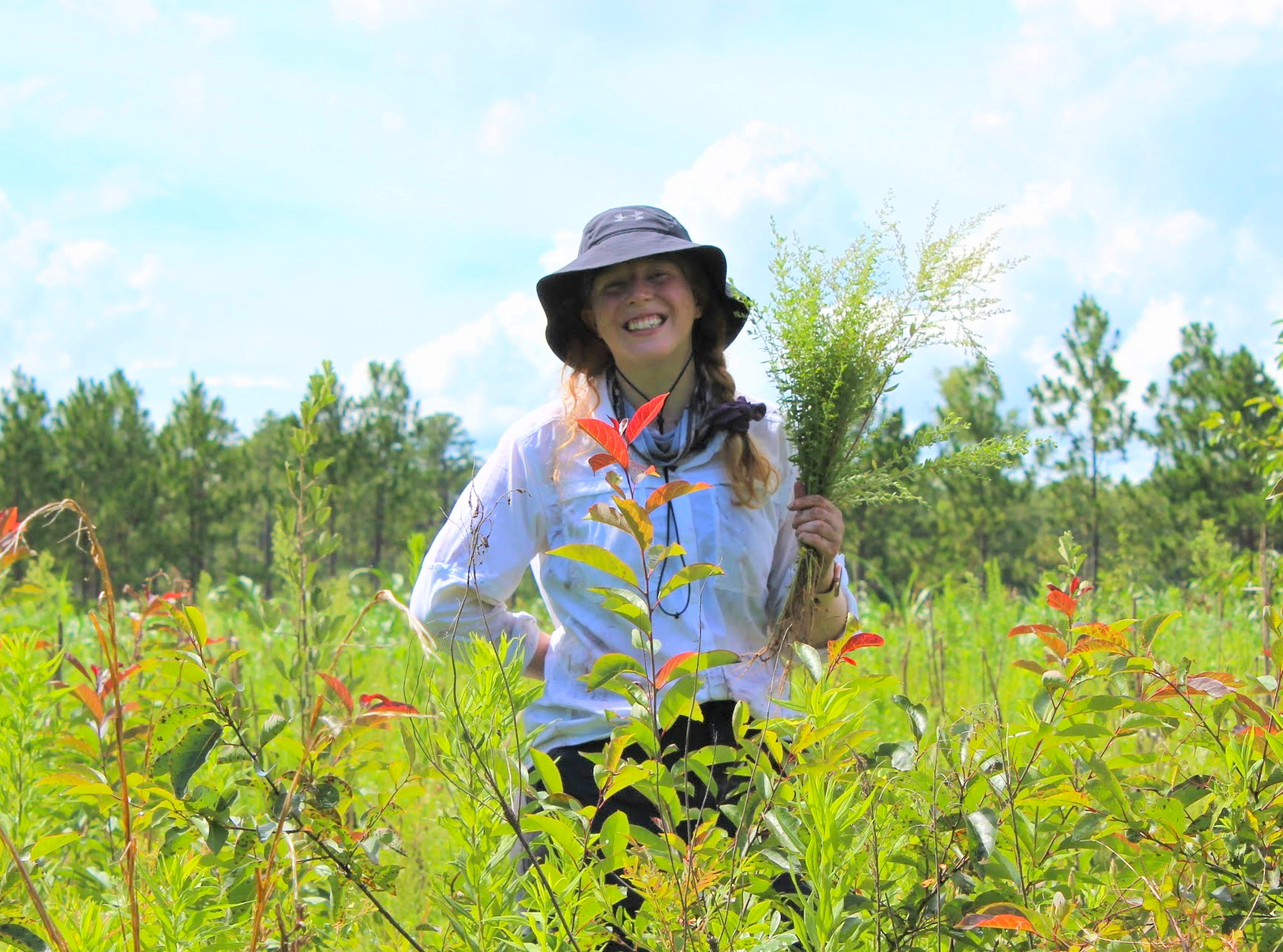
Emory graduate student Caitlin Risener, first author of the study, gathers tall goldenrod in the field in South Georgia. "When you collect a specimen yourself, and dry and preserve the samples, you get a personal connection," she says. (Photos by Tharanga Samarakoon)

By Carol Clark

Two common wild plants contain extracts that inhibit the ability of the virus that causes COVID-19 to infect living cells, an Emory University study finds. Scientific Reports published the results — the first major screening of botanical extracts to search for potency against the SARS-CoV-2 virus. 

In laboratory dish tests, extracts from the flowers of tall goldenrod (Solidago altissima) and the rhizomes of the eagle fern (Pteridium aquilinum) each blocked SARS-CoV-2 from entering human cells. 

The active compounds are only present in miniscule quantities in the plants. It would be ineffective, and potentially dangerous, for people to attempt to treat themselves with them, the researchers stress. In fact, the eagle fern is known to be toxic, they warn. 

“It’s very early in the process, but we’re working to identify, isolate and scale up the molecules from the extracts that showed activity against the virus,” says Cassandra Quave, senior author of the study and associate professor in Emory School of Medicine’s Department of Dermatology and the Center for the Study of Human Health. “Once we have isolated the active ingredients, we plan to further test for their safety and for their long-range potential as medicines against COVID-19.” 

A powerful tool for drug discovery 

Quave is an ethnobotanist, studying how traditional people have used plants for medicine to identify promising new candidates for modern-day drugs. Her lab curates the Quave Natural Product Library, which contains thousands of botanical and fungal natural products extracted from plants collected at sites around the world. 

Tall goldenrod

Caitlin Risener, a PhD candidate in Emory’s Molecular and Systems Pharmacology graduate program and the Center for the Study of Human Health, is first author of the current paper. 

In previous research to identify potential molecules for the treatment of drug-resistant bacterial infections, the Quave lab focused on plants that traditional people had used to treat skin inflammation. 

Given that COVID-19 is a newly emerged disease, the researchers took a broader approach. They devised a method to rapidly test more than 1,800 extracts and 18 compounds from the Quave Natural Product Library for activity against SARS-CoV-2. 

“We’ve shown that our natural products library is a powerful tool to help search for potential therapeutics for an emerging disease,” Risener says. “Other researchers can adapt our screening method to search for other novel compounds within plants and fungi that may lead to new drugs to treat a range of pathogens.” 

Picking the locks on a cell’s surface 

SARS-CoV-2 is an RNA virus with a spike protein that can bind to a protein called ACE2 on host cells. “The viral spike protein uses the ACE2 protein almost like a key going into a lock, enabling the virus to break into a cell and infect it,” Quave explains. 

The researchers devised experiments with virus-like particles, or VLPs, of SARS-CoV-2, and cells programmed to overexpress ACE2 on their surface. The VLPs were stripped of the genetic information needed to cause a COVID-19 infection. Instead, if a VLP managed to bind to an ACE2 protein and enter a cell, it was programmed to hijack the cell’s machinery to activate a fluorescent green protein. 

A plant extract was added to the cells in a petri dish before introducing the viral particles. By shining a fluorescent light on the dish, they could quickly determine whether the viral particles had managed to enter the cells and activate the green protein. 

The researchers identified a handful of hits for extracts that protected against viral entry and then homed in on the ones showing the strongest activity: Tall goldenrod and eagle fern. Both plant species are native to North America and are known for traditional medicinal uses by Native Americans. 

Additional experiments showed that the protective power of the plant extracts worked across four variants of SARS-CoV-2: Alpha, theta, delta and gamma. 

Confirming the results with infectious virus 

To further test these results, the Quave lab collaborated with co-author Raymond Schinazi, Emory professor of pediatrics, director of Emory’s Division of Laboratory of Biochemical Pharmacology and co-director of the HIV Cure Scientific Working Group within the NIH-sponsored Emory University Center for AIDS Research. A world leader in antiviral development, Schinazi is best known for his pioneering work on breakthrough HIV drugs. 

The higher biosecurity rating of the Schinazi lab enabled the researchers to test the two plant extracts in experiments using infectious SARS-CoV-2 virus instead of VLPs. The results confirmed the ability of the tall goldenrod and eagle fern extracts to inhibit the ability of SARS-CoV-2 to bind to a living cell and infect it. 

“Our results set the stage for the future use of natural product libraries to find new tools or therapies against infectious diseases," Quave says. 

As a next step, the researchers are working to determine the exact mechanism that enables the two plant extracts to block binding to ACE2 proteins. 

A hands-on connection to nature 

For Risener, one of the best parts about the project is that she collected samples of tall goldenrod and eagle fern herself. In addition to gathering medicinal plants from around the globe, the Quave lab also makes field trips to the forests of the Joseph W. Jones Research Center in South Georgia. The Woodruff Foundation established the center to help conserve one of the last remnants of the unique longleaf pine ecosystem that once dominated the southeastern United States. 

“It’s awesome to go into nature to identify and dig up plants,” Risener says. “That’s something that few graduate students in pharmacology get to do. I’ll be covered in dirt from head to toe, kneeling on the ground and beaming with excitement and happiness.” 

She also assists in preparing the plant extracts and mounting the specimens for the Emory Herbarium. “When you collect a specimen yourself, and dry and preserve the samples, you get a personal connection,” she says. “It’s different from someone just handing you a vial of plant material in a lab and saying, ‘Analyze this.’” 

After graduating, Risener hopes for a career in outreach and education for science policy surrounding research into natural compounds. A few of the more famous medicines derived from botanicals include aspirin (from the willow tree), penicillin (from fungi) and the cancer therapy Taxol (from the yew tree). 

“Plants have such chemical complexity that humans probably couldn’t dream up all the botanical compounds that are waiting to be discovered,” Risener says. “The vast medicinal potential of plants highlights the importance of preserving ecosystems.” 

Co-authors of the current paper include: Sumin Woo, Tharanga Samarakoon, Marco Caputo and Emily Edwards (the Quave lab and Emory’s Center for the Study of Human Health); Keivan Zandi, Shu Ling Goh and Jessica Downs-Bowen (the Schinazi lab); Kier Klepzig (Joseph W. Jones Research Center); and Wendy Applequist (Missouri Botanical Garden). 

Funding for the paper was provided by the Marcus Foundation, the NIH-funded Center for AIDS Research and the NIH National Center for Complementary and Integrative Health. 

Related:

Into the heart of brightness: An ethnobotanist's memoir

The plant hunters: Students search for secrets of ancient remedies

New molecule found in chestnut trees disarms dangerous bacteria 

Friday, January 27, 2023

Emory physicists to study airborne microbes, funded by $1.2 million Keck Award

The Keck Foundation awarded Emory physicists Minsu Kim, left, and Justin Burton $1.2 million to explore how microbes adapt to living in the Earth's atmosphere and the broader role that these organisms may play in the planet's ecosystem.

By Carol Clark

Microbes have an incredible ability to thrive in different environments. Extensive research has shown the vital roles that these invisible organisms play in the ecosystems of marine and soil environments. But the atmosphere is another important habitat. 

Growing evidence shows that microbes in the Earth’s atmosphere can affect rainfall, land fertilization and food production. Little is known, however, about how these tiny life forms adapt to living in air and the even broader role that airborne microbes may play in the planet’s ecosystem. 

The W.M. Keck Foundation awarded Emory University physicists Justin Burton and Minsu Kim $1.2 million to explore these mysteries. In a collaboration with the University of Oregon, the researchers will use the funds to pioneer new methods for mechanistic studies of the physiology, metabolism, ecology and evolution of airborne microbes. 

The Emory project will create new tools to conduct never-before-done studies of how microbes adapt to living in air. “We’ve developed a prototype acoustic levitation system that opens the door for air-culturing microbes in a well-controlled laboratory environment for the first time,” says Burton, associate professor of physics. 

The Burton lab specializes in studying the fluid dynamics of natural phenomena, from the molecular to the geographical scale. 

The Kim lab specializes in using advanced biophysical techniques to characterize microbes from the molecular to cellular level. 

“We are helping to take the field of air biology into a new era,” says Kim, associate professor of physics. “Most research into microbe ecology has focused on microbes from marine and soil environments. We’re expanding the possibilities for investigating atmospheric microbes.” 

The Emory researchers will collaborate with additional principal investigators on the Keck Award project: Earth scientist Joshua Méndez Harper, a former postdoctoral fellow in the Burton lab now at the University of Oregon, and Josef Dufek, professor of Earth sciences at the University of Oregon. 

Wind-blown dust circulates globally, emitted by volcanic eruptions, wildfires and dust storms. These airborne particles can carry minerals and other nutrients across long distances. Desert dust from the Sahara, for example, is an important source of phosphorous for the Amazon rain forest. It is also well-known that microbes — including viruses, fungi and bacteria — hitchhike on atmospheric dust. 

Perhaps the most striking example of how atmospheric microbes can impact the environment is the so-called rain-making bacterium Pseudomonas syringae that has been isolated from clouds. Research shows that this bacterium may play a role in the precipitation cycle by producing an enzyme that catalyzes ice formation. 

Key impediments to further studying such atmospheric phenomena are sampling and culturing microbes in the air. The Keck-funded project will develop an airborne-culturing method using acoustic levitators, each about the size of a microwave oven, that simulate atmospheric conditions. The levitators will work by creating standing waves of sound, just like a musical instrument, but at a frequency well outside of the range of human hearing. These high-intensity sound waves create high pressure that is capable of suspending particles in air that are as dense as copper. 

Initially, the project will focus on studying bacteria, believed to make up more than 50% of atmospheric microbes. The controlled, laboratory conditions of the levitators will allow the researchers to home in on how different species of bacteria adapt to living in the harsh conditions found in the atmosphere, such as extreme temperature shifts, high humidity and solar radiation. 

The bacterial species studied will include some that the researchers collect from the atmosphere through balloon experiments. Team members at the University of Oregon will release a series of small, ultralight balloons. They will float on easterly winds across the country at altitudes between five and six kilometers, which is comparable to those of Saharan dust clouds and wildfire plumes. Each balloon will house sterile titanium booms affixed with tiny sponges to trap microbes within their pores. 

Balloon positions and sensor data — including temperature, pressure, humidity and dust concentration — will be transmitted continuously using amateur radio bands. As the balloons fly over Georgia, descent will be controlled using parachutes. GPS beacons will be enabled upon landing, allowing the researchers to pinpoint and recover the balloons. 

The methods developed in the lab, and the resulting data, will be open source. Scientists around the world can build on the work and continue to push the boundaries in the field of air biology. 

“The award from the Keck Foundation is giving us the freedom to strike out in bold new scientific directions,” Burton says. 

Based in Los Angeles, the W.M. Keck Foundation was established in 1954 by the late W.M. Keck, founder of the Superior Oil Company. The foundation’s grant making is focused primarily on pioneering efforts in the areas of medical research and science and engineering. The foundation also supports undergraduate education and maintains a Southern California Grant Program that provides support for the Lost Angeles community, with a special emphasis on children and youth. For more information, visit www.wmkeck.org

Related: 

Soil quality critical to help some U.S. crops weather heat stress from climate change

Chemists crack complete quantum nature of water

Chemists map cascade of reactions for producing atmosphere's 'detergent'

Monday, December 19, 2022

On loneliness and well-being, in Japan and the world

"People tend to think of loneliness as an individual issue but it's a much bigger problem," says Emory anthropologist Chikako Ozawa-de Silva.

By Carol Clark

Chikako Ozawa-de Silva, Emory professor of anthropology, was born and raised in Kagoshima on the southernmost tip of Japan — a historically rich area where different cultures flowed through with the sea trade. 

“I’ve always been interested in understanding human beings from a cross-cultural perspective,” Ozawa-de Silva says. She graduated from Sophia University in Tokyo before heading to Oxford University for a PhD in social and cultural anthropology. Research fellowships took her to Harvard and the University of Chicago before she joined Emory in 2003. 

Her research focuses on the impacts of culture on well-being, including how people experience and respond to suffering. 

Ozawa-de Silva’s most recent book is titled “The Anatomy of Loneliness: Suicide, Social Connection, and the Search for Relational Meaning in Contemporary Japan.” Published by the University of California Press, the book won the Society for East Asian Anthropology’s 2022 Francis Hsu Book Prize. The prize committee called the work “poignant, richly ethnographic and an exemplary instance of a book that really speaks beyond our field. . . . Ozawa-de Silva writes about suicide and loneliness in Japan in ways that speak to wider global trends while giving us some hint at potentially better ways to live.” 

“The Anatomy of Loneliness” also received the 2022 Victor Turner Prize in Ethnographic Writing honorable mention, presented by the Society for Humanistic Anthropology. “This book is a jarring, empathic, and even paradoxical diagnosis of emerging collective social structures that make people feel alone,” the prize committee wrote. “Along the way, readers are introduced to a brave and novel vision for what an inclusive society might mean.” 

In the following Q&A, Ozawa-de Silva talks about her research into loneliness in Japan as well as the worldwide epidemic of loneliness and ways to potentially reduce it. 

Why did you want to write this book? 

In 1998, the suicide rates in Japan jumped across the population — and by more than 50 percent among adolescents — but no one quite understood why. They remained elevated for the next decade. New forms of suicide were emerging, such as internet group suicide, in which individuals come together online and then agree to meet in person to commit suicide collectively. 

There was also a rise in the phenomenon of “hikikomori,” or social withdrawal, when young people do not leave their houses for extended periods of time, instead remaining secluded and entirely dependent on their parents. 

As I researched the causes of suicide in Japan, I discovered one of these to be a deeper underlying issue facing Japanese society — pervasive loneliness. 

How do you define loneliness? 

You can be alone at times and not be lonely. But you can also be physically among people and feel very lonely. 

By loneliness I mean a deep, pervasive sense of not being accepted or acknowledged by others. You feel that you are not cared for or loved. You don’t feel safe. 

On the flip side, when you feel safe and “at home,” it is more difficult to feel lonely. 

Japan may be ahead of the curve compared to many places but it is not the only country facing this problem of pervasive loneliness. The U.S. Surgeon General Vivek Murthy called loneliness a “growing health epidemic” and referenced research showing that social isolation is associated with a reduction in lifespan similar to that caused by smoking 15 cigarettes a day. 

And in 2018, the UK appointed its first minister for loneliness. Loneliness is increasingly recognized globally as a major public health problem. 

What is driving the epidemic of loneliness? 

People tend to think of loneliness as an individual issue but it’s a much bigger problem. Society is producing loneliness. Social structures that diminish compassion and kindness produce loneliness. 

For example, both Japanese and U.S. societies overemphasize productivity at the expense of everything else. So even how we evaluate our self-worth becomes based on our productivity. 

Society is saying that everyone needs to be a striker and to score a lot of points. But you also need midfielders and other players who can pass the ball to the striker. 

No one can win all the time. Even if you are super productive in your job or in other ways, at some point as humans beings we start slowing down and losing productivity. 

And, it seems paradoxical, but being a highly productive winner can feel lonely. The moment you feel special and different from others your sense of connection to them is not as strong. 

Nothing is wrong with being productive but when you overemphasize its value over everything else you lose so much. 

How can this problem be solved? 

The solution is empathy. From a very young age, children are expected to compete with one another but they also need to learn empathy. Research, including research here at Emory, demonstrates that empathy is a skill that can be taught. 

By empathy I don’t mean just feeling someone else’s pain. That can be empathic distress. It’s making the problem about yourself because now you are feeling pain and you want to reduce your own pain. 

Empathy is ultimately about understanding and respecting someone else’s emotions and differences. Cultivating empathy helps produce a sense of belonging. We need to take empathy seriously and help children and young people build skills such as the art of truly listening to other people. It’s important to learn to love and respect other people not for what they can do for you but for who they are. 

Increasingly, I see empathy as central to the discipline of anthropology and to the project of diversity and inclusion. My next book will be on empathy and intimacy. 

Once you develop empathy skills, compassion is the next stage. Compassion is the wish to reduce the pain of other people. 

How has the pandemic influenced the problem of loneliness? 

When the pandemic hit, many more people were suddenly exposed to loneliness. If you didn’t experience loneliness yourself, you probably know someone who did. Loneliness became everybody’s business. 

I hope that the growing awareness of loneliness and the harm it can cause will help to destigmatize it. People may become more receptive to the need to find solutions to the problem. 

The pandemic also made some people take a closer look at their values. Some cracks are starting to show in the idea of focusing on productivity over everything else. We are seeing some shifts toward people prioritizing their quality of life through trends like “quiet quitting,” [or doing the minimum in a job], and the “great resignation,” which could actually be a sign of having more empathy and self-compassion. 

Related:

How grandmothers' brains react to the sight of their grandchildren

Japanese self-analysis digs deep into memories

Are hugs the new drugs?