Scientists developed a new way to help understand what happens in the body when people consume a plant product and the many chemicals it contains. The American Chemical Society’s Journal of Natural Products published the method to quickly analyze the effects of a natural product, developed at Emory University.
Monday, March 16, 2026
Turning Over a New Leaf in Analyses of Natural Products
Scientists developed a new way to help understand what happens in the body when people consume a plant product and the many chemicals it contains. The American Chemical Society’s Journal of Natural Products published the method to quickly analyze the effects of a natural product, developed at Emory University.
Wednesday, January 14, 2026
Epigenetics linked to high-altitude adaptation in Andes
Friday, December 13, 2024
High temperatures dampen immune systems of wild capuchins
Thursday, November 21, 2024
A snapshot of scientific thought on emotions in animals
Monday, October 21, 2024
Exploring the nature of fathers
Monday, March 18, 2024
Primatologist Frans de Waal remembered for bringing apes 'a little closer to humans'
Emory University primatologist Frans de Waal — who pioneered studies of animal cognition while also writing best-selling books that helped popularize the field around the globe — passed away March 14, 2024, from stomach cancer.
De Waal, Charles Howard Candler Professor Emeritus of Psychology and former director of the Living Links Center for the Advanced Study of Ape and Human Evolution at the Emory National Primate Research Center, was 75. From his groundbreaking 1982 book “Chimpanzee Politics: Power and Sex Among Apes” to 2019’s “Mama’s Last Hug: Animal Emotions and What They Tell Us About Ourselves,” de Waal shattered long-held ideas about what it means to be an animal and a human.
“One thing that I’ve seen often in my career is claims of human uniqueness that fall away and are never heard from again,” de Waal said in 2014. “We always end up overestimating the complexity of what we do. That’s how you can sum up my career: I’ve brought apes a little closer to humans but I’ve also brought humans down a bit.”
Wednesday, March 6, 2024
Atlanta Science Festival returns to inspire discovery for all ages
Wednesday, September 13, 2023
Natural compound found in plants inhibits deadly fungi
By Carol Clark
A new study finds that a natural compound found in many plants inhibits the growth of drug-resistant Candida fungi — including its most virulent species, Candida auris, an emerging global health threat. The journal ACS Infectious Diseases published the discovery led by scientists at Emory University.
Laboratory-dish experiments showed that the natural compound, a water-soluble tannin known as PGG, blocks 90% of the growth in four different species of Candida fungi. The researchers also discovered how PGG inhibits the growth: It grabs up iron molecules, essentially starving the fungi of an essential nutrient. By starving the fungi rather than attacking it, the PGG mechanism does not promote the development of further drug resistance, unlike existing antifungal medications.
Laboratory-dish experiments also showed minimal toxicity of PGG to human cells.
“Drug-resistant fungal infections are a growing healthcare problem but there are few new antifungals in the drug-development pipeline,” says Cassandra Quave, senior author of the study and associate professor in Emory School of Medicine’s Department of Dermatology and the Center for the Study of Human Health. “Our findings open a new potential approach to deal with these infections, including those caused by deadly Candida auris.”
C. auris is often multidrug-resistant and has a high mortality rate, leading the Centers for Disease Control and Prevention (CDC) to label it a serious global health threat.
“It’s a really bad bug,” says Lewis Marquez, first author of the study and a graduate student in Emory’s molecular systems and pharmacology program. “Between 30 to 60% of the people who get infected with C. auris end up dying.”
An emerging threat
Candida is a yeast often found on the skin and in the digestive tract of healthy people. Some species, such as Candida albicans, occasionally grow out of control and cause mild infections in people. In more serious cases, Candida can invade deep into the body and cause infections in the bloodstream or organs such as the kidney, heart or brain.
Immunocompromised people, including many hospital patients, are most at risk for invasive Candida infections, which are rapidly evolving drug resistance.
In 2007, the new Candida species, C. auris, emerged in a hospital patient in Japan. Since then, C. auris has caused health care-associated outbreaks in more than a dozen countries around the world with more than 3,000 clinical cases reported in the United States alone.
A ‘natural’ approach to drug discovery
Quave is an ethnobotanist, studying how traditional people have used plants for medicine to search for promising new candidates for modern-day drugs. Her lab curates the Quave Natural Product Library, which contains 2,500 botanical and fungal natural products extracted from 750 species collected at sites around the world.
“We’re not taking a random approach to identify potential new antimicrobials,” Quave says. “Focusing on plants used in traditional medicines allows us to hone in quickly on bioactive molecules.”
Previously, the Quave lab had found that the berries of the Brazilian peppertree, a plant used by traditional healers in the Amazon for centuries to treat skin infections and some other ailments, contains a flavone-rich compound that disarms drug-resistant staph bacteria. Screens by the Quave lab had also found that the leaves of the Brazilian peppertree contain PGG, a compound that has shown antibacterial, anticancer and antiviral activities in previous research.
A 2020 study by the Quave lab, for instance, found that PGG inhibited growth of Carbapenem-resistant Acinetobacter baumannii, a bacterium that infects humans and is categorized as one of five urgent threats by the CDC.
The Brazilian peppertree, an invasive weed in Florida, is a member of the poison ivy family. “PGG has popped up repeatedly in our laboratory screens of plant compounds from members of this plant family,” Quave says. “It makes sense that these plants, which thrive in really wet environments, would contain molecules to fight a range of pathogens.”
Experimental results
The Quave lab decided to test whether PGG would show antifungal activity against Candida. Laboratory-dish experiments demonstrated that PGG blocked around 90% of the growth in 12 strains from four species of Candida: C. albicans, multidrug-resistant C. auris and two other multidrug-resistant non-albicans Candida species.
PGG is a large molecule known for its iron-binding properties. The researchers tested the role of this characteristic in the antifungal activity.
“Each PGG molecule can bind up to five iron molecules,” Marquez explains. “When we added more iron to a dish, beyond the sequestering capacity of the PGG molecules, the fungi once again grew normally.”
Dish experiments also showed that PGG was well-tolerated by human kidney, liver and epithelial cells. “Iron in human cells is generally not free iron,” Marquez says. “It is usually bound to a protein or is sequestered inside enzymes.”
A potential topical treatment
Previous animal studies on PGG have found that the molecule is metabolized quickly and removed from the body. Instead of an internal therapy, the researchers are investigating its potential efficacy as a topical antifungal.
“If a Candida infection breaks out on the skin of a patient where a catheter or other medical instrument is implanted, a topical antifungal might prevent the infection from spreading and entering into the body,” Marquez says.
As a next step, the researchers will test PGG as a topical treatment for fungal skin infections in mice.
Meanwhile, Quave and Marquez have applied for a provisional patent for the use of PGG for the mitigation of fungal infections.
“These are still early days in the research, but another idea that we’re interested in pursuing is the potential use of PGG as a broad-spectrum microbial,” Quave says. “Many infections from acute injuries, such as battlefield wounds, tend to be polymicrobial so PGG could perhaps make a useful topical treatment in these cases.”
Scientists from the University of Toronto are co-authors of the paper, including Yunjin Lee, Dustin Duncan, Luke Whitesell and Leah Cowen. Whitesell and Cowen are co-founders and shareholders in Bright Angel Therapeutics, a platform company for development of antifungal therapeutics, and Cowen is a science advisor for Kapoose Creek, a company that harnesses the therapeutic potential of fungi.
The work was supported by grants from the National Institutes of Health, National Center for Complementary and Integrative Health; the Jones Center at Ichauway, the CIHR Frederick Banting and Charles Best Canada Graduate Scholarship and the Canadian Institutes of Health Research Foundation.
Related
Extracts from two wild plants inhibit COVID virus, study finds
Scientists identify chemicals in noxious weed that 'disarm' deadly bacteria
Friday, August 25, 2023
Buffalo slaughter left lasting impact on Indigenous peoples
Monday, February 20, 2023
Genomic study reveals signs of TB adaptation in ancient Andeans
By Carol Clark
People have inhabited the Andes mountains of South America for more than 9,000 years, adapting to the scarce oxygen available at high altitudes, along with cold temperatures and intense ultraviolet radiation. A new genomic study suggests that Indigenous populations in present-day Ecuador also adapted to the tuberculosis bacterium, thousands of years before the arrival of Europeans.
The journal iScience published the findings, led by scientists at Emory University.
“We found that selection for genes involved in TB-response pathways started to uptick a little over 3,000 years ago,” says Sophie Joseph, first author of the paper and an Emory graduate student in anthropology. “That’s an interesting time because it was when agriculture began proliferating in the region. The development of agriculture leads to more densely populated societies that are better at spreading a respiratory pathogen like TB.”
The investigators had originally set out to investigate how the Indigenous people of Ecuador adapted to living at high altitude.
“We were surprised to find that the strongest genetic signals of positive selection were not associated with high altitude but for the immune response to tuberculosis,” says John Lindo, Emory assistant professor of anthropology and senior author of the study. “Our results bring up more questions regarding the prevalence of tuberculosis in the Andes prior to European contact.”
The Lindo lab specializes in mapping little-explored human lineages of the Americas.
Previously published research found evidence of the tuberculosis bacterium in the skeletal material of 1,400-year-old Andean mummies, contradicting some theories that TB did not exist in South America until the arrival of Europeans 500 years ago.
The current paper provides the first evidence for a human immune-system response to TB in ancient Andeans and gives clues to when and how their genomes may have adapted to that exposure.
A graphic from the iScience paper“Human-pathogen co-evolution is an understudied area that has a huge bearing on modern-day public health,” Joseph says. “Understanding how pathogens and humans have been linked and affecting each other over time may give insights into novel treatments for any number of infectious diseases.”
Co-authors of the paper include scientists at Central University of Ecuador, Technical University of Manabi in Ecuador, University of Pavia in Italy, University of Iowa and Florida Atlantic University.
The researchers sequenced whole genomes using blood samples from 15 present-day Indigenous individuals living at altitudes above 2,500 meters in several different Ecuadorian provinces. They performed a series of scans to look for signatures of positive selection for genes in their ancestral past.
“Computational techniques for sequencing genomes and modeling ancestral selection keep improving,” Joseph says. “The genomes of people living today give us a window into the past.”
Among the strongest signals detected were for biomarkers that are switched on in modern humans during an active TB infection. The researchers modeled the timing of selection for several of the genes involved in the TB-response pathways.
Although they were not as strong as for exposure to TB, some signals were also detected for biomarkers related to adaptation to hypoxia, or low levels of oxygen in the blood that result from living at high altitude.
Previous research has revealed stark differences in how high-altitude populations in Tibet, Ethiopia and the Peruvian Andes adapted to hypoxia.
“For the Ecuadorean samples, we did see a couple of overlaps with studies from the Peruvian Andes in the overarching genes involved in the selection for hypoxia, although the variants were slightly different,” Joseph says. “To me, that suggests that there may have been independent adaptations within even small populations, at the community level. It shows the robustness of the genome to solve adaptive problems through different pathways.”
Joseph plans a career focused on mapping ancestral data for Indigenous populations from the Americas.
“South America has far fewer genomic studies and publications compared to Europe and I’d like to help close that gap,” she says.
“I want to understand human evolution and health from an integrated biological perspective,” Joseph adds. “The genome can reveal many fascinating things and yet it is just one aspect of a human being. You also have to consider the environment and social-cultural aspects.”
Related:
Genomic mapping of little-explored human lineages
Ancient DNA analyses add new complexity to South America settlement
Thursday, February 9, 2023
Extracts from two wild plants inhibit COVID-19 virus, study finds
By Carol Clark
Two common wild plants contain extracts that inhibit the ability of the virus that causes COVID-19 to infect living cells, an Emory University study finds. Scientific Reports published the results — the first major screening of botanical extracts to search for potency against the SARS-CoV-2 virus.
In laboratory dish tests, extracts from the flowers of tall goldenrod (Solidago altissima) and the rhizomes of the eagle fern (Pteridium aquilinum) each blocked SARS-CoV-2 from entering human cells.
The active compounds are only present in miniscule quantities in the plants. It would be ineffective, and potentially dangerous, for people to attempt to treat themselves with them, the researchers stress. In fact, the eagle fern is known to be toxic, they warn.
“It’s very early in the process, but we’re working to identify, isolate and scale up the molecules from the extracts that showed activity against the virus,” says Cassandra Quave, senior author of the study and associate professor in Emory School of Medicine’s Department of Dermatology and the Center for the Study of Human Health. “Once we have isolated the active ingredients, we plan to further test for their safety and for their long-range potential as medicines against COVID-19.”
A powerful tool for drug discovery
Quave is an ethnobotanist, studying how traditional people have used plants for medicine to identify promising new candidates for modern-day drugs. Her lab curates the Quave Natural Product Library, which contains thousands of botanical and fungal natural products extracted from plants collected at sites around the world.
![]() |
| Tall goldenrod |
Caitlin Risener, a PhD candidate in Emory’s Molecular and Systems Pharmacology graduate program and the Center for the Study of Human Health, is first author of the current paper.
In previous research to identify potential molecules for the treatment of drug-resistant bacterial infections, the Quave lab focused on plants that traditional people had used to treat skin inflammation.
Given that COVID-19 is a newly emerged disease, the researchers took a broader approach. They devised a method to rapidly test more than 1,800 extracts and 18 compounds from the Quave Natural Product Library for activity against SARS-CoV-2.
“We’ve shown that our natural products library is a powerful tool to help search for potential therapeutics for an emerging disease,” Risener says. “Other researchers can adapt our screening method to search for other novel compounds within plants and fungi that may lead to new drugs to treat a range of pathogens.”
Picking the locks on a cell’s surface
SARS-CoV-2 is an RNA virus with a spike protein that can bind to a protein called ACE2 on host cells. “The viral spike protein uses the ACE2 protein almost like a key going into a lock, enabling the virus to break into a cell and infect it,” Quave explains.
The researchers devised experiments with virus-like particles, or VLPs, of SARS-CoV-2, and cells programmed to overexpress ACE2 on their surface. The VLPs were stripped of the genetic information needed to cause a COVID-19 infection. Instead, if a VLP managed to bind to an ACE2 protein and enter a cell, it was programmed to hijack the cell’s machinery to activate a fluorescent green protein.
A plant extract was added to the cells in a petri dish before introducing the viral particles. By shining a fluorescent light on the dish, they could quickly determine whether the viral particles had managed to enter the cells and activate the green protein.
The researchers identified a handful of hits for extracts that protected against viral entry and then homed in on the ones showing the strongest activity: Tall goldenrod and eagle fern. Both plant species are native to North America and are known for traditional medicinal uses by Native Americans.
Additional experiments showed that the protective power of the plant extracts worked across four variants of SARS-CoV-2: Alpha, theta, delta and gamma.
Confirming the results with infectious virus
To further test these results, the Quave lab collaborated with co-author Raymond Schinazi, Emory professor of pediatrics, director of Emory’s Division of Laboratory of Biochemical Pharmacology and co-director of the HIV Cure Scientific Working Group within the NIH-sponsored Emory University Center for AIDS Research. A world leader in antiviral development, Schinazi is best known for his pioneering work on breakthrough HIV drugs.
The higher biosecurity rating of the Schinazi lab enabled the researchers to test the two plant extracts in experiments using infectious SARS-CoV-2 virus instead of VLPs. The results confirmed the ability of the tall goldenrod and eagle fern extracts to inhibit the ability of SARS-CoV-2 to bind to a living cell and infect it.
“Our results set the stage for the future use of natural product libraries to find new tools or therapies against infectious diseases," Quave says.
As a next step, the researchers are working to determine the exact mechanism that enables the two plant extracts to block binding to ACE2 proteins.
A hands-on connection to nature
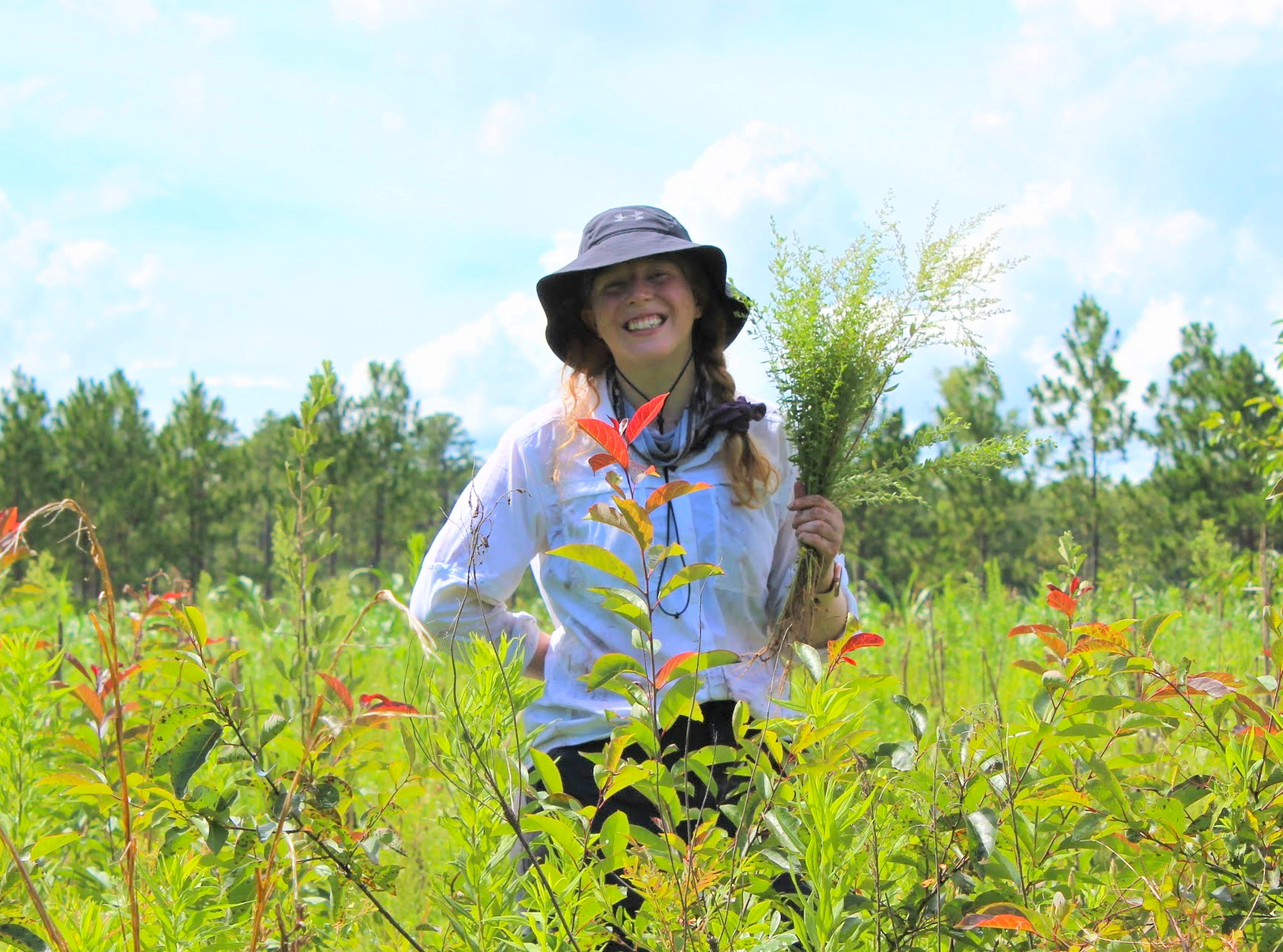
For Risener, one of the best parts about the project is that she collected samples of tall goldenrod and eagle fern herself. In addition to gathering medicinal plants from around the globe, the Quave lab also makes field trips to the forests of the Joseph W. Jones Research Center in South Georgia. The Woodruff Foundation established the center to help conserve one of the last remnants of the unique longleaf pine ecosystem that once dominated the southeastern United States.
“It’s awesome to go into nature to identify and dig up plants,” Risener says. “That’s something that few graduate students in pharmacology get to do. I’ll be covered in dirt from head to toe, kneeling on the ground and beaming with excitement and happiness.”
She also assists in preparing the plant extracts and mounting the specimens for the Emory Herbarium. “When you collect a specimen yourself, and dry and preserve the samples, you get a personal connection,” she says. “It’s different from someone just handing you a vial of plant material in a lab and saying, ‘Analyze this.’”
After graduating, Risener hopes for a career in outreach and education for science policy surrounding research into natural compounds. A few of the more famous medicines derived from botanicals include aspirin (from the willow tree), penicillin (from fungi) and the cancer therapy Taxol (from the yew tree).
“Plants have such chemical complexity that humans probably couldn’t dream up all the botanical compounds that are waiting to be discovered,” Risener says. “The vast medicinal potential of plants highlights the importance of preserving ecosystems.”
Co-authors of the current paper include: Sumin Woo, Tharanga Samarakoon, Marco Caputo and Emily Edwards (the Quave lab and Emory’s Center for the Study of Human Health); Keivan Zandi, Shu Ling Goh and Jessica Downs-Bowen (the Schinazi lab); Kier Klepzig (Joseph W. Jones Research Center); and Wendy Applequist (Missouri Botanical Garden).
Funding for the paper was provided by the Marcus Foundation, the NIH-funded Center for AIDS Research and the NIH National Center for Complementary and Integrative Health.
Related:
Into the heart of brightness: An ethnobotanist's memoir
The plant hunters: Students search for secrets of ancient remedies
New molecule found in chestnut trees disarms dangerous bacteria
Monday, December 19, 2022
On loneliness and well-being, in Japan and the world
By Carol Clark
Chikako Ozawa-de Silva, Emory professor of anthropology, was born and raised in Kagoshima on the southernmost tip of Japan — a historically rich area where different cultures flowed through with the sea trade.
“I’ve always been interested in understanding human beings from a cross-cultural perspective,” Ozawa-de Silva says. She graduated from Sophia University in Tokyo before heading to Oxford University for a PhD in social and cultural anthropology. Research fellowships took her to Harvard and the University of Chicago before she joined Emory in 2003.
Her research focuses on the impacts of culture on well-being, including how people experience and respond to suffering.
Ozawa-de Silva’s most recent book is titled “The Anatomy of Loneliness: Suicide, Social Connection, and the Search for Relational Meaning in Contemporary Japan.” Published by the University of California Press, the book won the Society for East Asian Anthropology’s 2022 Francis Hsu Book Prize. The prize committee called the work “poignant, richly ethnographic and an exemplary instance of a book that really speaks beyond our field. . . . Ozawa-de Silva writes about suicide and loneliness in Japan in ways that speak to wider global trends while giving us some hint at potentially better ways to live.”
“The Anatomy of Loneliness” also received the 2022 Victor Turner Prize in Ethnographic Writing honorable mention, presented by the Society for Humanistic Anthropology. “This book is a jarring, empathic, and even paradoxical diagnosis of emerging collective social structures that make people feel alone,” the prize committee wrote. “Along the way, readers are introduced to a brave and novel vision for what an inclusive society might mean.”
In the following Q&A, Ozawa-de Silva talks about her research into loneliness in Japan as well as the worldwide epidemic of loneliness and ways to potentially reduce it.
Why did you want to write this book?
In 1998, the suicide rates in Japan jumped across the population — and by more than 50 percent among adolescents — but no one quite understood why. They remained elevated for the next decade. New forms of suicide were emerging, such as internet group suicide, in which individuals come together online and then agree to meet in person to commit suicide collectively.
There was also a rise in the phenomenon of “hikikomori,” or social withdrawal, when young people do not leave their houses for extended periods of time, instead remaining secluded and entirely dependent on their parents.
As I researched the causes of suicide in Japan, I discovered one of these to be a deeper underlying issue facing Japanese society — pervasive loneliness.
How do you define loneliness?
You can be alone at times and not be lonely. But you can also be physically among people and feel very lonely.
By loneliness I mean a deep, pervasive sense of not being accepted or acknowledged by others. You feel that you are not cared for or loved. You don’t feel safe.
On the flip side, when you feel safe and “at home,” it is more difficult to feel lonely.
Japan may be ahead of the curve compared to many places but it is not the only country facing this problem of pervasive loneliness. The U.S. Surgeon General Vivek Murthy called loneliness a “growing health epidemic” and referenced research showing that social isolation is associated with a reduction in lifespan similar to that caused by smoking 15 cigarettes a day.
And in 2018, the UK appointed its first minister for loneliness. Loneliness is increasingly recognized globally as a major public health problem.
What is driving the epidemic of loneliness?
People tend to think of loneliness as an individual issue but it’s a much bigger problem. Society is producing loneliness. Social structures that diminish compassion and kindness produce loneliness.
For example, both Japanese and U.S. societies overemphasize productivity at the expense of everything else. So even how we evaluate our self-worth becomes based on our productivity.
Society is saying that everyone needs to be a striker and to score a lot of points. But you also need midfielders and other players who can pass the ball to the striker.
No one can win all the time. Even if you are super productive in your job or in other ways, at some point as humans beings we start slowing down and losing productivity.
And, it seems paradoxical, but being a highly productive winner can feel lonely. The moment you feel special and different from others your sense of connection to them is not as strong.
Nothing is wrong with being productive but when you overemphasize its value over everything else you lose so much.
How can this problem be solved?
The solution is empathy. From a very young age, children are expected to compete with one another but they also need to learn empathy. Research, including research here at Emory, demonstrates that empathy is a skill that can be taught.
By empathy I don’t mean just feeling someone else’s pain. That can be empathic distress. It’s making the problem about yourself because now you are feeling pain and you want to reduce your own pain.
Empathy is ultimately about understanding and respecting someone else’s emotions and differences. Cultivating empathy helps produce a sense of belonging. We need to take empathy seriously and help children and young people build skills such as the art of truly listening to other people. It’s important to learn to love and respect other people not for what they can do for you but for who they are.
Increasingly, I see empathy as central to the discipline of anthropology and to the project of diversity and inclusion. My next book will be on empathy and intimacy.
Once you develop empathy skills, compassion is the next stage. Compassion is the wish to reduce the pain of other people.
How has the pandemic influenced the problem of loneliness?
When the pandemic hit, many more people were suddenly exposed to loneliness. If you didn’t experience loneliness yourself, you probably know someone who did. Loneliness became everybody’s business.
I hope that the growing awareness of loneliness and the harm it can cause will help to destigmatize it. People may become more receptive to the need to find solutions to the problem.
The pandemic also made some people take a closer look at their values. Some cracks are starting to show in the idea of focusing on productivity over everything else. We are seeing some shifts toward people prioritizing their quality of life through trends like “quiet quitting,” [or doing the minimum in a job], and the “great resignation,” which could actually be a sign of having more empathy and self-compassion.
Related:
How grandmothers' brains react to the sight of their grandchildren
Wednesday, November 2, 2022
Ancient DNA analyses add new complexity to South America settlement
By Carol Clark
Genomic analyses of ancient individuals from South America add surprising twists in the story of early human settlement of the continent. The Royal Society Proceedings B published the results, which show ancestral evidence in the Americas for extinct hominins known as Denisovans.
The work, providing the most complete genetic evidence to date for ancient Central American and South American migration routes, was led by anthropologists at Emory University and archeologists at Florida Atlantic University.
Identification of Denisovan DNA goes back only to 2010, after Russian scientists uncovered a finger bone dated 50,000 to 30,000 years ago in a cave in the Altai Mountains of Siberia. Additional specimens from the Siberian cave were subsequently tied genetically to Denisovans, an archaic hominin with an affinity to Neanderthals, along with a single specimen from a cave on the Tibetan Plateau in China.
“It’s phenomenal that Denisovan ancestry made it all the way to South America,” says John Lindo, a co-corresponding author of the paper and an anthropologist at Emory who specializes in ancient DNA analysis. “The admixture must have occurred a long time before, perhaps 40,000 years ago.”
The fact that the Denisovan lineage persisted and its genetic signal made it into an ancient individual from Uruguay that is only 1,500 years old suggests that it was a large admixture event between a population of humans and Denisovans, Lindo says.
First author of the paper is Andrew Luiz Campelo dos Santos, an archeologist now at Florida Atlantic University who was formerly at the Federal University of Pernambuco in Recife, Brazil. Dos Santos uncovered the remains of two individuals from northeastern Brazil, who date back 2,000 years and are included in the analyses.
Co-corresponding author is Michael DeGiorgio from Florida Atlantic University, a population geneticist specializing in human, evolutionary and computational genomics.
The Americas were the last continents that humans populated. Evidence suggests that Paleolithic hunter-gatherers entered North America from a land bridge that formed between northeastern Siberia and western Alaska during a period of lower sea level around 26,000 to 19,000 years ago.
The current analyzes compared two newly sequenced ancient whole genomes from northeastern Brazil with present-day genomes and other ancient whole genomes from South America and Panama. The results showed distinct relationships between Meso America, or parts of the modern-day countries of Mexico and Central America, and both present-day South Americans and ancient individuals from northeastern and southeastern Brazil, Uruguay and Panama. The analyses also detected a strong Australasian signal in the ancient genomes from near the Atlantic coast in Brazil.
These ancestral connections provide new genetic evidence — in support of existing archeological evidence — for an ancient migration route through Panama and along the Atlantic coast of South America.
Adding to the complexity is the detection of a stronger signal for Denisovan ancestry in the ancient Uruguay and Panama individuals than in those from ancient Brazil. That suggests multiple waves of ancestral migrations along the Atlantic coast, the researchers conclude.
The Lindo ancient DNA lab specializes in mapping little-explored human lineages of the Americas. Previously, little focus has been put on sequencing ancient DNA from South America. One reason is that warmer, more humid climates throughout much of the continent have made it more challenging to collect usable ancient DNA specimens, although advances in sequencing technology are helping to remove some of these limitations.
As of the publication date of this paper, Lindo notes, only 12 ancient whole genomes from South America have been sequenced and published, in contrast to hundreds from Europe. Other published ancient genomic sequences from the continent have been limited to mitochondrial DNA (which is typically transmitted exclusively by maternal inheritance) and targeted DNA sequencing (which captures less than one percent of the genome).
“In this paper we’ve analyzed all of the ancient whole genomes available for South America and found some surprises,” Lindo says. “As more whole genomes from South America are sequenced and published, they are likely to reveal more nuances about how South America was first settled.”
Related:
Ancient DNA lab maps little-explored human lineages
Ancient DNA gives new insights into 'lost' Indgenous people of Uruguay
Thursday, May 5, 2022
Ancient DNA gives new insights into 'lost' Indigenous people of Uruguay
A sculpture commemorates the Indigenous people of Uruguay in the capital of Montevideo. Archeological evidence for human settlement of the area goes back 10,000 years. (Photo by Maximasu via Wikimedia Commons)
By Carol Clark
The first whole genome sequences of the ancient people of Uruguay provide a genetic snapshot of Indigenous populations of the region before they were decimated by a series of European military campaigns. PNAS Nexus published the research, led by anthropologists at Emory University and the University of the Republic, Montevideo, Uruguay.
“Our work shows that the Indigenous people of ancient Uruguay exhibit an ancestry that has not been previously detected in South America,” says John Lindo, co-corresponding author and an Emory assistant professor of anthropology specializing in ancient DNA. “This contributes to the idea of South America being a place where multi-regional diversity existed, instead of the monolithic idea of a single Native American race across North and South America.”
The analyses drew from a DNA sample of a man that dated back 800 years and another from a woman that went back 1,500 years, both well before the 1492 arrival of Christopher Columbus in the Americas. The samples were collected from an archeological site in eastern Uruguay by co-corresponding author Gonzalo Figueiro, a biological anthropologist at the University of the Republic.
The results of the analyses showed a surprising connection to ancient individuals from Panama — the land bridge that connects North and South America — and to eastern Brazil, but not to modern Amazonians. These findings support the theory proposed by some archeologists of separate migrations into South America, including one that led to the Amazonian populations and another that led to the populations along the East coast.
“We’ve now provided genetic evidence that this theory may be correct,” Lindo says. “It runs counter to the theory of a single migration that split at the foot of the Andes.”
Archeological evidence
The archeological evidence for human settlement of the area now known as Uruguay, located on the Atlantic coast south of Brazil, goes back more than 10,000 years. European colonizers made initial contact with the Indigenous people of the region in the early 1500s.
During the 1800s, the colonizers launched a series of military campaigns to exterminate the native peoples, culminating in what is known as the massacre at Salsipuedes Creek, in 1831, which targeted an ethnic group called the Charrúa. At that time, the authors write, the term Charrúa was being applied broadly to the remnants of various hunter-gatherer groups in the territory of Uruguay.
“Through these first whole genome sequences of the Indigenous people of the region before the arrival of Europeans, we were able to reconstruct at least a small part of their genetic prehistory,” Lindo says.
The work opens the door to modern-day Uruguayans seeking to potentially link themselves genetically to populations that existed in the region before European colonizers arrived. “We would like to gather more DNA samples from ancient archeological sites from all over Uruguay, which would allow people living in the country today to explore a possible genetic connection,” Lindo says.
Focusing on little-explored human lineages
The Lindo ancient DNA lab specializes in mapping little-explored human lineages of the Americas. Most ancient DNA labs are located in Europe, where the cooler climate has better preserved specimens.
Less focus has been put on sequencing ancient DNA from South America. One reason is that warmer, more humid climates throughout much of the continent have made it more challenging to collect usable ancient DNA specimens, although advances in sequencing technology are helping to remove some of these limitations.
“If you’re of European descent, you can have your DNA sequenced and use that information to pinpoint where your ancestors are from down to specific villages,” Lindo says. “If you are descended from people Indigenous to the Americas you may be able to learn that some chunk of your genome is Native American, but it’s unlikely that you can trace a direct lineage because there are not enough ancient DNA references available.”
Further complicating the picture, he adds, is the massive disruption caused by the arrival of Europeans given that many civilizations were destroyed and whole populations were killed.
By collaborating closely with Indigenous communities and local archeologists, Lindo hopes to use advanced DNA sequencing techniques to build a free, online portal with increasing numbers of ancient DNA references from the Americas, to help people better explore and understand their ancestry.
Co-authors of the current paper include Emory senior Rosseirys De La Rosa, Andrew Luize Campelo dos Santos (the Federal University of Penambuco, Recife, Brazil), Monica Sans (University of the Republic, Montevideo, Uruguay), and Michael De Giorgio (Florida Atlantic University).
The work was funded by a National Science Foundation CAREER Grant.
Related:
Ancient DNA lab maps little-explored human lineages
Ancient DNA from Sudan shines new light on Nile Valley past
'Potato gene' reveals how ancient Andeans adapted to starchy diet
Wednesday, March 16, 2022
Atlanta Science Fest celebrates the wonders all around us
A celebration of science once again takes metro Atlanta by storm with the return of the Atlanta Science Festival, ongoing through March 26. More than 100 activities, planned throughout the city, invite families to experience the thrills of discovery, from nature walks to expert talks and hands-on STEM learning opportunities.
Wednesday, January 19, 2022
First genome-wide ancient human DNA from Sudan shines new light on Nile Valley past
By Carol Clark
The first genome-wide, ancient human DNA data from Sudan reveals new insights into the ancestry and social organization of people who lived more than 1,000 years ago in the Nile Valley, an important genetic and cultural crossroads.
Nature Communications published the analyses of the DNA of 66 individuals from a site in ancient Nubia known as Kulubnarti, located on the Nile River in Sudan, just south of the Egyptian border.
“Before this work, there were only three ancient genome-wide samples available, from Egypt, for the entire Nile Valley,” says first author Kendra Sirak, who began the project as a PhD student at Emory University. “And yet the region was, and still is, an incredibly important part of the world in terms of the movement, meeting and mixing of people.”
Sirak was the last graduate student of the late George Armelagos, former professor of anthropology at Emory and a pioneer in bridging the disciplines of archeology and biology. While still a graduate student in the 1960s, Armelagos was part of a team that excavated ancient skeletons from Sudanese Nubia, so the bones would not be lost forever when the Nile was dammed.
“Nubia was a place of human habitation for tens of thousands of years,” says Sirak, who is now a staff scientist at Harvard University. “This ancient genetic data helps fill in some major gaps in our understanding of who these people were.”
The 66 individuals date back from 1,080 to 1,320 years ago, during the Christian Period of Sudanese Nubia, prior to the genetic and cultural changes that occurred along with the introduction of Islam. The analyses showed how the Kulubnarti gene pool formed over the course of a least a millennium through multiple waves of admixture, some local and some from distant places. They had ancestry seen today in some populations of Sudan, as well as ancestry that was ultimately West Eurasian in origin and likely introduced into Nubia through Egypt.
“A key finding is that social status did not have a strong relationship to biological relatedness or to ancestry in this ancient population, who lived during a period of cultural and social change,” says Jessica Thompson, a co-senior author of the paper. Thompson, a former PhD supervisor of Sirak in Emory’s Department of Anthropology, is now at Yale University.
During a field visit, Sirak took the above photo of a sunrise on the Nile River. The Nile Valley region "was, and still is, an incredibly important part of the world in terms of movement, meeting and mixing of people," she says.
The remains of the individuals came from two cemeteries with Christian-style burials that previous evidence indicated were socially stratified. In one cemetery, located on an island in the Nile, the skeletal remains bore more markers of stress, disease and malnutrition and the average age of those buried was just over 10 years old. By contrast, the average age at death in the other cemetery, located on the mainland, was 18 years.
One hypothesis that grew out of this skeletal evidence was that the island cemetery was for a Kulubnarti “underclass,” possibly laborers for members of landowning families buried in the mainland cemetery. It was a mystery whether the social stratification may have developed because one population came from a different origin.
A genome-wide analysis suggests that was not the case — the people buried in the separate cemeteries came from a single genetic population.
“It seems that people in this area did not use biological ancestry as a basis for social differentiation,” Thompson says. “This reinforces the point that dividing people up socially on the basis of their genetic ancestry is a recent phenomenon, with no basis in universal human tendences.”
Another key finding of the genetic analyses shows that some people as close as second-degree relatives were buried across the cemetery divide. Examples of second-degree relationships include grandparents to grandchildren, aunts and uncles to nieces and nephews, and half siblings.
“That indicates that there was some fluidity among the two groups of people,” Sirak says. “There wasn’t an intergenerational caste system that meant someone was prescribed to being in the same social group as all of their relatives.”
A further interesting twist is that much of the Eurasian-derived ancestry within the population came from women. “Often when you think of ancestry and how genes move, you think of males who are trading or conquering or spreading religion,” Sirak says. “But the genetic data here reveals that female mobility was really crucial to shaping the gene pool in Kulubnarti.”
One possible explanation is that Kulubnarti was a patrilocal system, meaning that males tended to stay where they were born and females moved away from their homelands.
“The Christian Period Nubians from Kulubnarti are fascinating,” Sirak says. “They survived in a barren, isolated, desolate region where life was never easy. I like to think that the ancient DNA research is giving a new life to these people from 1,000 years ago by providing a more nuanced view of them. Anytime you’re studying someone’s remains, their physical being, you owe it to them to tell the most accurate, respectful and meaningful story that you can.”
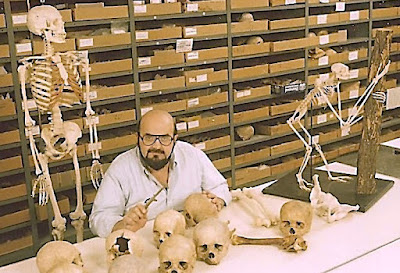
The late George Armelagos during the 1980s. He and fellow faculty members built Emory's Department of Anthropology into a powerhouse of the biocultural approach to the field.Sirak came to Emory as a graduate student in 2012 to study human bones and paleopathology under Armelagos. By that time, he and fellow faculty members had built Emory’s Department of Anthropology into a powerhouse of the biocultural approach to the field. In particular, Armelagos, his colleagues and graduate students studied the remains of the Sudanese Nubians to learn about patterns of health, illness and death in the past.
A long missing piece in the studies of this population, however, was genetic analysis. So, in 2013, Armelagos sent Sirak to one of the best ancient DNA labs in the world, University College Dublin, with samples of the Nubian bones.
“I had no interest in genetics,” Sirak recalls, “but George was a visionary who believed that DNA was going to become a critical part of anthropological research.”
Sirak soon became hooked when she saw how she could combine her interest in ancient bones with insights from DNA. She formed collaborations not just in Dublin but at Harvard Medical School’s Department of Genetics and elsewhere, investigating mysteries surrounding deaths going back anywhere from decades to ancient times.
Armelagos was 77 and still mentoring Sirak, his last graduate student, when he died of pancreatic cancer in 2014. Dennis Van Gerven, an emeritus professor of anthropology at the University of Colorado at Boulder, took over Sirak’s mentorship, along with Thompson. Van Gerven was among Armelagos’ first group of students, and he also spent decades studying the Sudanese Nubians.
Sirak stuck with her PhD dissertation project of trying to collect enough ancient DNA from the Nubian remains for analysis.
“Ancient DNA is difficult to recover from areas that are extremely hot, because DNA tends to degrade in heat,” she explains.
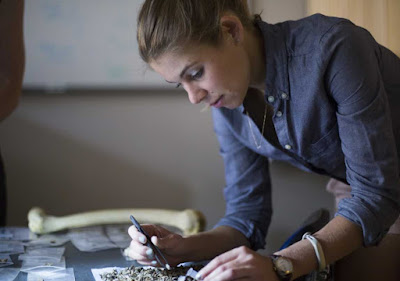
Genetic sequencing techniques kept improving, however, and Sirak was working at the forefront of the effort. In 2015, while still an Emory graduate student, she was among the researchers who realized that a particular part of the petrous bone consistently yielded the most DNA. This pyramid-shaped bone houses several parts of the inner ear related to hearing and balance. In addition, Sirak developed a technique to drill into a skull and reach this particular part of the petrous bone in the most non-invasive way possible, while also getting enough bone powder for DNA analysis. The use of this part of the petrous bone is now the gold standard in ancient DNA analysis.
In 2018, Sirak received her PhD from Emory and went on to work in the lab of David Reich, a geneticist at Harvard Medical School who specializes in the population genetics of ancient humans.
She and her colleagues continued to push the boundaries of what’s possible with ancient DNA sequencing. They managed to get whole-genome samples from the petrous bones of 66 of the Sudanese Nubians, ushering in a whole new era of bioarchaeology for the Nile Valley. “I don’t think we would have succeeded in this work had we not known to focus on the specific part of the petrous bone,” Sirak says.
“It’s incredible to me that George asked me to focus on ancient DNA back in 2012, long before these techniques were developed,” she adds. “He had a way of making anyone who was working with him really feel important and powerful and that gave me the confidence to strike out on a pioneering path.”
“George Armelagos’ influence is everywhere,” adds Thompson, explaining that he also advised many senior people who mentored her early in her career.
Funded by National Geographic Explorer grants, Sirak is now working with Sudanese colleagues to gather and analyze ancient DNA samples from other geographic locations in the Nile Valley, going even deeper into its past, to add more details to the story of how people moved, mixed and thrived in the region across millennia.
As the last graduate student of Armelagos — and then a mentee of Van Gerven, one of Armelagos’ first students — Sirak feels like she is completing a circle. The publication of the current paper is the realization of Armelagos’ last wishes for the project.
“It’s really special for me to be able to use ancient DNA to build on decades of anthropological and archeological research for the region,” Sirak says. “I know that George would be proud and thrilled. I’m part of this amazing lineage of researchers now. And the desire to continue what they started is a huge motivation for me.”
In addition to Reich, Thompson and Van Gerven, senior authors of the Nature Communications paper include Nick Patterson (Broad Institute of Harvard and MIT) and Ron Pinhasi (University College, Dublin). Co-authors include researchers from these institutions as well as the University of Vienna, the University of Coimbra in Portugal, the Howard Hughes Medical Institute, the University of Pompeu Fabra in Barcelona, the University of Georgia, the University of California, Santa Cruz, and the University of Michigan.
Related:
Emory students help unravel prehistoric mysteries
Malawi yields oldest-known DNA from Africa
Wednesday, November 17, 2021
How grandmothers' brains react to the sight of their grandchildren
By Carol Clark
Many people lucky enough to have grown up with doting grandmothers know that they can burnish a child’s development in unique and valuable ways. Now, for the first time, scientists have scanned grandmothers’ brains while they’re viewing photos of their young grandchildren — providing a neural snapshot of this special, inter-generational bond.
Proceedings of the Royal Society B published the first study to examine grandmaternal brain function, conducted by researchers at Emory University.
“What really jumps out in the data is the activation in areas of the brain associated with emotional empathy,” says James Rilling, lead author and professor in Emory's Department of Anthropology and Department of Psychiatry and Behavioral Sciences. “That suggests that grandmothers are geared toward feeling what their grandchildren are feeling when they interact with them. If their grandchild is smiling, they’re feeling the child’s joy. And if their grandchild is crying, they’re feeling the child’s pain and distress.”
In contrast, the study found that when grandmothers view images of their adult child, they show stronger activation in an area of the brain associated with cognitive empathy. That indicates they may be trying to cognitively understand what their adult child is thinking or feeling and why, but not as much from the emotional side.
“Young children have likely evolved traits to be able to manipulate not just the maternal brain, but the grand maternal brain,” Rilling says. “An adult child doesn’t have the same cute ‘factor,’ so they may not illicit the same emotional response.”
Co-authors of the study are Minwoo Lee, a PhD candidate in Emory’s Department of Anthropology, and Amber Gonzalez, a former Emory research specialist.
“I can relate to this research personally because I spent a lot of time interacting with both of my grandmothers,” Lee says. “I still remember warmly the moments I had with them. They were always so welcoming and happy to see me. As a child, I didn’t really understand why.”
It’s relatively rare, Lee adds, for scientists to study the older human brain outside of the problems of dementia or other aging disorders.
“Here, we’re highlighting the brain functions of grandmothers that may play an important role in our social lives and development,” Lee says. “It’s an important aspect of the human experience that has been largely left out of the field of neuroscience.”
Rilling’s lab focuses on the neural basis of human social cognition and behavior. Motherhood has been extensively studied by other neuroscientists. Rilling is a leader in researching the lesser-explored neuroscience of fatherhood.
Grandmothers interacting with grandchildren offered new neural territory.
“Evidence is emerging in neuroscience for a global, parental caregiving system in the brain,” Rilling says. “We wanted to see how grandmothers might fit into that pattern.”
Humans are cooperative breeders, meaning that mothers get help caring for their offspring, although the sources of that help vary both across and within societies.
“We often assume that fathers are the most important caregivers next to mothers, but that’s not always true,” Rilling says. “In some cases, grandmothers are the primary helper.”
In fact, the “grandmother hypothesis” posits that the reason human females tend to live long past their reproductive years is because they provide evolutionary benefits to their offspring and grandchildren. Evidence supporting this hypothesis includes a study of the traditional Hadza people of Tanzania, where foraging by grandmothers improves the nutritional status of their grandchildren. Another study of traditional communities showed that the presence of grandmothers decreases their daughters’ interbirth intervals and increases the number of grandchildren.
And in more modern societies, evidence is accumulating that positively engaged grandmothers are associated with children having better outcomes on a range of measures, including academic, social, behavior and physical health.
"If their grandchild is smiling, they're feeling the child's joy," Rilling says. "And if their grandchild is crying, they're feeling the child's pain and distress."For the current study, the researchers wanted to understand the brains of healthy grandmothers and how that may relate to the benefits they provide to their families.
The 50 participants in the study completed questionnaires about their experiences as grandmothers, providing details such as how much time they spend with their grandchildren, the activities they do together and how much affection they feel for them. They also underwent functional magnetic resonance imaging (fMRI) to measure their brain function as they viewed pictures of their grandchild, an unknown child, the same-sex parent of the grandchild, and an unknown adult.
The results showed that, while viewing pictures of their grandchildren, most participants showed more activity in brain areas involved with emotional empathy and movement, compared to when they were viewing the other images.
Grandmothers who more strongly activated areas involved with cognitive empathy when viewing pictures of their grandchild reported in the questionnaire that they desired greater involvement in caring for the grandchild.
Finally, compared with results from earlier study by the Rilling lab of fathers viewing photos of their children, grandmothers more strongly activated regions involved with emotional empathy and motivation, on average, when viewing images of their grandchildren.
“Our results add to the evidence that there does seem to be a global parenting caregiving system in the brain, and that grandmothers’ responses to their grandchildren maps onto it,” Rilling says.
One limitation to the study, the researchers note, is that the participants skewed towards mentally and physically healthy women who are high-functioning grandmothers.
The study opens the door to many more questions to be explored. “It would be interesting to also look at the neuroscience of grandfathers and how the brain functions of grandparents may differ across cultures,” Lee says.
An especially gratifying aspect of the project for Rilling was personally interviewing all the participants himself. “It was fun,” he says. “I wanted to get a sense of the rewards and challenges of being a grandmother.”
The main challenge many of them reported was trying not to interfere when they disagreed with the parents over how their grandchildren should be raised and what values should be instilled in them.
“Many of them also said how nice it is to not be under as much time and financial pressure as they were when raising their children,” Rilling says. “They get to enjoy the experience of being a grandmother much more than they did being parents.”
This work was supported in part by the Silvia O. Conte Center for Oxytocin and Social Cognition.
Related:
Five surprising facts about fathers
Brain scans link oxytocin to paternal nurturing
Dads show gender biases, in both brain responses and behaviors, toward toddlers