Showing posts with label Psychology. Show all posts

Friday, April 3, 2026

Seals and sea lions provide clues to evolution of vocalization

A harbor seal relaxing on shore. (Wikipedia Commons, Charles J. Sharp)

Neuroscientists uncovered new insights into a key evolutionary question: Why can humans talk when most animals can’t? 

The journal Science published the research led by Emory University and the New College of Florida. The findings suggest that seals and sea lions may have vocal flexibility as a side effect of developing a brain “bypass” for voluntary breath control. This same bypass allowed them to adapt to aquatic life. 

The comparative study examined the brains of coyotes along with those of sea lions, elephant seals and harbor seals — marine carnivores with varying degrees of vocal control that are evolutionary cousins to canines. 

Seals are among the few animal species known to have the super vocal flexibility that allows them to mimic human voices. Sea lions have also demonstrated good vocal plasticity on a more limited scale. The neurobiology of these capabilities, however, was not known. 

Senior author Gregory Berns, Emory professor of psychology, and first author Peter Cook, a former Emory postdoctoral fellow, used the technique of diffusion magnetic resonance imaging (MRI) on post-mortem animal brains, giving them a view of connective neural pathways across species. 

All the brains used in the study came from wild animals that died naturally in rehabilitation facilities or had to be euthanized due to injuries.


Related:

How the brain charts emotion in a map-like way

Co-authors Philip Kragel, assistant professor of psychology, and Yumeng Ma, a PhD student in Kragel's Emotion Cognition and Computation Lab. (Photos by Carol Clark)

It is well established in psychology that humans conceptualize emotions by features known as valence (the degree of pleasantness or unpleasantness) and arousal (the intensity of bodily reactions, such as rapid breathing or a racing heart). 

If you think of “pleasantness” as longitude and “bodily reaction” as latitude, you can imagine a “mental map,” with nodes that “chart” knowledge of emotion. 

The neural mechanisms giving rise to this configuration, however, have remained unclear. 

Now, a new study reveals that hippocampal-prefrontal circuits — neural structures implicated in forming other types of cognitive maps — could support the mental mapping of emotion. 

Nature Communications published the research by neuroscientists at Emory University. The results showed how the hippocampus represents emotion concepts in a structured hierarchy of “nodes” of pleasantness and bodily reaction, while the ventromedial prefrontal cortex more accurately tracks relationships between these different nodes, or how they are distributed on the mental map.


Related:


Tuesday, August 12, 2025

Evolving views: A new look at the Scopes Trial

Emory professor of psychology Harold Gouzoules, left, and his son Alexander Gouzoules, an Emory alum who is a legal scholar.

A combination of inherited genes and life experiences led Alexander Gouzoules (a legal scholar) and his father, Harold Gouzoules (an evolutionary biologist), to co-author a book about the 1925 Scopes trial. 

“The Hundred Years’ Trial: Law, Evolution, and the Long Shadow of Scopes v. Tennessee” blends their expertise. Johns Hopkins University Press published the book, marking the centenary of the fierce, public legal battle over the right to teach evolution in a Tennessee high school. 

“We had the ideal meshing of interests to take on the topic in a new way,” says Harold Gouzoules, an Emory professor of psychology who studies the evolution of primate social behavior. “I took on the science and Alex covered the legal ramifications of the trial.”

Monday, May 12, 2025

Children as young as five can navigate a 'Tiny Town'

A playground scene in Tiny Town. (Dilks lab)

Many behavioral studies suggest that using landmarks to navigate through large-scale spaces — known as map-based navigation — is not established until around age 12. 

A neuroscience study at Emory University counters that assumption. Through experiments combining brain scans and a virtual environment the researchers dubbed Tiny Town, they showed that five-year-olds have the brain system that supports map-based navigation. 

The journal Proceedings of the National Academy of Sciences published the finding, the first neural evidence that this cognitive ability is in place in such young children. 

“While large-scale navigation abilities certainly continue to develop throughout childhood, our findings show that the underlying neural system is established remarkably early,” says Yaelan Jung, first author of the study and a postdoctoral fellow in Emory’s Department of Psychology. 

“Rather than taking a decade or more, map-based navigation is underway in half that time,” adds Daniel Dilks, associate professor of psychology and senior author of the study. “Five-year-olds have the brain system enabling them to find their way around a tiny, virtual town. They not only know that the ice cream store in the mountain region is different than the ice cream store in the lake region, they know how to navigate the streets to get to each of them.”


Related:


Thursday, November 21, 2024

A snapshot of scientific thought on emotions in animals

Wild capuchin monkeys in Costa Rica where Emory anthropologist Marcela Benítez is studying their social behaviors. (Capuchinos de Taboga)

The journal Royal Society Open Science published a survey of 100 researchers of animal behavior, providing a unique view of current scientific thought on animal emotions and consciousness. 

“As far as we know, this is the first assessment of how animal behavior researchers across a range of disciplines think about emotions and consciousness in non-human animals,” says Marcela Benítez, assistant professor of anthropology at Emory University and corresponding author of the paper. “It gives us a snapshot in time so that 20 years from now, we can revisit how scientific experts may have changed their views.” 

A majority of the survey respondents ascribed emotions to “most” or “all or nearly all” non-human primates (98%), other mammals (89%), birds (78%), octopus, squids and cuttlefish (72%) and fish (53%). And most of the respondents ascribed emotions to at least some members of each taxonomic group of animals considered, including insects (67%) and other invertebrates (71%). 

The survey also included questions about the risks in animal behavioral research of anthropomorphism (inaccurately projecting human experience onto animals) and anthropodenial (willful blindness to any human characteristics of animals). 

“It’s surprising that 89% of the respondents thought that anthropodenial was problematic in animal behavioral research, compared to only 49% who thought anthropomorphism poses a risk,” Benítez says. “That seems like a big shift.” 

Anthropomorphism, she notes, has long been a leading argument against those who attributed feelings to animals.


Related:

Monday, October 21, 2024

Exploring the nature of fathers

"My academic life informed my personal life and vice versa as I wrote the book," Rilling says. "It was an interesting interplay." (Photo by Kay Hinton)

In a new book, James Rilling interweaves his personal experiences as a son, husband and dad with the latest scientific insights into fatherhood. The MIT Press published “Father Nature: The Science of Paternal Potential.” 

“It’s about how and why human males evolved the capacity to be involved caregivers, how that care benefits their children, and the circumstances in which it is more common,” says Rilling, a professor in Emory University’s Department of Psychology and Department of Psychiatry and Behavioral Sciences. “The intended audience is anyone who is, has or knows a father.” 

Rilling explores the neural basis of human social cognition and behavior as the director of the Laboratory for Darwinian Neuroscience. Around the time of the birth of his first child, he realized that paternal caregiving was a neglected research topic and he decided to make it a focus of his lab. 

He also began teaching an undergraduate course on fatherhood.


Related:

Tuesday, October 15, 2024

Spiny Mice Point to New Path in Neuroscience

Spiny mice live in arid environments in Africa, the Middle East and southern Asia.

By Carol Clark

Scientists zeroed in on brain circuitry powering the desire of spiny mice to live in large groups, opening the door to a new model for the study of complex social behaviors in mammals. 

Current Biology published the work led by researchers at Emory University. It shows that neural signaling from the brain’s anterior cingulate cortex to the lateral septum drives the preference for spiny mice (Acomys) to affiliate with large peer groups. 

“To our knowledge, this is the first study to identify neural circuitry that promotes group-size preferences in a mammal,” says Aubrey Kelly, senior author of the study and associate professor of psychology at Emory. “We hope that our work paves the way for new insights into complex social behaviors in a range of mammals, including humans.” 

The Kelly lab made the breakthrough by developing methods to use spiny mice as a laboratory model for social neuroscience. 


Related:

Monday, July 29, 2024

How cows expanded a neuroscientist's mind

"Cows are emotional, intelligent and loyally affectionate," says Gregory Berns, Emory professor of psychology.

During the COVID-19 pandemic, Emory neuroscientist Gregory Berns moved with his wife to a farm about an hour south of Atlanta. His reinvention, from city dweller to farmer, led to Berns’ upcoming book, “Cowpuppy: An Unexpected Friendship and a Scientist’s Journey into the Secret World of Cows.” Set for publication by Harper Horizon on Aug. 20, the book describes Berns’ crash course in becoming a cattleman and his ongoing fascination with the interior world of cows. 

“I originally got cows for biological help, to keep the grass down,” Berns explains. “But then my relationship with them turned into something more. I started seeing the world through a cow’s eyes. There’s a common misconception that cows are dumb animals, but that’s just because most people haven’t had the opportunity to interact with them. I decided it was time to set the record straight on cow brains.”

His new lifestyle also inspired Berns to develop an undergraduate class to debut this fall: “Psychology of Sustainability.” 


Related:

Thursday, March 28, 2024

'Jeopardy!' contestant creates buzz with psychological study of trivia experts

'Jeopardy!' contestant and Emory psychologist Monica Thieu, shown with host Ken Jennings, during the 2024 "Jeopardy!" Invitational Tournament.

Monica Thieu is a four-time "Jeopardy!" contestant and a postdoctoral fellow in Emory's Department of Psychology. Psychonomic Bulletin & Review recently published her finding that two memory systems — one for facts and another for personal experiences  are more entwined in the minds of top trivia experts compared to others. 

"In trivia experts, it appears that these two systems are talking to each other in unique ways," Thieu says. "Our findings for this special population may help us better understand how memory works in normative populations."

Thieu says her personal experience in trivia competitions helped in the design of the study. 

"It's trick to make sure that lab experiments are both rigorous and reflect lived experience," Thieu says. "I know the world of trivia experts well."


Related:


Monday, March 18, 2024

Primatologist Frans de Waal remembered for bringing apes 'a little closer to humans'

Frans de Waal shown overlooking the chimpanzee habitat at the Emory National Primate Research Center.

By Carol Clark

Emory University primatologist Frans de Waal — who pioneered studies of animal cognition while also writing best-selling books that helped popularize the field around the globe — passed away March 14, 2024, from stomach cancer. 

De Waal, Charles Howard Candler Professor Emeritus of Psychology and former director of the Living Links Center for the Advanced Study of Ape and Human Evolution at the Emory National Primate Research Center, was 75. From his groundbreaking 1982 book “Chimpanzee Politics: Power and Sex Among Apes” to 2019’s “Mama’s Last Hug: Animal Emotions and What They Tell Us About Ourselves,” de Waal shattered long-held ideas about what it means to be an animal and a human. 

“One thing that I’ve seen often in my career is claims of human uniqueness that fall away and are never heard from again,” de Waal said in 2014. “We always end up overestimating the complexity of what we do. That’s how you can sum up my career: I’ve brought apes a little closer to humans but I’ve also brought humans down a bit.” 

 Read the full story here by clicking here.

Wednesday, March 6, 2024

Atlanta Science Festival returns to inspire discovery for all ages

A middle-school student experiences an Emory chemistry lab during a recent community outreach event. 

The Atlanta Science Festival returns March 9 to 23, inviting curious kids and adults to explore all things science, technology, engineering and mathematics (STEM). Experts in these fields — including many members of the Emory community — will serve as educational guides for more than 150 interactive events. 

“The Atlanta Science Festival aims to bring the community together through their shared love of science,” says Meisa Salaita, co-founder and co-executive director of Science ATL, the engineers of the festival. “Through these events, we hope to inspire and empower the next generation to pursue their dreams.” 

Participants can take a crash course on the basics of AI, create an herbarium of medicinal plants, go into the field with researchers studying microplastic pollution in a stream, take a behind-the-scenes tour of the latest advances in healthcare technology and even get a taste of the physics of cheese making. 

Now in its 11th year, the Atlanta Science Festival was co-founded by Emory, Georgia Tech and the Metro Atlanta Chamber. 

“We have grown into a mainstay of Atlanta,” says Salaita, noting that many of the events fill up quickly. “The festival is something that people look forward to every spring.” 

Monday, May 15, 2023

'Love hormone' guides young songbirds in choice of 'voice coach'

Zebra finches are highly social birds and will press a lever in order to hear a recording of another Zebra finch singing. (Photo by Carlos Rodríguez-Saltos)

By Carol Clark

Oxytocin, the so-called “love hormone,” plays a key role in the process of how a young zebra finch learns to sing by imitating its elders, suggests a new study by neuroscientists at Emory University. Scientific Reports published the findings, which add to the understanding of the neurochemistry of social learning. 

“We found that the oxytocin system is involved from an early age in male zebra finches learning song,” says Natalie Pilgeram, first author of the study and an Emory PhD candidate in psychology. “It’s basic science that may lead to insights into the process of vocal learning across the animal kingdom, including humans.” 

“Our results suggest that the neurochemistry of early social bonds, particularly during language learning, may be relevant in studies of autism,” adds Donna Maney, a professor of neuroscience in Emory’s Department of Psychology and senior author of the study. 

Young male zebra finches learn to sing by listening to an adult male tutor that they choose to pay close attention to, normally their biological father or a “foster” father who nurtures them. This social process holds some similarities for how children learn to speak, making the birds a laboratory model for the neural underpinnings of social vocal learning. 

In the current paper, the researchers show how oxytocin, a hormone essential to social bonding, influences young finches exposed only to the songs of unfamiliar males. In experiments, blocking the young birds’ oxytocin receptors while they listened to a male biased the birds against that male’s song. Instead they preferred to listen to and eventually learn the song of a male they heard when their oxytocin receptors were allowed to function normally. 

The paper builds on previous work by the Maney lab regarding the hormonal and genetic influences on social behavior. Her lab is working with researchers at the Marcus Autism Center in Atlanta to maximize any potential translational impact of its research findings. 

Finding their voice 

Zebra finches are highly social birds. In the wild they nest together in large colonies. Only adult males sing, primarily to court females. 

From the time they hatch, the males begin listening for song, and memorizing particular songs, even before they can actually sing one. “Up until around day 50, they are making little cheeps and warbles, what we call ‘subsong,’” Pilgeram explains. “It’s similar to human infants who begin to babble at around six months without actually talking.” 

During this sensitive listening phase, a male zebra finch pays closest attention to the song of its father, even though it can hear other adult males nearby. 

In a laboratory environment, research shows that if a biological father is removed from a cage before a male hatches and then substituted with a “foster father” that they can interact with, the young male will prefer the song of the foster father over other males it can hear. The young males demonstrate this preference by pressing levers that allow them to hear playback of different songs. 

Learning from their environment 

“The young birds have got to learn all that they can from their environment,” Pilgeram says. “Just as during human development, the birds pay the closest attention to their immediate caregivers, on whom they rely for everything.” 

Around day 50, the young male finches enter puberty and what is called the “plastic song phase.” During this time, they practice their song motor skills and actively try to produce song. Although they begin to shift their attention away from their fathers and show a preference for hearing songs of other males, each young male still practices dad’s tune. 

By day 100, most male zebra finches are fully singing their father’s song. They have reached adulthood and their tune has “crystalized” into the song that they will sing for the rest of their lives. 

In previous research, the Maney lab found that the stronger the preference a male zebra finch shows for its father’s song during the early listening phase, the more closely its crystalized adult song will mimic that of the father. 

The role of oxytocin 

For the current paper, the researchers wanted to test whether the oxytocin system played a role in that preference. 

The research centered on male juvenile zebra finches hatched in the lab. At day four, the fathers were removed from each of the youngsters’ cages so they were raised only by their mothers. The cages were enclosed in chambers that prevented the young birds from hearing song from other birds housed nearby. 

Beginning at day 27 in a young bird’s life, it was exposed to a series of tutoring sessions by two different adult male tutors that it had never heard. The tutor’s cage was placed next to the cage of the young bird, or pupil. When it was exposed to one of the tutors, the pupil was given a substance that blocked its oxytocin receptors from activating. When the young bird was exposed to the other tutor it received a control substance that allowed its oxytocin receptors to function normally. 

After completing a series of tutoring sessions, the pupils were presented with two different levers they could press in their cages. Pressing one lever was more likely to play the song they heard when their oxytocin receptors were blocked. The other lever was more likely to play the song they heard with normally functioning oxytocin. 

The results showed that early in their development, the juveniles favored the song that they heard when their oxytocin was not blocked. 

Building on past findings 

“We also found that when their oxytocin was not blocked, the birds’ developmental milestones fit the same data curve as in our previous research,” Maney says. “They showed an early preference for the song of one tutor, then switched to preferring the other song during puberty.” 

The preference flattened out as they began singing the song of their chosen tutor, she adds. And the stronger the preference that they showed for the chosen tutor’s song during the early listening phase, the more closely their own adult song resembled that of the chosen tutor. 

The researchers also noted behavioral differences in the way the pupils and tutors interacted. With normally functioning oxytocin, a pupil pecked more often at the wall of its cage facing the tutor and more often preened in a fashion known to be associated with focused listening in the birds, compared to when its oxytocin was blocked. 

“Our results suggest that the oxytocin system is involved in how an animal decides where to focus its attention very early in its life,” Pilgeram says. 

Co-authors of the study include Carlos Rodríguez-Saltos, who received his doctorate from Emory and is now at Illinois State University; postdoctoral fellow Nicole Baran; research technicians Matthew Davis and Erik Iverson; and Emory undergraduates Sumin Lee, Emily Kim and Aditya Bhise. 

The work was funded by the National Science Foundation and the Silvio O. Conte Center for Oxytocin and Social Cognition. 

Related:

How a single gene drives aggression in songbirds 

Songbird data yields new theory for learning sensorimotor skills

Wednesday, March 22, 2023

As the worm turns: New twists in behavioral association theories

The researchers conducted experiments on C. elegans, a roundworm with just 300 neurons, that offers a simple laboratory model for studying how an animal learns.

By Carol Clark

Physicists have developed a dynamical model of animal behavior that may explain some mysteries surrounding associative learning going back to Pavlov’s dogs. The Proceedings of the National Academy of Sciences (PNAS) published the findings, based on experiments on a common laboratory organism, the roundworm C. elegans. 

“We showed how learned associations are not mediated by just the strength of an association, but by multiple, nearly independent pathways — at least in the worms,” says Ilya Nemenman, an Emory professor of physics and biology whose lab led the theoretical analyses for the paper. “We expect that similar results will hold for larger animals as well, including maybe in humans.” 

“Our model is dynamical and multi-dimensional,” adds William Ryu, an associate professor of physics at the Donnelly Centre at the University of Toronto, whose lab led the experimental work. “It explains why this example of associative learning is not as simple as forming a single positive memory. Instead, it’s a continuous interplay between positive and negative associations that are happening at the same time.” 

First author of the paper is Ahmed Roman, who worked on the project as an Emory graduate student and is now a postdoctoral fellow at the Broad Institute. Konstaintine Palanski, a former graduate student at the University of Toronto, is also an author. 

The conditioned reflex

More than 100 years ago, Ivan Pavlov discovered the “conditioned reflex” in animals through his experiments on dogs. For example, after a dog was trained to associate a sound with the subsequent arrival of food, the dog would start to salivate when it heard the sound, even before the food appeared. 

About 70 years later, psychologists built on Pavlov’s insights to develop the Rescorla-Wagner model of classical conditioning. This mathematical model describes conditioned associations by their time-dependent strength. That strength increases when the conditioned stimulus (in Pavlov dog’s case the sound) can be used by the animal to decrease the surprise in the arrival of the unconditioned response (the food). 

Such insights helped set the stage for modern theories of reinforcement learning in animals, which in turn enabled reinforcement learning algorithms in artificial intelligence systems. But many mysteries remain, including some related to Pavlov’s original experiments. 

After Pavlov trained dogs to associate the sound of a bell with food he would then repeatedly expose them to the bell without food. During the first few trials without food, the dogs continued to salivate when the bell rang. If the trials continued long enough, the dogs “unlearned” and stopped salivating in response to the bell. The association was said to be “extinguished.” 

Pavlov discovered, however, that if he waited a while and then retested the dogs, they would once again salivate in response to the bell, even if no food was present. Neither Pavlov nor more recent associative-learning theories could accurately explain or mathematically model this spontaneous recovery of an extinguished association. 

Teasing out the puzzle

Researchers have explored such mysteries through experiments with C. elegans. The one-millimeter roundworm only has about 1,000 cells and 300 of them are neurons. That simplicity provides scientists with a simple system to test how the animal learns. At the same time, C. elegans’ neural circuitry is just complicated enough to connect some of the insights gained from studying its behavior to more complex systems. 

Earlier experiments have established that C. elegans can be trained to prefer a cooler or warmer temperature by conditioning it at a certain temperature with food. In a typical experiment, the worms are placed in a petri dish with a gradient of temperatures but no food. Those trained to prefer a cooler temperature will move to the cooler side of the dish, while the worms trained to prefer a warmer temperature go to the warmer side. 

But what exactly do these result mean? Some believe that the worms crawl toward a particular temperature in expectation of food. Others argue that the worms simply become habituated to that temperature, so they prefer to hang out there even without a food reward. 

The puzzle could not be resolved due to a major limitation of many of these experiments — the lengthy amount of time it takes for a worm to traverse a nine-centimeter petri dish in search of the preferred temperature. 

Measuring how learning changes over time

Nemenman and Ryu sought to overcome this limitation. They wanted to develop a practical way to precisely measure the dynamics of learning, or how learning changes over time. 

Ryu’s lab used a microfluidic device to shrink the experimental model of nine-centimeter petri dishes into four-millimeter droplets. The researchers could rapidly run experiments on hundreds of worms, each worm encased within its individual droplet. 

“We could observe in real time how a worm moved across a linear gradient of temperatures,” Ryu says. “Instead of waiting for it to crawl for 30 minutes or an hour, we could much more quickly see which side of the droplet, the cold side or the warm side, that the worm preferred. And we could also follow how its preferences changed with time.” 

Their experiments confirmed that if a worm is trained to associate food with a cooler temperature it will move to the cooler side of the droplet. Over time, however, with no food present, this memory preference seemingly decays. 

“We found that suddenly the worms wanted to spend more time on the warm side of the droplet,” Ryu says. “That’s surprising because why would the worms develop a different preference and even avoidance of the temperature they had come to associate with food?” 

Eventually the worm begins moving back and forth between the cooler and warmer temperatures. The researchers hypothesized that the worm does not simply forget the positive memory of food associated with cooler temperatures but instead starts to negatively associate the cooler side with no food. That spurs it to head for the warmer side. Then as more time passes, it begins to form a negative association of no food with the warmer temperature, which combined with the residual positive association to the cold, makes it migrate back to the cooler one. 

“The worm is always learning, all the time,” Ryu explains. “There is an interplay between the drive of a positive association and a negative association that causes it to start oscillating between cold and warm.” 

'It's like when you lose your keys'

Nemenman’s team developed theoretical equations to describe the interactions over time between the two independent variables — the positive, or excitatory, association that drives a worm toward one temperature and the negative, or inhibitory, association that drives it away from that temperature. 

“The side that the worm gravitates toward depends on when exactly you take the measurements,” Nemenman explains. “It’s like when you lose your keys you may check the desk where you usually keep them first. If you don’t see them there right away, you run around different places looking for them. If you still don’t find them, you go back to the original desk figuring you just didn’t look hard enough.” 

The researchers repeated the experiments under different conditions. They trained the worms at different starting temperatures and starved them for different durations before testing their temperature preference, and the worms’ behaviors were correctly predicted by the equations. 

They also tested their hypothesis by genetically modifying the worms, knocking out the insulin-like signaling pathway known to serve as a negative association pathway. 

“We perturbed the biology in specific ways and when we ran the experiments, the worm’s behavior changed as predicted by our theoretical model,” Nemenman says. “That gives us more confidence that the model reflects the underlying biology of learning, at least in C. elegans.” 

The researchers hope that others will test their model in studies of larger animals across species. 

“Our model provides an alternative quantitative model of learning that is multi-dimensional,” Ryu says. “It explains results that are difficult, or in some cases impossible, for other theories of classical conditioning to explain.” 

Related:

Physicists develop theoretical model for neural activity of mouse brain

Machine learning used to understand and predict dynamics of worm behavior

Monday, December 19, 2022

On loneliness and well-being, in Japan and the world

"People tend to think of loneliness as an individual issue but it's a much bigger problem," says Emory anthropologist Chikako Ozawa-de Silva.

By Carol Clark

Chikako Ozawa-de Silva, Emory professor of anthropology, was born and raised in Kagoshima on the southernmost tip of Japan — a historically rich area where different cultures flowed through with the sea trade. 

“I’ve always been interested in understanding human beings from a cross-cultural perspective,” Ozawa-de Silva says. She graduated from Sophia University in Tokyo before heading to Oxford University for a PhD in social and cultural anthropology. Research fellowships took her to Harvard and the University of Chicago before she joined Emory in 2003. 

Her research focuses on the impacts of culture on well-being, including how people experience and respond to suffering. 

Ozawa-de Silva’s most recent book is titled “The Anatomy of Loneliness: Suicide, Social Connection, and the Search for Relational Meaning in Contemporary Japan.” Published by the University of California Press, the book won the Society for East Asian Anthropology’s 2022 Francis Hsu Book Prize. The prize committee called the work “poignant, richly ethnographic and an exemplary instance of a book that really speaks beyond our field. . . . Ozawa-de Silva writes about suicide and loneliness in Japan in ways that speak to wider global trends while giving us some hint at potentially better ways to live.” 

“The Anatomy of Loneliness” also received the 2022 Victor Turner Prize in Ethnographic Writing honorable mention, presented by the Society for Humanistic Anthropology. “This book is a jarring, empathic, and even paradoxical diagnosis of emerging collective social structures that make people feel alone,” the prize committee wrote. “Along the way, readers are introduced to a brave and novel vision for what an inclusive society might mean.” 

In the following Q&A, Ozawa-de Silva talks about her research into loneliness in Japan as well as the worldwide epidemic of loneliness and ways to potentially reduce it. 

Why did you want to write this book? 

In 1998, the suicide rates in Japan jumped across the population — and by more than 50 percent among adolescents — but no one quite understood why. They remained elevated for the next decade. New forms of suicide were emerging, such as internet group suicide, in which individuals come together online and then agree to meet in person to commit suicide collectively. 

There was also a rise in the phenomenon of “hikikomori,” or social withdrawal, when young people do not leave their houses for extended periods of time, instead remaining secluded and entirely dependent on their parents. 

As I researched the causes of suicide in Japan, I discovered one of these to be a deeper underlying issue facing Japanese society — pervasive loneliness. 

How do you define loneliness? 

You can be alone at times and not be lonely. But you can also be physically among people and feel very lonely. 

By loneliness I mean a deep, pervasive sense of not being accepted or acknowledged by others. You feel that you are not cared for or loved. You don’t feel safe. 

On the flip side, when you feel safe and “at home,” it is more difficult to feel lonely. 

Japan may be ahead of the curve compared to many places but it is not the only country facing this problem of pervasive loneliness. The U.S. Surgeon General Vivek Murthy called loneliness a “growing health epidemic” and referenced research showing that social isolation is associated with a reduction in lifespan similar to that caused by smoking 15 cigarettes a day. 

And in 2018, the UK appointed its first minister for loneliness. Loneliness is increasingly recognized globally as a major public health problem. 

What is driving the epidemic of loneliness? 

People tend to think of loneliness as an individual issue but it’s a much bigger problem. Society is producing loneliness. Social structures that diminish compassion and kindness produce loneliness. 

For example, both Japanese and U.S. societies overemphasize productivity at the expense of everything else. So even how we evaluate our self-worth becomes based on our productivity. 

Society is saying that everyone needs to be a striker and to score a lot of points. But you also need midfielders and other players who can pass the ball to the striker. 

No one can win all the time. Even if you are super productive in your job or in other ways, at some point as humans beings we start slowing down and losing productivity. 

And, it seems paradoxical, but being a highly productive winner can feel lonely. The moment you feel special and different from others your sense of connection to them is not as strong. 

Nothing is wrong with being productive but when you overemphasize its value over everything else you lose so much. 

How can this problem be solved? 

The solution is empathy. From a very young age, children are expected to compete with one another but they also need to learn empathy. Research, including research here at Emory, demonstrates that empathy is a skill that can be taught. 

By empathy I don’t mean just feeling someone else’s pain. That can be empathic distress. It’s making the problem about yourself because now you are feeling pain and you want to reduce your own pain. 

Empathy is ultimately about understanding and respecting someone else’s emotions and differences. Cultivating empathy helps produce a sense of belonging. We need to take empathy seriously and help children and young people build skills such as the art of truly listening to other people. It’s important to learn to love and respect other people not for what they can do for you but for who they are. 

Increasingly, I see empathy as central to the discipline of anthropology and to the project of diversity and inclusion. My next book will be on empathy and intimacy. 

Once you develop empathy skills, compassion is the next stage. Compassion is the wish to reduce the pain of other people. 

How has the pandemic influenced the problem of loneliness? 

When the pandemic hit, many more people were suddenly exposed to loneliness. If you didn’t experience loneliness yourself, you probably know someone who did. Loneliness became everybody’s business. 

I hope that the growing awareness of loneliness and the harm it can cause will help to destigmatize it. People may become more receptive to the need to find solutions to the problem. 

The pandemic also made some people take a closer look at their values. Some cracks are starting to show in the idea of focusing on productivity over everything else. We are seeing some shifts toward people prioritizing their quality of life through trends like “quiet quitting,” [or doing the minimum in a job], and the “great resignation,” which could actually be a sign of having more empathy and self-compassion. 

Related:

How grandmothers' brains react to the sight of their grandchildren

Japanese self-analysis digs deep into memories

Are hugs the new drugs?

Monday, October 31, 2022

College, Interrupted: Pandemic took toll on first-year students, study suggests

The study results "support previous research that articulating a 'silver lining' within a stressful event is related to your subsequent well-being," says Robyn Fivush, Emory professor of psychology and co-author of the study.

By Carol Clark

Students who began their college careers in fall 2019, only to have them disrupted by the COVID-19 pandemic in spring 2020, report significantly higher rates of anxiety, depression and academic distress compared with prepandemic samples of first-year students. 

The journal Psychological Science published the analyses of students’ narratives about COVID-19 and self-reported measures of their well-being, in a study conducted by psychologists at Emory University, the University of Kansas, the University of Missouri, the University of Utah and Western Washington University. 

“When the pandemic lockdowns began in 2020 it pulled the rug out from under many people,” says Robyn Fivush, Emory professor of psychology and a co-author of the study. “It was a particularly difficult time for first-year college students, many of whom were away from home for the first time and beginning to explore their adult identities in terms of their relationships, their academic interests and the world of ideas.” 

Fivush’s research focuses on early memory with an emphasis on the social construction of autobiographical memory and the relations among memory, narrative, identity, trauma and coping. 

Jordan Booker, a former postdoctoral student at Emory who is now at the University of Missouri, is first author of the study. 

As universities moved to online courses during the pandemic, the researchers recruited 633 first-year U.S. students, including 84 from Emory, to provide narratives about the impacts of the pandemic on their lives. Narrative prompts included asking the students to describe an event that best captures the challenges they have faced as a result of COVID-19. They were also asked to explain why they chose that particular event to write about and what it says about who they are, who they were and who they might become. 

Their responses spanned a range of challenges, from difficulties with virtual coursework, feelings of isolation, worries about their own health as well as that of family members and financial pressures. 

The study participants also completed self-measurement scales for COVID-19-related stressors and psychological adjustment. The participants repeated these self-measurement scales 12 months later. 

The study found that the pandemic was associated with increased depression, general anxiety, social anxiety, eating concerns, academic distress and hostility relative to prepandemic samples of first-year students. 

Students who reported stressors directly related to the pandemic, such as a job loss or the death or debilitating illness of a loved one, were worse off as a group than those who did not. 

The study’s longitudinal analyses also revealed that on most measures, the participants as a group were not getting better a year later. And the measures for general anxiety and academic distress actually increased during the course of the study. 

Students who were able to narrate their experiences with a sense of personal growth, such as learning about their strengths or deepening their relationships during the pandemic, reported lower levels of distress one year later. 

“These results support previous research showing that articulating a ‘silver lining’ within a stressful event is related to your subsequent well-being,” Fivush says. 

The researchers conclude that recovery from the pandemic-related developmental disruptions is likely to be a long-term process. They recommend that academic institutions increase awareness of the issue among faculty, staff and leaders; emphasize learning experiences that support identity development; and create opportunities for students and the university community to make meaning of the pandemic experience through storytelling opportunities that help develop a growth mindset. 

“Not all of the students who participated in the study are struggling,” Fivush says. “We know that there is a substantial minority who have been able to overcome the stressors of COVID by creating meaning and resilience through narrative. Our next step is to go back into our data and see if we can determine a combination of other factors that predict who is doing okay as opposed to those who may still be struggling.” 

The researchers plan to conduct a follow-up study this year of the participating students, who are now seniors, and into the next year as the students graduate and enter the workforce. 

Related:

First-year students' stories of a pandemic: Study seeks data to help them flourish

How family stories help children weather hard times

Thursday, October 13, 2022

The Self Delusion: A neuroscientist reflects on storytelling and identity in a new book

A farmer is part of Emory psychologist Gregory Berns' new identity. Above he combs "Ricky Bobby," a miniature Zebu bull.

Like many people during the COVID-19 pandemic, Gregory Berns, Emory professor of psychology, took a long hard look at his life and his work and decided to make some major changes. He moved with his family to a farm about an hour south of Atlanta, where he tends to three dogs, four chickens and a small herd of seven cattle.

He also wrote a book, "The Self Delusion: The New Neuroscience of How We Invent — and Reinvent — Our Identities," published by Basic Books. 

"I've always wanted to write about some of the research I did many years ago about how reading fiction changes the brain," Berns says. "The book became more about how narratives make us into who we are."

Read more here about the book and how it reflects the changing trajectory of Berns' own life. 

Related:

How family stories help children weather hard times

A novel look at how stories may change the brain

Thursday, September 22, 2022

Decoding canine cognition: How dogs' minds process visual imagery

To create the video for the experiments, the researchers attached a video recorder to a selfie stick that allowed them to shoot footage from a dog's perspective.

Scientists have decoded visual images from a dog's brain, offering a first look at how the canine mind reconstructs what it sees. 

The Journal of Visualized Research published the research done at Emory University. The results suggest that dogs are more attuned to actions in their environment rather than who or what is doing the action. 

"We showed that we can monitor the activity in a dog's brain and, to at least a limited degree, reconstruct what it is looking at," says Gregory Berns, Emory professor of psychology and corresponding author of the paper. "The fact that we are able to do that is remarkable." 

Read more here. 

Related: 

Dogs process numerical quantities in similar brain regions as humans

Scientists chase mystery of how dogs process words 

Thursday, August 11, 2022

Testosterone promotes 'cuddling,' not just aggression, animal study finds

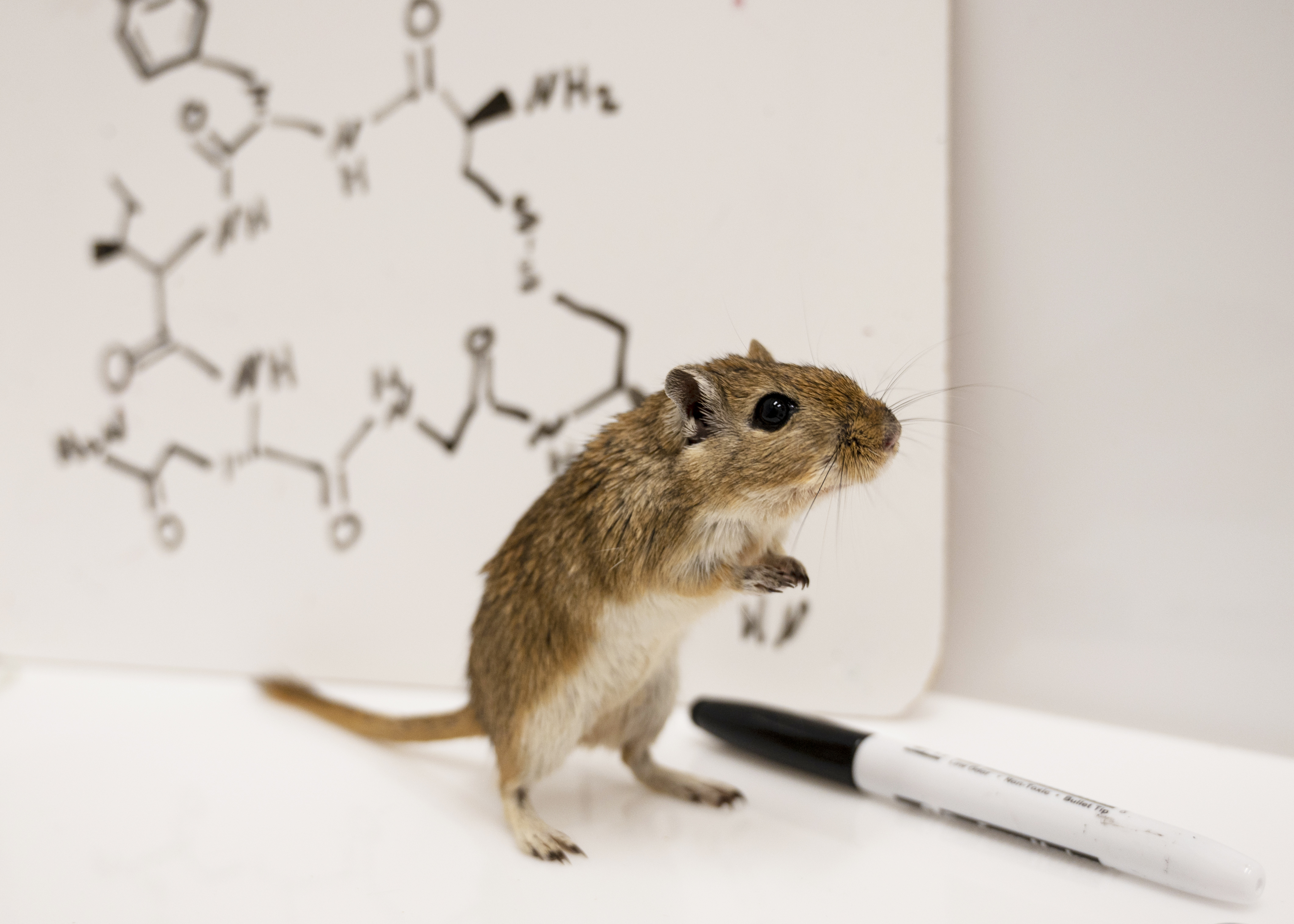
The research used the experimental model of Mongolian gerbils, rodents that form lasting pair bonds and raise their pups together. In addition to demonstrating testosterone's effects on prosocial behavior, the work also revealed how testosterone influences the neural activity of oxytocin cells — the so-called "love hormone" associated with social bonding. (Photo by Aubrey Kelly)

By Carol Clark

Testosterone can foster friendly, prosocial behavior in males, a new animal study finds. The Proceedings of the Royal Society B published the research on Mongolian gerbils conducted by neuroscientists at Emory University. 

“For what we believe is the first time, we’ve demonstrated that testosterone can directly promote nonsexual, prosocial behavior, in addition to aggression, in the same individual,” says Aubrey Kelly, Emory assistant professor of psychology and first author of the study. “It’s surprising because normally we think of testosterone as increasing sexual behaviors and aggression. But we’ve shown that it can have more nuanced effects, depending on the social context.”

The work also revealed how testosterone influences the neural activity of oxytocin cells — the so-called “love hormone” associated with social bonding. 

Richmond Thompson, a neuroscientist at Oxford College of Emory University, is co-author of the study. 

Kelly’s lab has recently focused on the neural effects of oxytocin using rodent experimental models. Thompson’s lab investigates the neural effects of steroids in fish. Both scientists are trying to get at the question of how hormones work in the brain to allow an animal to rapidly change its behavior, depending on the social context. 

In addition to sharing this research interest, Kelly and Thompson share a home as a married couple.

“The idea for this paper was borne out of us talking together over a glass of wine,” Kelly says. “It blends our two research worlds.” 

Testing new questions 

The majority of human studies show that testosterone enhances aggressive behavior. Kelly and Thompson wondered if maybe testosterone might, in lockstep with being able to increase aggression toward intruders, also generally dampen prosocial behaviors. However, they also hypothesized that it might do something more radical — actually enhance positive social responses in contexts in which acting prosocially is appropriate. 

To test this question, the Kelly lab conducted experiments on Mongolian gerbils, rodents that form lasting pair bonds and raise their pups together. While males can become aggressive during mating and in defense of their territory, they also exhibit cuddling behavior after a female becomes pregnant, and they demonstrate protective behavior toward their pups. 

In one experiment, a male gerbil was introduced to a female gerbil. After they formed a pair bond and the female became pregnant, the males displayed the usual cuddling behaviors toward their partners. The researchers then gave the male subjects an injection of testosterone. They expected that the resulting acute rise in a male’s testosterone level would lessen his cuddling behaviors if testosterone generally acts as an antisocial molecule. 

“Instead, we were surprised that a male gerbil became even more cuddly and prosocial with his partner,” Kelly says. “He became like ‘super partner.’” 

Switching contexts 

In a follow-up experiment a week later, the researchers conducted a resident-intruder test. The females were removed from the cages so that each male gerbil that had previously received a testosterone injection was alone in his home cage. An unknown male was then introduced into the cage. 

“Normally, a male would chase another male that came into its cage, or try to avoid it,” Kelly says. “Instead, the resident males that had previously been injected with testosterone were more friendly to the intruder.” 

The friendly behavior abruptly changed, however, when the original male subjects were given another injection of testosterone. They then began exhibiting normal chasing and/or avoidance behaviors with the intruder. “It was like they suddenly woke up and realized they weren’t supposed to be friendly in that context,” Kelly says. 

The researchers theorize that because the male subjects experienced a surge in testosterone while they were with their partners, it not only rapidly increased positive social responses toward them but also primed the males to act more prosocially in the future, even when the context changed and they were in the presence of another male. However, the second testosterone injection then rapidly prompted them to switch their behavior to become more aggressive, as appropriate to the context of a male intruder. 

“It appears that testosterone enhances context-appropriate behavior,” Kelly says. “It seems to play a role in amplifying the tendency to be cuddly and protective or aggressive.” 

The laboratory experiments, in a sense, slowed down what the males might experience almost simultaneously in the wild. In their natural habitat, Kelly explains, mating with a partner elevates testosterone, which primes them to act cuddly in the moment and in the near future while living with their partner, even if the testosterone levels decline. If a rival entered its burrow the gerbil would likely experience another surge of testosterone that would immediately help adjust his behavior so he can fend off the rival and protect his pups. Testosterone, then appears to help animals rapidly pivot between pro- and antisocial responses as the social world changes. 

‘A complicated dashboard’ 

The current study also looked at how testosterone and oxytocin interact biologically. The results showed that the male subjects receiving injections of testosterone exhibited more oxytocin activity in their brains during interactions with a partner compared to males that did not receive the injections. 

“We know that systems of oxytocin and testosterone overlap in the brain but we don’t really understand why,” Kelly says. “Taken together, our results suggest that one of the reasons for this overlap may be so they can work together to promote prosocial behavior.” 

Rather than just flipping an “on” or “off” button to modulate behaviors, hormones seem to play a more nuanced role, Kelly says. “It‘s like a complicated dashboard where one dial may need to move up a bit while another one moves down.” 

Human behaviors are far more complex than those of Mongolian gerbils, but the researchers hope that their findings provide a basis for complementary studies in other species, including humans. 

“Our hormones are the same, and the parts of the brain they act upon are even the same,” Thompson says. “So, learning how hormones like testosterone help other animals adjust to rapidly changing social contexts will not only help us understand the biological nuts and bolts that affect their behavior, but also predict and ultimately understand how the same molecules in human brains help shape our own responses to the social world around us.” 

Jose Gonzalez Abreu, a former research specialist in the Kelly lab, is a co-author of the study. The work was supported by the National Science Foundation. 

Related:

Study shows how a single gene drives aggression in wild songbirds

Athletes' testosterone surges not tied to winning, study finds


Wednesday, March 16, 2022

Atlanta Science Fest celebrates the wonders all around us


A celebration of science once again takes metro Atlanta by storm with the return of the Atlanta Science Festival, ongoing through March 26. More than 100 activities, planned throughout the city, invite families to experience the thrills of discovery, from nature walks to expert talks and hands-on STEM learning opportunities. 

“The festival offers ways for people of all ages to learn something new and to spark a new interest,” says Meisa Salaita, the executive co-director of Science ATL, the non-profit organization that produces the Atlanta Science Festival. “You may not realize that your child has a secret knack for chemistry, or that you enjoy birdwatching, until getting immersed in it.” 

The Atlanta Science Festival, now in its ninth year, was co-founded by Emory, Georgia Tech and the Metro Atlanta Chamber.

Thursday, December 16, 2021

Children's books still show bias toward male protagonists, analysis finds

"Children's stories are incredibly important to a child's development," says Stella Lourenco, Emory associate professor of psychology and senior author of the study.

By Carol Clark

A major analysis of children’s books published during the last 60 years suggests that a bias persists toward male protagonists — despite an overall trend for an increasing proportion of female leads.

PLOS ONE published the results of the analysis, conducted at Emory University, and focused on books that feature a single main character. 

The bias toward male protagonists remained slight in the books overall, at a rate of 1.2 to 1 in the last decade. When broken down by variables and including all publication years, however, some larger gaps were seen. Among male authors overall, for instance, across the six decades the bias toward male protagonists occurred at a rate of 3 to 1. 

“While gender bias in children’s books appears to have declined significantly over the years, we found that bias remains,” says Stella Lourenco, Emory associate professor of psychology and senior author of the study. “We worry about what this mismatch communicates to children, particularly to girls. It’s concerning because disproportionate gender representation in children’s books may contribute to the persistence of biases in society.” 

First author of the study is Kennedy Casey, who did the work through an internship in the Lourenco lab while she was an undergraduate at Princeton University. Kylee Novick, an Emory senior in the Lourenco lab, is co-author of the paper. 

The statistical analysis included 3,280 books, aimed for audiences aged 0 to 16 years, that could be purchased online in the United States, either as hard copies or digitally. The analysis broke down the results by a range of variables, such as the target age group, categories of fiction or non-fiction, whether the protagonist is human or non-human, and by the gender of the authors. 

“We hope our data can provide insights for parents and teachers,” Lourenco says. “We also hope that publishers see our results and do what they can to encourage more equitable gender representation in children’s books.” 

Lourenco’s research focuses on spatial perception and cognition, including sex and socioeconomic differences. 

The largest known gender difference in cognition occurs in visual-spatial reasoning, including the ability to mentally rotate objects. On average, men outperform women on this task of imagining multi-dimensional objects from different points of view. 

A major meta-analysis by the Lourenco lab, however, found that men are not born with this advantage. Instead, males gain a slight advantage in mental-rotation performance during the first years of formal schooling, and this advantage slowly grows with age, tripling in size by the end of adolescence. That finding suggests that other factors besides intrinsic gender differences in spatial reasoning may be at play. 

“One of the focuses of my lab is trying to understand the mechanisms that underlie such gender differences,” Lourenco says. “That includes potential environmental influences that may affect your motivation, confidence and anxiety levels when you’re performing various tasks.”

The researchers decided to explore gender in protagonists of children’s books because a major analysis on that topic did not appear to have been conducted since 2000. 

The results showed that non-fiction books have a greater degree of gender bias for males than do fiction books. And male character bias is higher for fiction featuring non-human characters than for fiction with human characters. 

Books by male authors showed a decline over time in bias for males, but only in books targeted toward younger children. Female authors also declined in male character bias over time, even overrepresenting female characters in books targeted to older children. Female authors continued to favor male leads, however, in books with non-human protagonists. 

Many factors are likely driving the differences in these variables, Lourenco says. For instance, books featuring actual historical characters who were scientists would likely show a bias toward male protagonists, since most scientists in history have been men. 

The current analysis was limited in that it only looked at books focused on a single main character, and it did not consider how the character was depicted in the narrative. 

“As a next step, I hope we can do precise, rigorous experiments on what books children are actually reading and learn what kind of impact the gender representation in those books may have on the children’s attitudes about themselves,” Lourenco says. 

She hopes other researchers will also build off the analysis to study other remaining questions in gender representation in children’s books, including examining trends in the representation of non-binary protagonists. 

“Children’s stories are incredibly important to a child’s development,” Lourenco says. “Exposure to books is a form of enculturation, in addition to building language and reading skills. Children look to stories for inspiration and for role models.”

Related:

Gender gap in spatial reasoning starts in elementary school, meta-analysis finds

Babies spatial reasoning predicts later math skills