Tuesday, February 5, 2013

Bonobos comfort friends in distress

The consolation behavior of young bonobos is a sign of sensitivity to the emotions of others and the ability to take the perspective of another. Photo courtesy of Zanna Clay.

By Lisa Newbern, Woodruff Health Sciences Center

Comforting a friend or relative in distress may be a more hard-wired behavior than previously thought, according to a new study of bonobos, which are great apes known for their empathy and close relation to humans and chimpanzees. The study provides key evolutionary insight into how critical social skills may develop in humans. The results were published by the journal PLOS
One.

Researchers from Emory's Yerkes National Primate Research Center observed juvenile bonobos at the Lola ya Bonobo sanctuary in the Democratic Republic of Congo engaging in consolation behavior more than their adult counterparts. Juvenile bonobos (three-to-seven years old) are equivalent in age to preschool or elementary school-aged children.

Emory psychologists Zanna Clay and Frans de Waal, director of the Living Links Center at Yerkes, led the study.

"Our findings suggest that for bonobos, sensitivity to the emotions of others emerges early and does not require advanced thought processes that develop only in adults," Clay says.

Starting at around age two, human children usually display consolation behavior, a sign of sensitivity to the emotions of others and the ability to take the perspective of another. Consolation has been observed in humans, bonobos, chimpanzees and other animals, including dogs, elephants and some types of birds, but has not been seen in monkeys.

At the Lola ya Bonobo sanctuary, most bonobos come as juvenile or infant orphans because their parents are killed for meat or captured as pets. A minority of bonobos in the sanctuary is second generation and raised by their biological mothers. The researchers found bonobos raised by their own mothers were more likely to comfort others compared to orphaned bonobos. This may indicate early life stress interferes with development of consolation behavior, while a stable parental relationship encourages it, Clay says.

Clay observed more than 350 conflicts between bonobos at the sanctuary during several months. Some conflicts involved violence, such as hitting, pushing or grabbing, while others only involved threats or chasing. Consolation occurred when a third bonobo — usually one that was close to the scene of conflict — comforted one of the parties in the conflict.

Consolation behavior includes hugs, grooming and sometimes sexual behavior. Consolation appears to lower stress in the recipient, based on a reduction in the recipient’s rates of self-scratching and self-grooming, the authors write.

"We found strong effects of friendship and kinship, with bonobos being more likely to comfort those they are emotionally close to," Clay says. "This is consistent with the idea that empathy and emotional sensitivity contribute to consolation behavior."

In future research, Clay plans to take a closer look at the emergence of consolation behavior in bonobos at early ages. A process that may facilitate development of consolation behavior is when older bonobos use younger ones as teddy bears; their passive participation may get the younger bonobos used to the idea, she says.

Related:
Are hugs the new drugs?
Chimps, bonobos yield clues to social brain
Hugs go way back in evolution

Monday, February 4, 2013

The physics of icicles and our lumpy universe


Everyone knows that no two snowflakes are alike, but what about icicles? Physicist Stephen Morris built an icicle-making machine in his University of Toronto lab to tackle this question by systematically studying the shape of icicles and how they grow. (See video above). His research is not just fascinating physics. It could also have implications for preventing dangerous ice formations on airplane wings or power lines.

And icicles are just the tip of the problem. The entire universe is not uniform, instead it’s “a kind of foam or lumpy mass,” Morris says.

Morris is in Atlanta this week, where he will be giving talks about pattern formations in nature, going back to the lumps that developed in the primordial soup of early Earth. You can catch him in a public lecture tonight, Feb. 4 at 6 pm at Georgia Tech, and in an Emory physics colloquia tomorrow, Feb. 5 at 2:30 pm.

Related:
Physicists crack another piece of the glass puzzle
Crystal-liquid interface made visible for the first time

Tuesday, January 29, 2013

Catch a rising star of ichnology

A sea star makes a trail on a barrier island beach, from the book "Life Traces of the Georgia Coast" by Anthony Martin.

Emory ichnologist Tony Martin drew a standing-room-only crowd on Saturday for his Atlanta Science Tavern talk about tracks, burrows, trails, nests, tooth marks, feces and other signs left by plants and animals. Who wouldn't want to follow an expert on tracks?

Here’s an excerpt from a post Martin wrote about his work for the “Wonders and Marvels” blog:

“In reality, the majority of ichnologists ignore humans, and more often use their observations of modern non-human traces as guides for traveling back in time to interpret the products of behavior from earth history. This is how we can interpret when (and why) a trilobite stopped and changed its direction while burrowing along a Paleozoic seafloor more than 400 million years ago. This is how we figure out what a dinosaur was eating on a given day during the Mesozoic Era, and that dung beetles were living with those dinosaurs, making use of the digested part of that dinosaur’s meal. This is how we identify the size and species of fish that swam along a lake bottom more than 50 million years ago, despite it having left only marks from its fins and mouth. Given nearly 10 million species of modern life-forms and their behaviors to consider, four billion years of life history, and innumerable trace fossils that resulted from that life, why should we waste our time being anthropocentric, or otherwise let ourselves be distracted by just our species in the here and now?”

Martin will give another talk on February 5 at the Decatur Library, where he will also be signing copies of his new book, “Life Traces of the Georgia Coast.” And on February 24, Martin will be the guest lecturer at Andalusia, the Milledgeville farm of Flannery O’Connor.

Related:
Lake-bed trails tell ancient fish story
Polar dinosaur tracks open new trail to past
Burrow into a good book on wildlife traces
Insider's guide to Georgia barrier islands

Thursday, January 24, 2013

Canine brain-tumor treatment trials may help humans

Following a seizure, Petey the pit bull was diagnosed with a brain tumor. He is doing well after undergoing treatment in a pilot trial in 2011.

By Janet Christenbury
Woodruff Health Sciences Center

The American Kennel Club Canine Health Foundation, Inc., has awarded the University of Georgia (UGA) College of Veterinary Medicine and Emory University a $119,000 grant over three years to test a newly developed experimental drug to treat dogs with naturally-occurring brain tumors, following partial surgical removal of those tumors.

The goal of the research is to help translate new brain cancer therapies to humans by assessing results in dogs with similar diseases. According to the researchers, the tumors in dogs, known as spontaneous gliomas, are very similar to human malignant brain tumors both by imaging and biology, and both tend to grow back rapidly. The poor prognosis for dogs with gliomas is similar to human patients. The researchers are hoping the novel treatment being tested will slow down tumor growth.

A seven-year-old pit bull named Petey was the first dog enrolled in the initial pilot trial at UGA in 2011. Following discovery of a brain tumor after a seizure, Petey underwent surgery in September 2011 to remove a portion of the tumor. Simon Platt, a professor of veterinary neurology at UGA, performed the surgery and diagnosed Petey with a glioma. After surgery and for three days, an investigational drug was directly infused into the glioma tumor area via catheters, targeting any residual tumor cells. Petey underwent blood testing and complete neurologic testing confirming no toxicity of the therapeutic agent.

Six weeks after surgery, Petey had a follow-up MRI that revealed the therapeutic agent still within the remaining brain tumor. Petey had another MRI five months after surgery showing a marked reduction in tumor size. Petey is now seizure-free and doing well 15 months after surgery.

Read more.

Tuesday, January 22, 2013

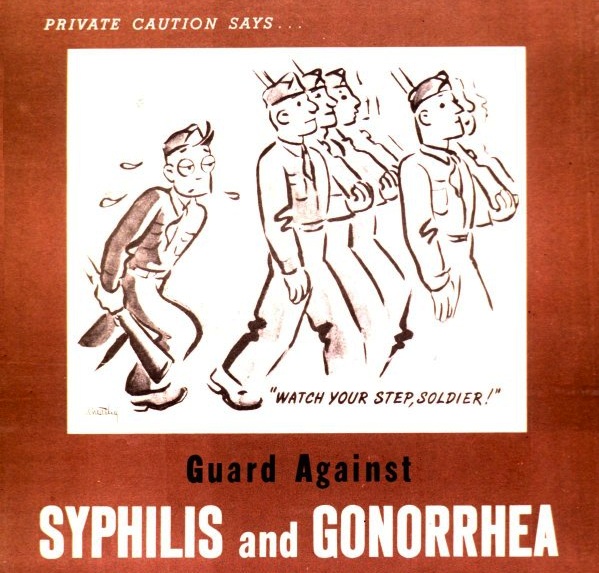
Penicillin, not the pill, may have launched the sexual revolution

The 1950s were not as prudish as they seemed on the surface, says economist Andrew Francis. 

By Carol Clark

The rise in risky, non-traditional sexual relations that marked the swinging ‘60s actually began as much as a decade earlier, during the conformist ‘50s, suggests an analysis recently published by the Archives of Sexual Behavior.

“It’s a common assumption that the sexual revolution began with the permissive attitudes of the 1960s and the development of contraceptives like the birth control pill,” notes Emory University economist Andrew Francis, who conducted the analysis. “The evidence, however, strongly indicates that the widespread use of penicillin, leading to a rapid decline in syphilis during the 1950s, is what launched the modern sexual era.”

As penicillin drove down the cost of having risky sex, the population started having more of it, Francis says, comparing the phenomena to the economic law of demand: When the cost of a good falls, people buy more of the good.

“People don’t generally think of sexual behavior in economic terms,” he says, “but it’s important to do so because sexual behavior, just like other behaviors, responds to incentives.”

Syphilis reached its peak in the United States in 1939, when it killed 20,000 people. “It was the AIDS of the late 1930s and early 1940s,” Francis says. “Fear of catching syphilis and dying of it loomed large.”

Penicillin was discovered in 1928, but it was not put into clinical use until 1941. As World War II escalated, and sexually transmitted diseases threatened the troops overseas, penicillin was found to be an effective treatment against syphilis.


“The military wanted to rid the troops of STDs and all kinds of infections, so that they could keep fighting,” Francis says. “That really sped up the development of penicillin as an antibiotic.”

Right after the war, penicillin became a clinical staple for the general population as well. In the United States, syphilis went from a chronic, debilitating and potentially fatal disease to one that could be cured with a single dose of medicine.

From 1947 to 1957, the syphilis death rate fell by 75 percent and the syphilis incidence rate fell by 95 percent. “That’s a huge drop in syphilis. It’s essentially a collapse,” Francis says.

In order to test his theory that risky sex increased as the cost of syphilis dropped, Francis analyzed data from the 1930s through the 1970s from state and federal health agencies. Some of the data was only available on paper documents, but the Centers for Disease Control and Prevention (CDC) digitized it at the request of Francis.

For his study, Francis chose three measures of sexual behavior: The illegitimate birth ratio; the teen birth share; and the incidence of gonorrhea, a highly contagious sexually transmitted disease that tends to spread quickly.

“As soon as syphilis bottoms out, in the mid- to late-1950s, you start to see dramatic increases in all three measures of risky sexual behavior,” Francis says.

While many factors likely continued to fuel the sexual revolution during the 1960s and 1970s, Francis says the 1950s and the role of penicillin have been largely overlooked. “The 1950s are associated with prudish, more traditional sexual behaviors,” he notes. “That may have been true for many adults, but not necessarily for young adults. It’s important to recognize how reducing the fear of syphilis affected sexual behaviors.”

A few physicians sounded moralistic warnings during the 1950s about the potential for penicillin to affect behavior. Spanish physician Eduardo Martinez Alonso referenced Romans 6:23, and the notion that God uses diseases to punish people, when he wrote: “The wages of sin are now negligible. One can almost sin with impunity, since the sting of sinning has been removed.”

Such moralistic approaches, equating disease with sin, are counterproductive, Francis says, stressing that interventions need to focus on how individuals may respond to the cost of disease.

He found that the historical data of the syphilis epidemic parallels the contemporary AIDS epidemic. “Some studies have indicated that the development of highly active antiretroviral therapy for treating HIV may have caused some men who have sex with men to be less concerned about contracting and transmitting HIV, and more likely to engage in risky sexual behaviors,” Francis says.

“Policy makers need to take into consideration behavioral responses to changes in the cost of disease, and implement strategies that are holistic and longsighted,” he concludes. “To focus exclusively on the defeat of one disease can set the stage for the onset of another if preemptive measures are not taken.”

Images are vintage health messages from NIH National Library of Medicine.

Related:
Skeletons point to Columbus voyage for syphilis origins
Your brain, in love and in lust