Showing posts with label Sociology. Show all posts

Tuesday, August 12, 2025

Evolving views: A new look at the Scopes Trial

Emory professor of psychology Harold Gouzoules, left, and his son Alexander Gouzoules, an Emory alum who is a legal scholar.

A combination of inherited genes and life experiences led Alexander Gouzoules (a legal scholar) and his father, Harold Gouzoules (an evolutionary biologist), to co-author a book about the 1925 Scopes trial. 

“The Hundred Years’ Trial: Law, Evolution, and the Long Shadow of Scopes v. Tennessee” blends their expertise. Johns Hopkins University Press published the book, marking the centenary of the fierce, public legal battle over the right to teach evolution in a Tennessee high school. 

“We had the ideal meshing of interests to take on the topic in a new way,” says Harold Gouzoules, an Emory professor of psychology who studies the evolution of primate social behavior. “I took on the science and Alex covered the legal ramifications of the trial.”

Wednesday, July 2, 2025

Exploring the frontiers of data science

Satellite technology is transforming the field of geography, says Xiao Huang. "It's kind of like being an astronaut in that satellites give you a view of Earth from space."

As a high-tech geographer, Xiao Huang uses remove sensing and AI for insights into how to design more equitable cities, improve management of natural resources, lessen the impact of natural and human-caused disasters, and improve public health policies.

"I love geography and computer technology," says Huang, assistant professor in Emory's Department of Environmental Sciences. "I want to use my knowledge of these fields to help humanity, especially socially disadvantaged communities."

Read the full story here.

Related:

Developing a new approach to control a dangerous urban mosquito in Ethiopia

Friday, May 2, 2025

Developing a new approach to control a dangerous, invasive mosquito in Ethiopia

Edilawit Mesfine, left, and Edel Seifu, both from Jigjiga University, collect data and larvae from a construction site. (Photo by Kim Awbrey)

Emory University received $2.8 million in funding from the Gates Foundation to support its work to develop and test a high-tech, low-cost method to control an invasive mosquito that poses a growing threat of urban malaria in Africa. The three-year project is focused on three cities in Ethiopia: Jigjiga, Semera and Logiya. 

The project’s novel approach to combating malaria combines on-the-ground knowledge of human and mosquito behaviors with detailed environmental imagery from drones and NASA satellites. Machine learning techniques will be applied to the data to develop a model — powered by artificial intelligence — for targeted public health interventions. 

The aim is to efficiently control populations of the invasive Anopheles stephensi mosquito by first, identifying water sources that are most likely to harbor the larvae during the dry season. And secondly, by sharing maps of these precise targets with local public health authorities — via a mobile phone app — to guide their larvae-eradication efforts in the most efficient and effective manner. 

The strategy is based on research on the ecology of stephensi in Jigjiga led by Gonzalo Vazquez-Prokopec, Emory professor of environmental sciences and co-principal investigator for the grant. “It sounds counterintuitive to focus mosquito-control efforts on the dry season,” Vazquez-Prokopec says. “Our research, however, shows that the dry season offers a perfect window of opportunity to cost-effectively control these mosquitoes.” 

Vazquez-Prokopec is an expert on the disease ecology of pathogens spread by vectors, such as mosquitoes. His research considers environmental factors as well as the interactions of mosquitoes, the pathogens they carry, and people. 


Related:


Tuesday, September 10, 2024

The promise and pitfalls of 'climatopias' for building resilience in coastal communities

"We need to invest in projects for low-income groups because they are the most impacted by climate change," says Jola Ajibade, associate professor in Emory's Department of Environmental Sciences. (Photo by Carol Clark)

By Carol Clark

Idowu (Jola) Ajibade grew up in Lagos, Nigeria, a low-lying city built around a lagoon bordered by the Atlantic Ocean. Flooding is a routine occurrence during the rainy season. 

“It was bad,” Ajibade recalls of living on the ground floor of a building during her early childhood. “We would get inundated with water until my family relocated to the upper level in a rental apartment. I don’t have many childhood photos or videos like most people. Our belongings got flooded out yearly — we replaced some items, but some things are just irreplaceable.” 

These experiences are part of what drove Ajibade, associate professor in Emory’s Department of Environmental Sciences, to become an environmental and human geographer. She explores how climate change is transforming the lives, livelihoods, social-cultural landscapes and housing access for low-income groups and historically marginalized communities. 

Nature recently published a commentary by Ajibade and Sameer Shah from the University of Washington considering whether futuristic settlements on water, so-called “climatopias,” are viable ways to build resilience in coastal communities. 

As urban populations boom, even as climate change exacerbates flood risks in coastal areas, governments are working with developers, architects and engineers to try to make their cities more resilient. Many leaders are promoting showcase climatopias as viable solutions. 

Ajibade and Shah, however, take a more cautious approach in their Nature commentary. “Ultimately, climatopias can become technical solutions to a complex global challenge only if stricter planning processes, impact assessments, ecosystem protection and justice for communities are at the heart of any coastal future,” the authors write. 

Examples of climatopias

The Maldives Floating City is a development of modular floating platforms taking shape in the Indian Ocean, set for completion in 2027. The development aims to help the Maldives, one of the world’s low-lying nations, survive the effects of rising sea levels. 

Maasbommel in the Netherlands offers an example of an amphibious climatopia. The 32 amphibious homes of Maasbommel are anchored to the ground but also fastened to flexible mooring posts that allow them to move upward by more than five meters and float during floods. 

Reclamation, or the practice of creating new land from oceans by filling the water with rock, cement and other materials, forms the basis for other climatopia projects worldwide. One famous example is Eko Atlantic, an enclave of sleek, modern skyscrapers rising on a two-square-mile platform of reclaimed land on the Lagos waterfront. 

Dredging for Eko Atlantic began in 2009, and construction is still underway. When completed, Eko Atlantic will comprise offices and luxury condos expected to house 250,000 residents, who will be protected from storm surges by an eight-mile-long, 20-foot-tall wall of concrete and granite. 

Developers laud Eko Atlantic as a way to attract transnational investment, drive economic growth, combat the effects of climate change and house more people in one of the world’s fastest-growing megacities. 

Getting multiple perspectives 

While working on her PhD as a graduate student at Western University in Canada in 2012, Ajibade returned to her hometown to research community vulnerability and resilience in Lagos, a city sharply divided between the rich and poor. 

“I talked to people who lived in slums and those in wealthy areas to get both their perspectives,” she says. “There was torrential rainfall during my visit and, at one point, I had to wade through chest-high water.” 

She notes that construction on the Eko Atlantic project has been blamed for displacing some communities and for diverting water in ways that increase the flooding burden on the poorest of the poor. Others counter that poor communities have caused the increase in flooding by building shanties on drainage systems and filling them with trash. 

Some believe that Eko Atlantic will benefit low-income people by providing service jobs. Others doubt that the economic boon of the pricy new real estate will “trickle down” in ways that benefit those who need it most. 

So is Eko Atlantic worth the billions of dollars that have already been invested in it during the past 16 years? 

“It depends on who you ask,” Ajibade says. 

Improving the drainage infrastructure throughout Lagos, including in the poorest areas, might be another solution that could benefit more people. 

“We need to invest in projects for low-income groups because they are the most impacted by climate change,” she notes. “Climatopias can’t be the focal solution, and they should be carefully considered so that they don’t damage fragile ecosystems, accelerate ocean colonialism or create even more problems for people who are already living on the margins of society.”

Related:

Monday, July 29, 2024

How cows expanded a neuroscientist's mind

"Cows are emotional, intelligent and loyally affectionate," says Gregory Berns, Emory professor of psychology.

During the COVID-19 pandemic, Emory neuroscientist Gregory Berns moved with his wife to a farm about an hour south of Atlanta. His reinvention, from city dweller to farmer, led to Berns’ upcoming book, “Cowpuppy: An Unexpected Friendship and a Scientist’s Journey into the Secret World of Cows.” Set for publication by Harper Horizon on Aug. 20, the book describes Berns’ crash course in becoming a cattleman and his ongoing fascination with the interior world of cows. 

“I originally got cows for biological help, to keep the grass down,” Berns explains. “But then my relationship with them turned into something more. I started seeing the world through a cow’s eyes. There’s a common misconception that cows are dumb animals, but that’s just because most people haven’t had the opportunity to interact with them. I decided it was time to set the record straight on cow brains.”

His new lifestyle also inspired Berns to develop an undergraduate class to debut this fall: “Psychology of Sustainability.” 


Related:

Wednesday, July 24, 2024

White House taps Emory expert to speak on climate resilience panel

“The climate is changing. We also need to think about ways to change ourselves as a society so we can begin to meet the important challenges ahead of us,” says Idowu (Jola) Ajibade, associate professor in Emory University’s Department of Environmental Sciences. 

As a deadly heat waves blanketed parts of the United States, Ajibade spoke on a guest panel of experts for a meeting of the U.S. President’s Council of Advisors on Science and Technology (PCAST). PCAST consists of experts from who advise the president on policy matters where the understanding of science, technology and innovation is key. 

The public meeting, entitled “Social Impact of Research: Climate Resilience,” was livestreamed on July 11 and also recorded. 

Ajibade is an environmental and human geographer. She explores how climate change is transforming the lives, livelihoods, social-cultural landscapes and housing access for members of historically marginalized communities. 

“If we’re going to build resilience to climate change, we need multiple perspectives, multiple expertise and, certainly multiple methods,” Ajibade explains during her PCAST presentation. 

Watch the full presentation in the video above.

Related:


Friday, April 26, 2024

Identifying risks of human flea infestations in plague-endemic areas of Madagascar

A home in the Central Highlands of Madagascar. Residential structures vary greatly in rural areas. (Photos by Adelaide Miarinjara)

By Carol Clark

Madagascar is one of the last places where outbreaks of human bubonic plague still happen regularly. 

Fleas carrying the plague bacterium Yersinia pestis can spread the disease through their bites. And while a species commonly known as “the rat flea” has been fingered as the main culprit in plague outbreaks, a species known as “the human flea” may play a secondary role. 

As an investigator during plague outbreaks in rural Madagascar, medical entomologist Adelaide Miarinjara knew that many households were teeming with these human fleas. Miarinjara grew up in the island nation off the east coast of Africa and is now a postdoctoral fellow at Emory University, collaborating with the Pasteur Institute in Madagascar. 

“We have observed huge variability in the number of fleas in different households in the same village,” she says. “We might collect three or five fleas in one house and hundreds of them in another house.” 

Miarinjara led a study to solve the mystery of this variability. 

PLoS Neglected Diseases published her team’s findings: The abundance of human fleas is primarily associated with households that have a traditional dirt floor covered by a plant-fiber mat, as opposed to households with cement or board floors. A secondary risk factor was keeping animals in the house at night. 

“Flea larvae need humidity, but not too much humidity, to survive,” Miarinjara says, “so the dirt covered by the plant-fiber mat may be holding just the right amount of moisture for them to thrive.” 

She hopes that agencies seeking to improve people’s lives in plague-endemic areas of Madagascar focus on upgrading the flooring in homes and constructing sheds separate from the households for animals.

“Flea infestation raises the risk for getting diseases and it has a big impact on the quality of life,” Miarinjara says. “The constant bites are annoying and lead to lack of sleep.” 

Household flea infestations also promote the overuse of insecticides. Surveys by the researchers reveal that 80% of the households use insecticide to try to battle the fleas. Many people are buying liquid insecticides that are repackaged in empty plastic or glass containers, without labels or instructions for how to apply them, and sold in small, open-air markets. 

Improper use of insecticides is a health risk to people who may be overexposed to the chemicals.

“Overuse of these chemicals is also dangerous because some fleas are developing resistance to insecticides — the frontline tools for battling plague outbreaks,” Miarinjara says. 

“Poverty related to housing construction is a primary challenge that this research identified,” adds Thomas Gillespie, senior author of the study and professor and chair of Emory’s Department of Environmental Sciences. “Resurfacing dirt floors in homes with concrete could improve a range of health and quality-of-life issues, from reducing flea populations in homes to making the floors easier to clean of contaminants such as fecal matter tracked in from the outside.” 

The Gillespie lab is a pioneer in the “one health” approach to epidemics — studying the interactions of people, domestic animals, wildlife and ecosystems to understand how germs jump across species. 

Village residents gather to hear the research team brief them on the purpose of their visit. The women in the foreground are sitting on a traditional plant-fiber mat.

The plague has afflicted humans at least as far back as the Bronze Age and has persisted through the centuries. The advent of antibiotics — which can effectively treat plague — turned the disease into a horror story from the past for much of the world. 

In Madagascar, however, plague returns regularly to claim new victims. Cases typically originate in the rural rice-growing region of the central Highlands during the rainy season. Outbreaks there are associated with agriculture, deforestation, the black rat — and fleas. 

Different flea species have evolved to prefer the blood of one animal over another, although they may feed on a variety of organisms if they are hungry enough. 

Most plague research is centered on the rat flea, or Xenopsylla cheopis. Just one of its bites can transmit enough bacteria to infect someone with plague. In contrast, several bites from the human flea, Pulex irritans, are required to transmit the bacteria, making it a less potent spreader of plague but still a threat. 

For the current paper, the researchers collected fleas from 126 households in four different villages. Rural Madagascar homes typically consist of more than one level. The bottom level is often used to keep livestock overnight and the second and third floors are where members of the family sleep, cook and eat. 

Researchers collect the fleas captured overnight in a candle trap while members of a household watch.

The fleas were collected overnight on the second floor of the homes using simple traps — a lit candle set in a dish of soapy water. The fleas are attracted to the flickering light and drown when they hop into the dish. 

The researchers painstakingly removed each drowned flea using tweezers, set them to dry on absorbent paper, and then transferred them to test tubes for laboratory identification and analyses. 

The results showed that around 95% of the species collected in households were human fleas, mixed at times with a few rat fleas and a few from a third species that prefers to feed on cats and dogs. Collections were conducted in both the dry and rainy seasons with similar results. 

“We’re now looking deeper into what’s going on with insecticide use in households,” Miarinjara says. “We want to both sort out what is driving insecticide resistance among fleas and find ways to help people use insecticides safely and more effectively.” 

Co-authors of the current study include: Annick Reveloson, a PhD student at the University of Antananarivo in Madagascar; Stephen Mugel, an Emory PhD student set to graduate this May; Nick An, who graduated last year from Emory’s BS/MPH program; Andry Andriamiadanarivo, a technician at Centre ValBio in Madagascar; and Minoarisoa Rajerison, Rindra Randremanana and Romain Girod, research scientists at the Pasteur Institute in Madagascar. 

The research was funded by the Branco Weiss Society in Science Fellowship and the American Society of Tropical Medicine and Hygiene.

Related:


Monday, March 18, 2024

Primatologist Frans de Waal remembered for bringing apes 'a little closer to humans'

Frans de Waal shown overlooking the chimpanzee habitat at the Emory National Primate Research Center.

By Carol Clark

Emory University primatologist Frans de Waal — who pioneered studies of animal cognition while also writing best-selling books that helped popularize the field around the globe — passed away March 14, 2024, from stomach cancer. 

De Waal, Charles Howard Candler Professor Emeritus of Psychology and former director of the Living Links Center for the Advanced Study of Ape and Human Evolution at the Emory National Primate Research Center, was 75. From his groundbreaking 1982 book “Chimpanzee Politics: Power and Sex Among Apes” to 2019’s “Mama’s Last Hug: Animal Emotions and What They Tell Us About Ourselves,” de Waal shattered long-held ideas about what it means to be an animal and a human. 

“One thing that I’ve seen often in my career is claims of human uniqueness that fall away and are never heard from again,” de Waal said in 2014. “We always end up overestimating the complexity of what we do. That’s how you can sum up my career: I’ve brought apes a little closer to humans but I’ve also brought humans down a bit.” 

 Read the full story here by clicking here.

Tuesday, December 5, 2023

Building boom boosts malaria-carrying, invasive mosquito in Ethiopia

Sampling for mosquito larva in the water of a manmade pit at a construction site made of simple earth walls covered in plastic sheeting. 

A malaria-carrying mosquito that thrives in urban environments is moving into Africa where a construction boom may be one factor helping the newcomer feel at home.

Lancet Planetary Health published the findings on the ecology of the invasive Anopheles stephensi mosquito led by Gonzalo Vazquez-Prokopec, a professor in Emory University’s Department of Environmental Sciences. 

The invasion of stephensi poses a major threat to urban populations in Africa, where malaria has primarily been a rural disease. While most of the limited data available on stephensi in Africa has been gathered during the rainy season, this study focused on the city of Jigjiga in eastern Ethiopia during the peak of the dry season. 

Stephensi was first detected in Jigjiga in 2018 and has persisted there despite harsh dry seasons of around three rainless months. “We found that during this period of low-water availability, Anopheles stephensi is primarily exploiting habitats associated with construction,” says Vazquez-Prokopec, a leading expert in the disease ecology of urban mosquitos. 


Related:


Friday, November 10, 2023

NSF funds holistic approach to help farmers adapt to climate change

"There is already a lot of work on what climate change may mean for agriculture in general," says Emily Burchfield, Emory assistant professor of environmental sciences. "But what climate change means for an individual farm must be filtered through issues particular to that farm."

By Carol Clark

The National Science Foundation (NSF) awarded Emily Burchfield, Emory assistant professor of environmental sciences, $1.6 million to lead efforts to identify emerging pressures on agriculture in Georgia, Iowa and Ohio and to develop predictive models to help farmers and policymakers weather these changes. 

“In a nutshell, we’re trying to understand what climate change will mean for agriculture in these three states,” Burchfield says. “We’ll be integrating biophysical projections based on environmental data with insights gathered from farmers and agricultural experts.” 

The goal is to develop possible scenarios for the impacts of climate change — along with the evolving technical, socioeconomic and political landscapes in each state — for how and where crops could be grown over the next 30 to 40 years. The researchers will create a public, online tool to allow farmers and policymakers to explore the possible futures of agriculture at regional and state levels and to support their efforts to manage these scenarios. 

The grant is part of the NSF Dynamics of Integrated Socio-Environmental Systems Program (DISES). 

“Traditionally, the NSF has mainly split programs into the social sciences and the natural sciences but DISES is one of their newer programs that joins the two, looking at how nature affects people and people affect nature,” Burchfield says. “Coupling human and natural systems in theoretical frameworks allows us to take on some of the grand challenges that we’re facing, like climate change and food and water security.” 

Burchfield is principal investigator for the project, which also includes researchers from Arizona State University, Ohio State University and the University of Nebraska, Lincoln. 

A range of agricultural systems 

While the two main crops in both Iowa and Ohio are corn and soy, agriculture in Georgia is far more diverse. The state leads the nation in the production of peanuts, pecans, blueberries and spring onions and is also a leading producer of cotton, watermelon, peaches, cucumbers, sweet corn, bell peppers, tomatoes, cantaloupes, rye and cabbage. 

Agriculture contributes nearly $70 billion annually to Georgia’s economy and one in seven Georgians works in agriculture, forestry or related fields, according to the Georgia Farm Bureau. 

“Compared to other parts of the country, Georgia is incredibly diverse not just in terms of what is grown in the state but in terms of who grows it,” Burchfield says. “A lot of exciting changes are happening in the state — citrus production is moving into South Georgia. And the biggest organic farm east of the Mississippi is located in Georgia, producing carrots.” 

While California currently produces the bulk of the nation’s produce, that state is facing significant challenges for water availability, Burchfield notes. “Georgia has a unique opportunity to expand its fresh-produce production to help meet future demand,” she says. “We want to provide farmers the resources they need to capitalize on such trends.” 

Building tools for the future of farming 

Burchfield’s research combines spatial-temporal social and environmental data to understand the future of food security in the United States, including the consequences of a changing climate. 

For the current project, the researchers will draw from available climate, soil and land-use data to create biophysical models for how changes in climate will affect where and how particular crops can be grown. These models will be integrated with data gathered from surveys and focus groups conducted with agricultural experts, climatologists and farmers working the land throughout Georgia, Iowa and Ohio. 

The project aims to get input from a diverse range of farmers growing different crops and using different management practices. 

“There is already a lot of work on what climate change may mean for agriculture in general,” Burchfield says. “But what climate change means for an individual farm must be filtered through issues particular to that farm. So many dimensions that matter deeply to farmers are not included in policy discussions about agriculture.” 

Farmers will be asked what information and resources they need to sustain their operations and to adapt to climate change. “We want to understand the vision that farmers have for the future of their farms,” Burchfield says. “What would they would like to see happen? What do they see as the barriers and bridges to achieving that vision?” 

The public, online tool that the researchers develop will include interactive maps for crop forecasts by region. It will also provide information to guide policymakers and to help farmers adapt to the changes ahead. 

“It’s impossible to accurately say exactly what’s going to happen in the future,” Burchfield says. “But combining biophysical data with an understanding of the technical, economic and political changes emerging in each of these states, along with the expertise of our farmers, will allow us to forecast trends for how suitable particular regions will be for growing certain crops. The bottom line is we are pulling together the best information available to give a sense of the emergent opportunities in the state for agriculture as well as the emergent challenges.” 

Related:

Emory breaking new ground for climate-smart agriculture

Climate change on course to hit U.S. Corn Belt especially hard

Friday, August 25, 2023

Buffalo slaughter left lasting impact on Indigenous peoples

"Bison were not just key to the economies of some Indigenous nations," says Emory economist Maggie Jones, co-author of the study. "The bison were also important cultural and spiritual symbols."

By Carol Clark

The mass slaughter of North American bison by settlers of European descent is a well-known ecological disaster. An estimated eight million bison roamed the United States in 1870, but just 20 years later fewer than 500 of the iconic animals remained. 

The mass slaughter provided a brief economic boon to some newly arriving settlers, hunters and traders of the Great Plains who sold the hides and bones for industrial uses. In contrast, Indigenous peoples whose lives depended on the bison suffered a devastating economic shock — one that still reverberates in these communities today, an economic study finds. 

The Review of Economic Studies published the findings by economists at Emory University, the University of Toronto and the University of Victoria. The researchers quantified both the immediate and long-term economic impacts of the loss of the bison on Indigenous peoples whose lives depended on the animals. 
 
Changes in the average height of bison-related people is one striking example of the fallout. Adult height across a population is one proxy of wealth and health given that it can be impacted by nutrition and disease, particularly early in development. 

Bison-reliant Indigenous men stood around six feet tall on average, or about an inch taller than Indigenous men who were not bison-reliant. 

“They were among the tallest people in the world in the mid-19th century,” says Maggie Jones, assistant professor of economics at Emory University and a co-author of the paper. “But after the rapid near-extinction of the bison, the height of the people born after the slaughter also rapidly declined.” 

Within one generation, the average height of Indigenous peoples most impacted by the slaughter dropped by more than an inch. 

“That’s a major drop, but given the magnitude of the economic shock it’s not necessarily surprising,” Jones says. 

By the early 20th century, the paper shows, the child-mortality rate of bison-dependent Indigenous nations was 16 percentage points higher and the probability of a working-age male reporting an occupation was 19 percentage points lower compared with Indigenous nations that were never reliant on bison. 

And income per capita remained 25% lower, on average, for bison-reliant nations compared to other nations through the latter half of the 20th century to today. The persistent gap could not be explained by differences in factors such as agricultural productivity, self-governance or application of the Dawes Act of 1887, which authorized the breakup of reservation land into small allotments parceled out for individual ownership. 

The researchers find that limited access to credit was one factor that curtailed the ability of some bison-reliant nations to adjust economically following the near-extinction of the bison. 

“One role of economists is to provide quantitative evidence that people can turn to when trying to design more effective policies,” Jones says. “By providing data that benchmarks disparities among bison-reliant people and the sources and evolution of these disparities, we hope to support efforts to improve the situation.” 

The paper’s other co-authors are economists Donn Feir (University of Victoria) and Rob Gillezeau (University of Toronto). 

Jones’ economic research focus includes history, labor and education. She uses quantitative tools from these areas to better understand the persistence of socioeconomic inequalities between groups in North America. 

The economic effects of the bison slaughter are an overlooked piece of the history of Indigenous peoples that she and her co-authors decided to investigate. 

For more than 10,000 years, bison served as the primary source of the livelihood for many Native Americans in regions of the Great Plains, the Northwest and the Rocky Mountains. Along with nutrition, the animals provided hides for clothing, lodging and blankets as well as bones for tools and implements. Nearly every part of the animal was used, including the brains to obtain grease for tanning hides and the stomach for creating bags and water containers. 

Evidence suggests that bison-reliant Indigenous societies enjoyed living standards comparable to, or in some cases better than, their European contemporaries. 

A gradual decline of the bison population started with the introduction of the horse and the arrival of Europeans. By 1870, however, mass slaughter of the animals began. Factors that drove the kill-off included the completion of the transcontinental railroad, improvements in European tanning technology that made bison hides more desirable and encouragement by the U.S. Army to eliminate the animals to help in their efforts to force Indigenous peoples onto reservations. 

In some regions, the bison was eliminated in a little more than a decade. Jones and her co-authors describe the slaughter as one of the largest and most rapid losses of a critical industry in North American history. 

“Centuries of human capital were built around the use of the bison, and within 10 to 20 years this economic underpinning disappeared,” Jones says. “And many channels of economic adjustment were cut off for Indigenous populations.” 

Indigenous people were forced onto reservations, their movements were restricted and they were not allowed to become citizens of the United States until 1924, the authors note. 

Among the sources Jones and her colleagues drew on to quantify the impacts of the bison slaughter are data collected by anthropologists and published in the 15-volume Smithsonian Handbook on Native American Populations. 

The economists defined nearly 24 Indigenous nations as “exposed to the slaughter,” based on geographic location and whether bison served as their primary food source. 

In their quantitative analysis of bison-reliant nations with Indigenous nations that were not bison-reliant, they controlled for factors such as differences in self-governance status of communities, differences in forms of agricultural productivity and the suitability of the land for agricultural production, the effects of the Dust Bowl and differential application of the Dawes Act. 

To measure the persistent effects of the bison’s decline on economic outcomes, the researchers drew from several sources: the Bureau of Indian Affairs (beginning in 1945), the U.S. Census (1980, 1990, 2000) and American Community Surveys (2007-2012 and 2015-2019). 

The data showed that the income of formerly bison-reliant nations remained 25% lower than those of other Indigenous nations through 2019. 

The researchers find relatively more favorable trajectories for bison-reliant communities that were located nearer to financial institutions in 1870 when the mass slaughter of the bison began. 

“Proximity to a bank and access to credit appeared to be one important factor to help alleviate some of the financial hardship generated by the bison’s decline,” Jones says. “Many Indigenous communities are still located in banking deserts. That makes it more difficult to adjust to any kind of hardship that comes your way.” 

The researchers are now exploring the potential role of psychological trauma on the economic outcomes of bison-reliant nations. 

“Bison were not just key to the economies of some Indigenous nations,” Jones says. “The bison were also important cultural and spiritual symbols. You would expect a psychological impact when they were ripped away. That’s an important part of the story that this paper didn’t get to tell.”

Related:

Tuesday, July 11, 2023

A medical entomologist battles bubonic plague in Madagascar

"There are 48 different species of fleas in Madagascar, but only a handful of them are found in a human environment," says Adelaide Miarinjara, an expert in the ecology of plague transmission.

Madagascar is famous for its biodiversity and unique wildlife, especially lemurs. Less well known is that it’s a hot spot for bubonic plague. The island nation off the southeast coast of Africa is one of the last places where large outbreaks of human plague happen regularly. 

Adelaide Miarinjara, who grew up in Madagascar, is now a medical entomologist and a postdoctoral fellow at Emory. Her project, unraveling some of the many mysteries surrounding plague, spans the lab of Thomas Gillespie, Emory professor of environmental sciences, and the Pasteur Institute. 

“I chose not to study lemurs,” Miarinjara says. “So many people are already doing that. The animals that I work with, rats and fleas, are not nearly as charismatic. But learning about them may lead to better policies to prevent people getting plague.” 

“As a microbiologist, Adelaide is extremely creative,” Gillespie says. “She’s developed whole new protocols for studying fleas that are allowing her to zero in on unanswered questions.”

Read more about her work here.

Related:

Madagascar: An Island on the Brink

Valuing Natural Capital Vital to Avoid the Next Pandemic

Tuesday, March 21, 2023

Hidden 'super spreaders' spur dengue fever transmission

A NASA satellite image shows Iquitos, Peru, nestled in the Amazon Basin, on the banks of the Amazon River and surrounded by smaller rivers, lakes and lagoons.

By Carol Clark

For mosquito-borne diseases such as dengue fever, the abundance of the insects in places where people gather has long served as the main barometer for infection risk. A new study, however, suggests that the number of “hidden” infections tied to a place, or cases of infected people who show no symptoms, is the key indicator for dengue risk. 

PNAS Nexus published the research led by scientists at Emory University, which drew from six years of data collected in the Amazonian city of Iquitos, Peru. 

The results found that 8% of human activity spaces in the study accounted for more than half of infections during a dengue outbreak. And these “super spreader” spaces were associated with a predominance of asymptomatic cases, or 74% of all infections. 

“Our findings show that any public health intervention that focuses on responding to symptomatic cases of dengue is going to fail to control an outbreak,” says Gonzalo Vazquez-Prokopec, first author of the study and an Emory associate professor of environmental sciences. “Symptomatic cases represent only the tip of the iceberg.” 

Co-authors of the research include Uriel Kitron, Emory professor of environmental sciences; Lance Waller, professor of biostatistics and bioinformatics at Emory’s Rollins School of Public Health; and scientists from University of California-Davis, Tulane University, San Diego State University, University of Notre Dame, North Carolina State University and the U.S. Naval Medical Research Unit in Lima, Peru. 

'What matters is where you went'

Dengue fever is caused by a virus transmitted by the bite of a female Aedes aegypti mosquito. When the insect takes a blood meal from a human infected with dengue, the virus begins replicating within the mosquito. The virus may then spread to another person that the mosquito bites days later. 

This species of mosquito feeds exclusively on human blood, has a limited flight range of about 100 meters and thrives in sprawling urban areas of the tropics and subtropics. Its preferred habitat is inside homes, where it rests on the backs of furniture and at the bases of walls. Even the little bit of water held by an upturned bottle cap can serve as a nursery for its larvae. 

Vazquez-Prokopec is pioneering new mosquito-borne disease interventions, including tapping spatiotemporal data to track, predict and control outbreaks of pathogens transmitted by Aedes aegypti. The mosquito spreads the Zika, chikungunya and yellow fever viruses in addition to dengue. 

Around 500,000 cases of dengue occur annually around the world, according to the World Health Organization. The disease is caused by four distinct but closely related serotypes of the dengue virus. Infected people may have some immunity that prevents them from experiencing any noticeable effects while others may be severely debilitated for a week or more by symptoms such as extreme aches and pains, vomiting and rashes. Dengue hemorrhagic fever, the most severe form of the disease, causes an estimated 25,000 deaths annually worldwide. 

Iquitos, a city of nearly 500,000 people on the edge of the Amazon rainforest in Peru, is a dengue hotspot. For more than a decade, Vazquez-Prokopec and colleagues have mapped patterns of human mobility and dengue spread in Iquitos. 

“For diseases that are directly spread from one person to another, like COVID-19, what matters is who you were near,” he says. “But in the case of dengue, what matters most is where you went.” 

Tracking hidden cases

For the current study, the researchers wanted to determine the role of asymptomatic cases. People without symptoms may continue to go about their daily routines, unknowingly infecting any mosquitoes that bite them, which can then later spread the virus to more people. 

The study involved 4,600 people in two different neighborhoods. They were surveyed three times a week about their mobility. This data was used to map “activity spaces,” such as residences, churches and schools. 

The study participants were also regularly surveilled to determine if they experienced any dengue symptoms. Blood analyses confirmed a total of 257 symptomatic cases of dengue during the six-year study period. That led to investigations of other participants whose activity spaces overlapped with the symptomatic cases. More than 2,000 of these location-based contacts were confirmed by blood tests to have dengue infections and more than half of them reported not having any noticeable symptoms. 

A cascade of circumstances

The results pinpointed the role of asymptomatic “super spreaders” in a dengue outbreak. A small number of the activity spaces, or 8%, were linked to more than half of the infections and most of the cases associated with those places were asymptomatic. 

The comprehensive, one-of-a-kind study broke down the virus infections by serotype and measured the amount of mosquitoes in the activity spaces. 

“We found that the mosquito numbers in a location alone is not a predictor of the risk of infection,” Vazquez-Prokopec says. 

Instead, risk prediction for a location requires a cascade of circumstances: a high number of asymptomatic cases frequenting the location combined with high levels of mosquitos and high numbers of people who are not immune to the particular serotype of dengue virus that is circulating. 

“That’s the complicated nature of this virus,” Vazquez-Prokopec says. “We have underestimated the role of asymptomatic cases in spreading dengue.” 

Generally, about 50 to 70% of dengue cases are asymptomatic, making detection by public health officials impractical, and the current study reveals that asymptomatic cases are tied to a third of transmission. 

“The lesson is that we need to focus on prevention of dengue outbreaks,” Vazquez-Prokopec says. “The interventions for dengue for decades have been reactive. Simply reacting by closing a net around reported cases of the disease, however, will fail to contain an outbreak because that’s missing the super spreaders.” 

The study was funded by the U.S. National Institute of Allergy and Infectious Diseases, Bill and Melinda Gates Foundation, University of Notre Dame, Defense Threat Reduction Agency, Military Infectious Disease Research Program and the Armed Forces Health Surveillance Branch Global Emerging Infections Systems research program. 

Related:

Tapping big data to target a tiny predator 

Mapping dengue hot spots pinpoints risks for Zika and chikungunya 

Mutant mosquitoes make insecticide-resistance monitoring key to control Zika

Monday, February 20, 2023

Study shows long-term trend of undocumented Mexican immigrants most at risk for deportation from U.S.


No matter the U.S. political climate, young, single and less educated men seemed to be at higher risk for deportation than other undocumented Mexican immigrants from 2001 to 2019, a study led by Emory University finds. 

The Proceedings of the National Academy of Sciences (PNAS) published the study analyzing deportation and voluntary return migration data encompassing the administrations of U.S. Presidents George W. Bush, Barack Obama and Donald Trump. 

“Even through the Trump administration’s anti-immigrant rhetoric advocated deporting all undocumented immigrants, particularly from Mexico, the characteristics of Mexican immigrants deported during the Trump years were not dramatically different from previous administrations,” says Heeju Sohn, Emory assistant professor of sociology and lead author of the study. 

Co-authors include Anne Pebley and Amanda Landrian Gonzalez from the University of California Los Angeles and Noreen Goldman of Princeton University. 

The researchers examined trends in socio-demographic characteristics of undocumented Mexican immigrants deported by the U.S. along with those who chose to return to Mexico. 

While the study does not predict or offer any absolute probabilities, it provides insight into relative potential risks. 

On average, each administration annually deported about 893,000 people with the majority of them Mexican citizens. 

“Despite each administration’s differing approach and rhetoric, who was actually being deported or deciding to leave didn’t change all that much,” Sohn said. “Just because an undocumented person voluntary leaves the U.S. doesn’t always mean they felt they had a choice in that decision either.” 

Fewer immigrants were deported annually during the Trump administration than under Obama or Bush who had the highest number of deportations. During Obama’s first term, there was an increase in deportation of Mexican immigrants with criminal convictions but that percentage decreased in the last two years of his presidency. 

While Trump’s administration prioritized all undocumented immigrants for deportation, the result shows deportation focused more on young adults and those with less education, groups which already face higher deportation risks. 

"Policy makers and the public need to understand the consequences of the immigration policies that are implemented – whether they work or not,” says Pebley, a UCLA California Center for Population Research faculty fellow. “While the Trump administration's anti-immigrant rhetoric and policies had many negative effects on immigrants and Americans, they did not do what they were apparently intended to in terms of deporting a larger and more diverse group of undocumented immigrants.” 

The Trump administration’s anti-immigrant rhetoric and heightened enforcement didn’t appear to motivate a more diverse group of undocumented immigrants to leave voluntarily. Rather, voluntary return migration to Mexico was a trend that began early in the Obama administration after the great recession of 2007-2009, according to the study. 

“People who are leaving or being deported do not exist in a vacuum,” Sohn says. “You can’t isolate them separately from the social and family connections they have interwoven in U.S. society. So, what happens to undocumented people that society has neglected has a direct effect on the well-being of U.S. citizens. We have a duty to not discriminate and there is a need for additional research.” 

The experiences of undocumented children living in the U.S. is a blind spot in national data; the youngest age group in this study is 18 to 31. 

“Moving across countries is a disruptive life event,” Sohn says. “This is an age group where people take major steps as adults—finding a partner, having children or establishing a career. This can have reverberating consequences for the rest of their lives.” 

For the study, Sohn and the other researchers combined deportees’ and voluntary returnees’ data from both sides of the border—the Migration Survey on the Borders of Mexico-North (EMIF-N) and U.S. Current Population Survey’s Annual Social and Economic Supplement (ASEC). It’s the first time these two major sets of data were combined for research purposes and studied in a novel way. 

“It was critical that we understood the nuances of the data and sampling strategy. We took a lot of timand effort making sure our method accounted for the differences,” Sohn says. 

“This is part of a bigger desire to make sure the lives of underrepresented groups have adequate representation,” she adds. “A lot of the research in social sciences are based on large data sets that don’t put much focus on the smaller groups or ones that are harder to measure. I hope getting this important topic published will get visibility to a wider audience.” 

Funding for the story was provided by the NIH Eunice Kennedy Shriver National Institute of Child Health and Human Development (ROOHDO96322).

Monday, December 19, 2022

On loneliness and well-being, in Japan and the world

"People tend to think of loneliness as an individual issue but it's a much bigger problem," says Emory anthropologist Chikako Ozawa-de Silva.

By Carol Clark

Chikako Ozawa-de Silva, Emory professor of anthropology, was born and raised in Kagoshima on the southernmost tip of Japan — a historically rich area where different cultures flowed through with the sea trade. 

“I’ve always been interested in understanding human beings from a cross-cultural perspective,” Ozawa-de Silva says. She graduated from Sophia University in Tokyo before heading to Oxford University for a PhD in social and cultural anthropology. Research fellowships took her to Harvard and the University of Chicago before she joined Emory in 2003. 

Her research focuses on the impacts of culture on well-being, including how people experience and respond to suffering. 

Ozawa-de Silva’s most recent book is titled “The Anatomy of Loneliness: Suicide, Social Connection, and the Search for Relational Meaning in Contemporary Japan.” Published by the University of California Press, the book won the Society for East Asian Anthropology’s 2022 Francis Hsu Book Prize. The prize committee called the work “poignant, richly ethnographic and an exemplary instance of a book that really speaks beyond our field. . . . Ozawa-de Silva writes about suicide and loneliness in Japan in ways that speak to wider global trends while giving us some hint at potentially better ways to live.” 

“The Anatomy of Loneliness” also received the 2022 Victor Turner Prize in Ethnographic Writing honorable mention, presented by the Society for Humanistic Anthropology. “This book is a jarring, empathic, and even paradoxical diagnosis of emerging collective social structures that make people feel alone,” the prize committee wrote. “Along the way, readers are introduced to a brave and novel vision for what an inclusive society might mean.” 

In the following Q&A, Ozawa-de Silva talks about her research into loneliness in Japan as well as the worldwide epidemic of loneliness and ways to potentially reduce it. 

Why did you want to write this book? 

In 1998, the suicide rates in Japan jumped across the population — and by more than 50 percent among adolescents — but no one quite understood why. They remained elevated for the next decade. New forms of suicide were emerging, such as internet group suicide, in which individuals come together online and then agree to meet in person to commit suicide collectively. 

There was also a rise in the phenomenon of “hikikomori,” or social withdrawal, when young people do not leave their houses for extended periods of time, instead remaining secluded and entirely dependent on their parents. 

As I researched the causes of suicide in Japan, I discovered one of these to be a deeper underlying issue facing Japanese society — pervasive loneliness. 

How do you define loneliness? 

You can be alone at times and not be lonely. But you can also be physically among people and feel very lonely. 

By loneliness I mean a deep, pervasive sense of not being accepted or acknowledged by others. You feel that you are not cared for or loved. You don’t feel safe. 

On the flip side, when you feel safe and “at home,” it is more difficult to feel lonely. 

Japan may be ahead of the curve compared to many places but it is not the only country facing this problem of pervasive loneliness. The U.S. Surgeon General Vivek Murthy called loneliness a “growing health epidemic” and referenced research showing that social isolation is associated with a reduction in lifespan similar to that caused by smoking 15 cigarettes a day. 

And in 2018, the UK appointed its first minister for loneliness. Loneliness is increasingly recognized globally as a major public health problem. 

What is driving the epidemic of loneliness? 

People tend to think of loneliness as an individual issue but it’s a much bigger problem. Society is producing loneliness. Social structures that diminish compassion and kindness produce loneliness. 

For example, both Japanese and U.S. societies overemphasize productivity at the expense of everything else. So even how we evaluate our self-worth becomes based on our productivity. 

Society is saying that everyone needs to be a striker and to score a lot of points. But you also need midfielders and other players who can pass the ball to the striker. 

No one can win all the time. Even if you are super productive in your job or in other ways, at some point as humans beings we start slowing down and losing productivity. 

And, it seems paradoxical, but being a highly productive winner can feel lonely. The moment you feel special and different from others your sense of connection to them is not as strong. 

Nothing is wrong with being productive but when you overemphasize its value over everything else you lose so much. 

How can this problem be solved? 

The solution is empathy. From a very young age, children are expected to compete with one another but they also need to learn empathy. Research, including research here at Emory, demonstrates that empathy is a skill that can be taught. 

By empathy I don’t mean just feeling someone else’s pain. That can be empathic distress. It’s making the problem about yourself because now you are feeling pain and you want to reduce your own pain. 

Empathy is ultimately about understanding and respecting someone else’s emotions and differences. Cultivating empathy helps produce a sense of belonging. We need to take empathy seriously and help children and young people build skills such as the art of truly listening to other people. It’s important to learn to love and respect other people not for what they can do for you but for who they are. 

Increasingly, I see empathy as central to the discipline of anthropology and to the project of diversity and inclusion. My next book will be on empathy and intimacy. 

Once you develop empathy skills, compassion is the next stage. Compassion is the wish to reduce the pain of other people. 

How has the pandemic influenced the problem of loneliness? 

When the pandemic hit, many more people were suddenly exposed to loneliness. If you didn’t experience loneliness yourself, you probably know someone who did. Loneliness became everybody’s business. 

I hope that the growing awareness of loneliness and the harm it can cause will help to destigmatize it. People may become more receptive to the need to find solutions to the problem. 

The pandemic also made some people take a closer look at their values. Some cracks are starting to show in the idea of focusing on productivity over everything else. We are seeing some shifts toward people prioritizing their quality of life through trends like “quiet quitting,” [or doing the minimum in a job], and the “great resignation,” which could actually be a sign of having more empathy and self-compassion. 

Related:

How grandmothers' brains react to the sight of their grandchildren

Japanese self-analysis digs deep into memories

Are hugs the new drugs?

Monday, October 31, 2022

College, Interrupted: Pandemic took toll on first-year students, study suggests

The study results "support previous research that articulating a 'silver lining' within a stressful event is related to your subsequent well-being," says Robyn Fivush, Emory professor of psychology and co-author of the study.

By Carol Clark

Students who began their college careers in fall 2019, only to have them disrupted by the COVID-19 pandemic in spring 2020, report significantly higher rates of anxiety, depression and academic distress compared with prepandemic samples of first-year students. 

The journal Psychological Science published the analyses of students’ narratives about COVID-19 and self-reported measures of their well-being, in a study conducted by psychologists at Emory University, the University of Kansas, the University of Missouri, the University of Utah and Western Washington University. 

“When the pandemic lockdowns began in 2020 it pulled the rug out from under many people,” says Robyn Fivush, Emory professor of psychology and a co-author of the study. “It was a particularly difficult time for first-year college students, many of whom were away from home for the first time and beginning to explore their adult identities in terms of their relationships, their academic interests and the world of ideas.” 

Fivush’s research focuses on early memory with an emphasis on the social construction of autobiographical memory and the relations among memory, narrative, identity, trauma and coping. 

Jordan Booker, a former postdoctoral student at Emory who is now at the University of Missouri, is first author of the study. 

As universities moved to online courses during the pandemic, the researchers recruited 633 first-year U.S. students, including 84 from Emory, to provide narratives about the impacts of the pandemic on their lives. Narrative prompts included asking the students to describe an event that best captures the challenges they have faced as a result of COVID-19. They were also asked to explain why they chose that particular event to write about and what it says about who they are, who they were and who they might become. 

Their responses spanned a range of challenges, from difficulties with virtual coursework, feelings of isolation, worries about their own health as well as that of family members and financial pressures. 

The study participants also completed self-measurement scales for COVID-19-related stressors and psychological adjustment. The participants repeated these self-measurement scales 12 months later. 

The study found that the pandemic was associated with increased depression, general anxiety, social anxiety, eating concerns, academic distress and hostility relative to prepandemic samples of first-year students. 

Students who reported stressors directly related to the pandemic, such as a job loss or the death or debilitating illness of a loved one, were worse off as a group than those who did not. 

The study’s longitudinal analyses also revealed that on most measures, the participants as a group were not getting better a year later. And the measures for general anxiety and academic distress actually increased during the course of the study. 

Students who were able to narrate their experiences with a sense of personal growth, such as learning about their strengths or deepening their relationships during the pandemic, reported lower levels of distress one year later. 

“These results support previous research showing that articulating a ‘silver lining’ within a stressful event is related to your subsequent well-being,” Fivush says. 

The researchers conclude that recovery from the pandemic-related developmental disruptions is likely to be a long-term process. They recommend that academic institutions increase awareness of the issue among faculty, staff and leaders; emphasize learning experiences that support identity development; and create opportunities for students and the university community to make meaning of the pandemic experience through storytelling opportunities that help develop a growth mindset. 

“Not all of the students who participated in the study are struggling,” Fivush says. “We know that there is a substantial minority who have been able to overcome the stressors of COVID by creating meaning and resilience through narrative. Our next step is to go back into our data and see if we can determine a combination of other factors that predict who is doing okay as opposed to those who may still be struggling.” 

The researchers plan to conduct a follow-up study this year of the participating students, who are now seniors, and into the next year as the students graduate and enter the workforce. 

Related:

First-year students' stories of a pandemic: Study seeks data to help them flourish

How family stories help children weather hard times

Tuesday, September 13, 2022

Science and creativity combine to imagine a city where everyone thrives

"I never imagined that I'd be co-teaching with a comedian," says Emory biologist Micaela Martinez, "but it's awesome working with David." Photo by Kay Hinton.

A scientist and a comedian walk into a classroom. They start a discussion about how art can influence social justice. 

You’ll have to wait for the punchlines. Emory first-year students will create them as part of a new fall seminar “Human Flourishing: Imagine a Just City.” 

“Humans cannot flourish without true justice,” says Micaela Martinez, Emory assistant professor of biology, who developed the class. “We have so many huge societal problems that need creativity, imagination, hope and optimism to solve.” 

The class is among the new First-Year Flourishing Seminars, aimed at deepening what students know but also who they aspire to be. It is also part of the Emory Arts and Social Justice Fellows program, which pairs Emory faculty with Atlanta artists to explore how creative thinking and artistic expression can inspire change. 

Martinez is co-teaching with Arts and Social Justice Fellow David Perdue, a comedian. 

“You can’t save the world with jokes,” Perdue says. “But humor can be a good way to raise awareness of what’s going on. It’s a first step.” 

Read the whole story.

Monday, February 28, 2022

Data-driven study digs into the state of U.S. farm livelihoods

"Farmers are fundamental to our survival, their work is risky and difficult, and ensuring their quality of life is necessary for U.S. agriculture to persist," says Emily Burchfield, Emory assistant professor of environmental sciences and lead author of the study.

By Carol Clark

U.S. agricultural systems are world leaders in the production of food, fuel and fiber. This high level of production enables U.S. consumers to spend an average of only 8.6 percent of their disposable income on food, a percentage that has been trending downward since 1960. Growing evidence, however, shows that many hidden costs of cheap food may be passed on through factors such as reduced nutritional content, environmental degradation and the diminishing livelihoods of U.S. farm operators. 

A major new study led by Emory University digs deeper into the question of why, despite the extraordinary productivity of U.S. agriculture, U.S. farm operators are systematically losing money. The journal Frontiers of Sustainable Food Systems published the analysis, which drew from publicly available data from the U.S. Department of Agriculture, the U.S. Bureau of Economic Analysis and other sources. 

“It’s not that agriculture as a sector is not profitable,” says Emily Burchfield, assistant professor in Emory’s Department of Environmental Sciences and lead author of the study. “It’s that, despite hard work and significant financial risk, many of the people who operate U.S. farms are not able to make a decent living at it.” 

Rising input costs, shrinking production values, commodity specialization and challenges to land access all appear to be connected to declining farm operator livelihoods, the study concludes. 

“We’ve shown in a quantitative, systematic way the extent to which these trends are happening and, in many cases, how they appear to be worsening,” Burchfield says. 

An online data repository

“People who work in the agricultural space already know that it is difficult to make a living as a farmer,” she adds. “In this paper, we’ve cleaned and merged tremendous amounts of data from multiple sources to bring key information together into one place. This allows us to tell a more complete and clear story about how and why this is happening at a national scale.” 

The researchers deposited the cleaned and merged data into a free, online repository (https://github.com/blschum/US-Farming-Data-Narrative) so that other agricultural stakeholders can easily access it. They hope that their “one-stop,” centralized data hub on farmer livelihoods will serve as an educational tool and inspire more research into the topic. 

The USDA reported in 2020 that the average funds generated by farm operators to meet living expenses and debt obligations, after accounting for production expenses, have been negative for nine out of the last 10 years. In 2017, for instance, median net-cash farm income was $1,035 in the red per farm household in the country. 

Paying to farm

In many regions of the United States, the authors write, farm operators actually have to pay to engage in the labor- and time-intensive act of operating a farm. 

“What we were really surprised to find in the data is that the low, or negative, median farm operator income applies even when you factor in government subsidies,” Burchfield says. “Given that the federal government is subsidizing farming with billions of dollars annually, it raises the question of how we might do so more effectively. How are we going to convince folks to continue growing our food if they are locked into a system where they can’t make money?” 

Burchfield’s research combines spatial-temporal, social and environmental data to understand the future of food security in the United States, including the consequences of a changing climate. 

Co-authors of the current paper include: Britta Schumacher, a former Emory research assistant in Burchfield’s lab; Andrea Rissing, an Emory post-doctoral fellow in the lab; and Kaitlyn Spangler, a post-doctoral fellow at Penn State. 

Relying on off-farm income

Understanding how much income individual farms are losing on average is complicated by farm households often having a family member bringing in income through a non-farm occupation, Burchfield notes. In 2019, the USDA reported that on-farm production contributes to less than 25 percent of farm household income, on average, with the remaining 75 percent earned off-farm. This suggests that many farmers rely on off-farm income to stay afloat. 

“Farming is one of the hardest jobs on the planet,” Burchfield says, “and it’s going to get even harder due to climate change. The combination of more gradual shifts in average climate conditions, and the increased prevalence of extreme weather events, presents a serious challenge to farmers.” 

These ongoing challenges, the authors argue, require an urgent rethinking of how federal subsidies can play a role in encouraging and supporting new, adaptive approaches to agriculture. 

U.S. farm operations currently cover approximately 900 million cultivated acres, more than half of the nation’s land area. And three crops — corn, soy and wheat — are cultivated exclusively on more than two thirds of agricultural acres. 

“A lack of crop diversification can make farming increasingly brittle and less adaptable,” Burchfield says. “Climate change, meanwhile, makes the need for innovation and adaptation more crucial and inevitable.” 

The paper also highlights the lack of diversification among farm operators. Statistically, the “average” U.S. farmer is a 58-year-old white male. Those not identifying as white currently operate about 7 percent of farmland representing just 5 percent of operations. Only 1.4 percent of operators identify as Black, and these operators are heavily concentrated in the Southeast. And, on average, white operators receive twice as much from federal subsidy programs ($14,000 per farm) as Black operators ($6,400 per farm). 

A call for diversity of people, plants and practices

“We need better data to track the persistent inequities at the intersection of race, class and livelihoods in the agriculture space,” Burchfield says. 

She recommends finding ways to support the diversity of people, plants and practices in the national farm landscape to help address the growing issues of agricultural sustainability and climate change. “Small-scale experimentation and the emergence of grassroots alternatives along with technical innovations are all needed in order to better weather the challenges,” she says. 

Burchfield also cites the need for the availability of more fine-scale data on the livelihoods of farmers that goes beyond yields and acreage to cover issues such as access to health insurance. “Farmers are fundamental to our survival, their work is risky and difficult, and ensuring their quality of life is necessary for U.S. agriculture to persist,” she says. 

As Burchfield and her co-authors conclude: “Measuring and monitoring agricultural progress using only metrics of production, efficiency and revenue masks the lived realities of the humans operating our farms.” 

The research was supported in part by the U.S. Department of Agriculture and the National Science Foundation.

Related:

Diverse landcover boosts yields for major U.S. crops, study finds

Wednesday, January 19, 2022

First genome-wide ancient human DNA from Sudan shines new light on Nile Valley past

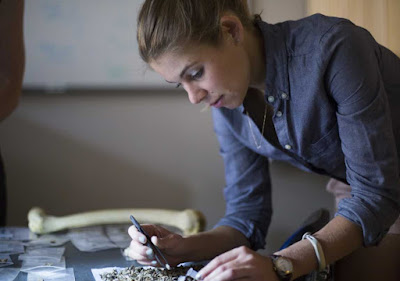
"Ancient DNA is difficult to recover from areas that are extremely hot, because DNA tends to degrade in heat," says Kendra Sirak, shown in 2017 when she was an Emory PhD student of anthropology. While still a student, she began developing new techniques for extracting ancient DNA samples that are opening new vistas into the human past.

By Carol Clark

The first genome-wide, ancient human DNA data from Sudan reveals new insights into the ancestry and social organization of people who lived more than 1,000 years ago in the Nile Valley, an important genetic and cultural crossroads. 

Nature Communications published the analyses of the DNA of 66 individuals from a site in ancient Nubia known as Kulubnarti, located on the Nile River in Sudan, just south of the Egyptian border. 

“Before this work, there were only three ancient genome-wide samples available, from Egypt, for the entire Nile Valley,” says first author Kendra Sirak, who began the project as a PhD student at Emory University. “And yet the region was, and still is, an incredibly important part of the world in terms of the movement, meeting and mixing of people.” 

Sirak was the last graduate student of the late George Armelagos, former professor of anthropology at Emory and a pioneer in bridging the disciplines of archeology and biology. While still a graduate student in the 1960s, Armelagos was part of a team that excavated ancient skeletons from Sudanese Nubia, so the bones would not be lost forever when the Nile was dammed. 

“Nubia was a place of human habitation for tens of thousands of years,” says Sirak, who is now a staff scientist at Harvard University. “This ancient genetic data helps fill in some major gaps in our understanding of who these people were.” 

The 66 individuals date back from 1,080 to 1,320 years ago, during the Christian Period of Sudanese Nubia, prior to the genetic and cultural changes that occurred along with the introduction of Islam. The analyses showed how the Kulubnarti gene pool formed over the course of a least a millennium through multiple waves of admixture, some local and some from distant places. They had ancestry seen today in some populations of Sudan, as well as ancestry that was ultimately West Eurasian in origin and likely introduced into Nubia through Egypt. 

“A key finding is that social status did not have a strong relationship to biological relatedness or to ancestry in this ancient population, who lived during a period of cultural and social change,” says Jessica Thompson, a co-senior author of the paper. Thompson, a former PhD supervisor of Sirak in Emory’s Department of Anthropology, is now at Yale University. 


During a field visit, Sirak took the above photo of a sunrise on the Nile River. The Nile Valley region "was, and still is, an incredibly important part of the world in terms of movement, meeting and mixing of people," she says.

The remains of the individuals came from two cemeteries with Christian-style burials that previous evidence indicated were socially stratified. In one cemetery, located on an island in the Nile, the skeletal remains bore more markers of stress, disease and malnutrition and the average age of those buried was just over 10 years old. By contrast, the average age at death in the other cemetery, located on the mainland, was 18 years. 

One hypothesis that grew out of this skeletal evidence was that the island cemetery was for a Kulubnarti “underclass,” possibly laborers for members of landowning families buried in the mainland cemetery. It was a mystery whether the social stratification may have developed because one population came from a different origin. 

A genome-wide analysis suggests that was not the case — the people buried in the separate cemeteries came from a single genetic population. 

“It seems that people in this area did not use biological ancestry as a basis for social differentiation,” Thompson says. “This reinforces the point that dividing people up socially on the basis of their genetic ancestry is a recent phenomenon, with no basis in universal human tendences.” 

Another key finding of the genetic analyses shows that some people as close as second-degree relatives were buried across the cemetery divide. Examples of second-degree relationships include grandparents to grandchildren, aunts and uncles to nieces and nephews, and half siblings. 

“That indicates that there was some fluidity among the two groups of people,” Sirak says. “There wasn’t an intergenerational caste system that meant someone was prescribed to being in the same social group as all of their relatives.” 

A further interesting twist is that much of the Eurasian-derived ancestry within the population came from women. “Often when you think of ancestry and how genes move, you think of males who are trading or conquering or spreading religion,” Sirak says. “But the genetic data here reveals that female mobility was really crucial to shaping the gene pool in Kulubnarti.” 

One possible explanation is that Kulubnarti was a patrilocal system, meaning that males tended to stay where they were born and females moved away from their homelands. 

“The Christian Period Nubians from Kulubnarti are fascinating,” Sirak says. “They survived in a barren, isolated, desolate region where life was never easy. I like to think that the ancient DNA research is giving a new life to these people from 1,000 years ago by providing a more nuanced view of them. Anytime you’re studying someone’s remains, their physical being, you owe it to them to tell the most accurate, respectful and meaningful story that you can.” 

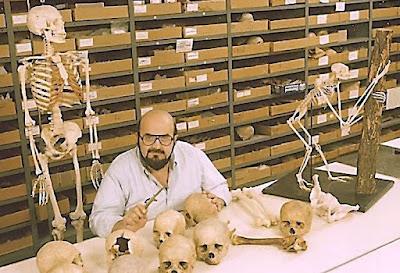
The late George Armelagos during the 1980s. He and fellow faculty members built Emory's Department of Anthropology into a powerhouse of the biocultural approach to the field.

Sirak came to Emory as a graduate student in 2012 to study human bones and paleopathology under Armelagos. By that time, he and fellow faculty members had built Emory’s Department of Anthropology into a powerhouse of the biocultural approach to the field. In particular, Armelagos, his colleagues and graduate students studied the remains of the Sudanese Nubians to learn about patterns of health, illness and death in the past. 

A long missing piece in the studies of this population, however, was genetic analysis. So, in 2013, Armelagos sent Sirak to one of the best ancient DNA labs in the world, University College Dublin, with samples of the Nubian bones. 

“I had no interest in genetics,” Sirak recalls, “but George was a visionary who believed that DNA was going to become a critical part of anthropological research.” 

Sirak soon became hooked when she saw how she could combine her interest in ancient bones with insights from DNA. She formed collaborations not just in Dublin but at Harvard Medical School’s Department of Genetics and elsewhere, investigating mysteries surrounding deaths going back anywhere from decades to ancient times. 

Armelagos was 77 and still mentoring Sirak, his last graduate student, when he died of pancreatic cancer in 2014. Dennis Van Gerven, an emeritus professor of anthropology at the University of Colorado at Boulder, took over Sirak’s mentorship, along with Thompson. Van Gerven was among Armelagos’ first group of students, and he also spent decades studying the Sudanese Nubians. 

Sirak stuck with her PhD dissertation project of trying to collect enough ancient DNA from the Nubian remains for analysis. 

“Ancient DNA is difficult to recover from areas that are extremely hot, because DNA tends to degrade in heat,” she explains. 

Genetic sequencing techniques kept improving, however, and Sirak was working at the forefront of the effort. In 2015, while still an Emory graduate student, she was among the researchers who realized that a particular part of the petrous bone consistently yielded the most DNA. This pyramid-shaped bone houses several parts of the inner ear related to hearing and balance. In addition, Sirak developed a technique to drill into a skull and reach this particular part of the petrous bone in the most non-invasive way possible, while also getting enough bone powder for DNA analysis. The use of this part of the petrous bone is now the gold standard in ancient DNA analysis. 

In 2018, Sirak received her PhD from Emory and went on to work in the lab of David Reich, a geneticist at Harvard Medical School who specializes in the population genetics of ancient humans. 

She and her colleagues continued to push the boundaries of what’s possible with ancient DNA sequencing. They managed to get whole-genome samples from the petrous bones of 66 of the Sudanese Nubians, ushering in a whole new era of bioarchaeology for the Nile Valley. “I don’t think we would have succeeded in this work had we not known to focus on the specific part of the petrous bone,” Sirak says. 

“It’s incredible to me that George asked me to focus on ancient DNA back in 2012, long before these techniques were developed,” she adds. “He had a way of making anyone who was working with him really feel important and powerful and that gave me the confidence to strike out on a pioneering path.”

“George Armelagos’ influence is everywhere,” adds Thompson, explaining that he also advised many senior people who mentored her early in her career. 

Funded by National Geographic Explorer grants, Sirak is now working with Sudanese colleagues to gather and analyze ancient DNA samples from other geographic locations in the Nile Valley, going even deeper into its past, to add more details to the story of how people moved, mixed and thrived in the region across millennia. 

As the last graduate student of Armelagos — and then a mentee of Van Gerven, one of Armelagos’ first students — Sirak feels like she is completing a circle. The publication of the current paper is the realization of Armelagos’ last wishes for the project. 

“It’s really special for me to be able to use ancient DNA to build on decades of anthropological and archeological research for the region,” Sirak says. “I know that George would be proud and thrilled. I’m part of this amazing lineage of researchers now. And the desire to continue what they started is a huge motivation for me.” 

In addition to Reich, Thompson and Van Gerven, senior authors of the Nature Communications paper include Nick Patterson (Broad Institute of Harvard and MIT) and Ron Pinhasi (University College, Dublin). Co-authors include researchers from these institutions as well as the University of Vienna, the University of Coimbra in Portugal, the Howard Hughes Medical Institute, the University of Pompeu Fabra in Barcelona, the University of Georgia, the University of California, Santa Cruz, and the University of Michigan.

Related:

Emory students help unravel prehistoric mysteries

Malawi yields oldest-known DNA from Africa

Pioneering techniques in anthropological genetics

Ancient DNA lab maps little-explored human lineages