Showing posts with label Health. Show all posts

Friday, April 3, 2026

Accuracy test for protein language models shines light into AI 'black box'

Yana Bromberg, right, professor of biology and computer science, and R. Prabakaran, a postdoctoral fellow in the Bromberg lab, are developing computational techniques to study biological complexity. (Photo by Carol Clark)

AI language models, used to generate human-like text to power chatbots and create content, are also revolutionizing biology by treating complex biological data like a language. Language models are increasingly used, for example, to find patterns in DNA and proteins to make predictions and speed research into biological complexity. 

A critical gap, however, is the lack of a method to estimate the reliability of these predictions. 

Computational biologists at Emory University have bridged this gap, developing a simple way to test the accuracy of a language model’s understanding of proteins. Nature Methods published their system, which scores the reliability of a model’s predictions by comparing how it “embeds,” or numerically codifies, synthetic random proteins versus proteins found in nature. 

“To the best of our knowledge, our framework is the first generalized method to quantify protein sequence embedding reliability,” says Yana Bromberg, senior author of the paper and Emory professor of biology and computer science. 

“Our method is a simple, elegant solution to a complex problem,” adds R. Prabakaran, first author of the study and a postdoctoral fellow in the Bromberg lab. “It’s a foundational method with a lot of scope for a range of language models in science.” 


Related:


Monday, March 16, 2026

Turning Over a New Leaf in Analyses of Natural Products

Emory graduate student William Crandall loves working at the nexus of nature and cutting-edge technology. (Photo by Tharanga Samarakoon)

Scientists developed a new way to help understand what happens in the body when people consume a plant product and the many chemicals it contains. The American Chemical Society’s Journal of Natural Products published the method to quickly analyze the effects of a natural product, developed at Emory University. 

As a test case, the paper focused on biotransformation of chemicals from the kratom plant by human liver cells in a laboratory dish. The researchers developed an automated method — based on high-resolution mass spectrometry and molecular network mapping — to gain a detailed, big-picture view of the resulting metabolites, or chemicals produced. 

The new, streamlined methodology can be broadly applied to nutrition and dietary supplement research, filling a critical gap in the field. 

“Plants evolved extraordinarily complex chemical defenses and signaling systems,” says Cassandra Quave, co-senior author of the study and professor of dermatology at Emory School of Medicine and the Center for the Study of Human Health. “Our new approach in molecular mapping gives us a way to follow how that chemical complexity is reshaped by human metabolism.” 

“Our technique does not just look at how one compound in this plant is metabolized,” adds William Crandall, first author of the study and a PhD student of molecular and systems pharmacology in Emory’s Laney Graduate School. “It shows how dozens of compounds are metabolized at one time.”

“This method marks a major, transformative step in natural products research,” says Dean Jones, co-senior author of the paper and professor in Emory School of Medicine. “A process that used to require years of work now takes just days.”


Related:


Wednesday, January 14, 2026

Epigenetics linked to high-altitude adaptation in Andes

Indigenous people living at high altitude in the Andean highlands have adapted to one of the most extreme environments ever inhabited by humans. (Getty Images/Oleh Slobodeniuk)

DNA sequencing technology makes it possible to explore the genome to learn how humans adapted to live in a wide range of environments. Research has shown, for instance, that Tibetans living at high altitude in the Himalayas have a unique variant of a gene that expands the oxygen-carrying capacity of their blood. 

Scientists, however, have not found a strong signal for this “high-altitude gene” in the genomes of Indigenous people living in the Andes Mountains of South America. It’s been less clear how people adapted to the altitudes greater than 2,500 meters in the Andean highlands, where low-oxygen levels, frigid temperatures and intense ultraviolet radiation make life challenging in the extreme. 

A study led by anthropologists at Emory University took a new approach to explore this Andean mystery.


Related:


Wednesday, January 7, 2026

Unlocking design secrets of deep-sea microbes

"The molecular study of proteins is rapidly expanding as the technology supporting the field keeps advancing," says Vincent Conticello. "You're only limited by your interest and your imagination." (Photo by Carol Clark)

The microbe Pyrodictium abyssi is an archaeaon — a member of what’s known as the third domain of life — and an extremophile. It lives in deep-sea thermal vents, at temperatures above the boiling point of water, without light or oxygen, withstanding the enormous pressure at ocean depths of thousands of meters. 

A biomatrix of tiny tubes of protein, known as cannulae, link cells of Pyrodictium abyssi together into a highly stable microbial community. No one knew how these single-celled microbes accomplished this feat of extreme engineering — until now. 

A study using advanced microscopy techniques reveals new details about the elegant design of the cannulae and the remarkable simplicity of their method of construction. Nature Communications published the work, led by scientists at Emory University; the University of Virginia, Charlottesville; and Vrije Universiteit Brussel in Belgium. 

The discovery holds the potential to inspire innovations in biotechnology, from the development of new “smart” materials to nanoscale drug delivery systems. 

“Not only are the cannulae strong enough to endure extreme conditions, they’re beautiful,” says Vincent Conticello, Emory professor of chemistry and co-senior author of the paper. “To me, they resemble columns from the classical architecture of ancient Greece or Rome,” he adds, citing their fluted edges and precise regularity.

Read the full story here.

Related:

Emory chemists invent shape-shifting nanomaterial

Wednesday, October 15, 2025

New Method to Control Dengue Mosquito Shows Public Health Benefit

In advance of the rainy season, local public health officials sprayed a long-lasting insecticide, safe for indoor use, targeted to areas where the Aedes mosquito prefers to hang out.

A novel disease prevention strategy — targeting a mosquito that spreads the dengue virus — significantly reduces both the mosquito numbers and cases of disease across a community, finds a major new study. New England Journal of Medicine published the results of the large, randomized clinical trial — considered the gold standard for evaluating the effectiveness of an intervention — led by Emory University. 

The research was conducted in Merida, a city of one million in the Mexican state of the Yucatan, through a close collaboration with the Autonomous University of the Yucatan, the Yucatan Ministry of Health and the Federal Ministry of Health of Mexico. 

The project tested an intervention that previous Emory research found promising: Targeted indoor residual spraying of insecticide, or TIRS, conducted before an outbreak occurs. The method is aimed at a particular species of mosquito, Aedes aegypti, that is perfectly adapted to live with humans in an urban setting. 

“Our study showed that the TIRS method reduced numbers of these mosquitos by 6o percent for a period of six months,” says Gonzalo Vazquez-Prokopec, senior author of the study and Emory professor of environmental sciences. “The results also quantified a 24 percent mean reduction community-wide in cases of dengue fever, even in the context of a record-breaking outbreak of dengue in Merida.”


Related:

Tuesday, September 23, 2025

New methods expand access to molecules key to human health

"I love solving problems, the more challenging the better," says San Pham, first author of the paper. Senior author is Frank McDonald, Emory professor of chemistry and Pham's PhD advisor.

A new approach to an established reaction boosts the ability to synthesize vinylic ethers — key building blocks for many molecules that are important to human health. The American Chemical Society’s Organic Letters published the breakthrough, made by chemists at Emory University. 

“Our method is easy to reproduce and is based on widely available and inexpensive compounds,” says San Pham, an Emory PhD candidate and first author of the paper. “We can apply this method to make multiple natural products, including novel vinylic ethers.” 

Her research improves the reliability, yield and generality of what is known as the Chan-Evans-Lam reaction. These enhancements greatly expand the reaction’s potential for the synthesis of complex, biologically active compounds for drug research.


Related:


Wednesday, July 2, 2025

Exploring the frontiers of data science

Satellite technology is transforming the field of geography, says Xiao Huang. "It's kind of like being an astronaut in that satellites give you a view of Earth from space."

As a high-tech geographer, Xiao Huang uses remove sensing and AI for insights into how to design more equitable cities, improve management of natural resources, lessen the impact of natural and human-caused disasters, and improve public health policies.

"I love geography and computer technology," says Huang, assistant professor in Emory's Department of Environmental Sciences. "I want to use my knowledge of these fields to help humanity, especially socially disadvantaged communities."

Read the full story here.

Related:

Developing a new approach to control a dangerous urban mosquito in Ethiopia

Friday, June 27, 2025

New AI tool supports best practices to prevent spread of dangerous C. diff infections

"At Emory, I look forward to continuing this line of work and exploring innovative ways AI can help improve patient care," says Shengpu Tang, who recently joined the university as assistant professor of computer science.

Decision-making forms the core of hospital patient care, involving an array of clinicians whose duties span diagnosis, treatment and resource allocation. The complexity of these interrelated decisions makes it challenging for physicians, nurses and other caretakers to connect all the dots in real time. 

Shengpu Tang, assistant professor of computer science at Emory University, is developing AI tools to identify, validate and transmit key data needed to most effectively support healthcare workers in decision-making processes. 
 
“The end goal is to improve patient care and patient outcomes,” Tang says. 

JAMA Open Network published the results of Tang’s latest collaborative project: the first AI guidance deployed in a hospital setting aimed at guiding best practices to prevent the spread of dangerous infections of Clostridioides difficile

Analysis by the researchers found that the new AI-guided protocol significantly reduced antibiotic prescriptions at Michigan Medicine — a factor that increases infection risk for vulnerable patients — with 10% to 15% fewer days on antimicrobials. Importantly, reducing days on antimicrobials did not increase the length of stay, readmission rate or mortality among patients. The already low incidence of Clostridioides difficle trended downwards during the study, but that reduction did not reach statistical significance.


Related:

Friday, May 2, 2025

Developing a new approach to control a dangerous, invasive mosquito in Ethiopia

Edilawit Mesfine, left, and Edel Seifu, both from Jigjiga University, collect data and larvae from a construction site. (Photo by Kim Awbrey)

Emory University received $2.8 million in funding from the Gates Foundation to support its work to develop and test a high-tech, low-cost method to control an invasive mosquito that poses a growing threat of urban malaria in Africa. The three-year project is focused on three cities in Ethiopia: Jigjiga, Semera and Logiya. 

The project’s novel approach to combating malaria combines on-the-ground knowledge of human and mosquito behaviors with detailed environmental imagery from drones and NASA satellites. Machine learning techniques will be applied to the data to develop a model — powered by artificial intelligence — for targeted public health interventions. 

The aim is to efficiently control populations of the invasive Anopheles stephensi mosquito by first, identifying water sources that are most likely to harbor the larvae during the dry season. And secondly, by sharing maps of these precise targets with local public health authorities — via a mobile phone app — to guide their larvae-eradication efforts in the most efficient and effective manner. 

The strategy is based on research on the ecology of stephensi in Jigjiga led by Gonzalo Vazquez-Prokopec, Emory professor of environmental sciences and co-principal investigator for the grant. “It sounds counterintuitive to focus mosquito-control efforts on the dry season,” Vazquez-Prokopec says. “Our research, however, shows that the dry season offers a perfect window of opportunity to cost-effectively control these mosquitoes.” 

Vazquez-Prokopec is an expert on the disease ecology of pathogens spread by vectors, such as mosquitoes. His research considers environmental factors as well as the interactions of mosquitoes, the pathogens they carry, and people. 


Related:


Wednesday, March 19, 2025

'Doctors by Nature': In a new book, a biologist explores how animals heal themselves

Emory biologist Jaap de Roode with his two dogs, Tukkie and Cooper.

In 2010, Emory University biologist Jaap de Roode published the discovery that monarch butterflies use medicine to cure their offspring of disease. His lab revealed how, if infected with a parasite, the female butterflies prefer to lay their eggs on a species of milkweed containing higher levels of a toxic chemical. The caterpillars eat the milkweed, ingest the toxin, and reduce the parasite load in their bodies. 

With that finding, de Roode joined the vanguard of scientists uncovering how animals treat themselves for diseases. 

“We showed how even an insect with a teeny-tiny brain can medicate,” de Roode says. “From there it was a natural progression to the understanding that, in principle, any animal can do it.” 

In his new book, “Doctors by Nature: How Ants, Apes and Other Animals Heal Themselves,” de Roode explores the growing field of animal self-medication. He interviews scientists around the globe and describes research into how animals from ants to apes, birds to bears — even family dogs and cats — use various forms of medicine.

Read more about de Roode's book.

Wednesday, March 5, 2025

Atlanta Science Festival set to entertain, inspire and engage all ages

The festival culminates Saturday, March 22, in "Exploration Expo," a day-long celebration in Piedmont Park. Demonstrations by Emory chemist Douglas Mulford are among the perennial favorites.

By Carol Clark

Atlanta Science Festival returns March 8-22, with more than 100 events throughout the metro area, inviting the public to join fun, interactive and educational experiences. The acclaimed city-wide celebration, one of the largest of its kind in the country, showcases the myriad science, technology engineering and mathematics (STEM) innovations happening in Atlanta, including at Emory. 

“Not only does the Atlanta Science Festival spotlight the wonder of science in its various forms, we strive to do so by curating a two-week experience that’s as exciting and intriguing as possible,” says Meisa Salaita, executive co-director of Science ATL, the non-profit organization that engineers the festival. “We want to open minds, educate, inspire, entertain, and spark the interest of the scientists of tomorrow.” 

Now in its 12th year, the Atlanta Science Festival was co-founded by Emory, Georgia Tech and the Metro Atlanta Chamber. 

Members of the Emory community will help participants experience the wonders of science through spectacles like the chemistry of fireballs, a musical entertainment combined with a biology talk on the surprising abilities of animals to use medicine, a walking tour of campus science landmarks, a behind-the-scenes look at the latest advances in healthcare technology and much more. 

Creative events to engage participants with technology include “Data Poetics,” which will combine slam poetry and computer science on Thursday, March 13 at 7 p.m. at the Supermarket event space in Atlanta. The introductory workshop in how to use software to visualize data and add power to poetic expression will be co-hosted by Emily Wall, Emory assistant professor of computer science, Keke Wu, Emory postdoctoral researcher, and W. J. Lofton, an Atlanta poet. 

The idea for the event grew out of an Emory class that Wall and Lofton co-taught as part of the Emory Arts and Social Justice Fellows program, which pairs faculty with local artists to explore how creative thinking and artistic expression can inspire change. Their class was so successful that the duo wanted to introduce the concept to the wider public. 

Participants will write a data-driven poem about a social issue affecting Atlanta and then amplify their message through information visualizations. “Many people think of computer science as intimidating and too ‘mathy’ to be interesting,” Wall says. 

That attitude often changes when people learn simple ways to directly apply computer science to better communicate a human problem, she adds. “We want to give artists another tool, a way to make their art even more compelling.”

Tuesday, February 11, 2025

Plant extract inspires new chemistry and new early lead against triple-negative breast cancer

The extract that inspired the research comes from Curcuma phaeocaulis, a flowering plant in the ginger family. (Wagner Campelo / Alamy Stock Photo)

Chemists at Emory University invented a reaction to streamline the total synthesis of a compound, phaeocaulisin A, extracted from a plant used for centuries in traditional Chinese medicine. 

In laboratory dish experiments conducted with biologists at Winship Cancer Institute of Emory University, the researchers showed the compound’s efficacy against HER2-positive breast cancer cells and triple-negative breast cancer cells. An analogue of the compound the chemists constructed boosted this efficacy. 

“We not only efficiently replicated a complex natural product,” says Mingji Dai, Emory professor of chemistry. “We also improved upon it by turning it into a more potent compound.” 

The Journal of the American Chemical Society published the work, led by Dai and Yong Wan, professor of pharmacology and chemical biology at Emory School of Medicine and director of basic research for the Glenn Family Breast Center at Winship Cancer Institute.


Related:

Tuesday, January 7, 2025

Bittersweet secrets of the fruit fly brain

Fruit flies have served as an important laboratory organism for more than 100 years. (Sanjay Archaya/Wikipedia)

The sense of taste carries evolutionary benefits key to survival. A sweet taste, for instance, signals energy-dense nutrients important to animals foraging for food — including humans. A bitter taste may warn of a toxic substance. 

“We use our sense of taste to decide what to eat and how much to eat,” says Anita Devineni, a neuroscientist and assistant professor in Emory University’s Department of Biology. 

Despite the importance of taste, little is known about how taste cues spark the firing of cells across a brain and evoke a variety of behavioral responses. Devineni is exploring this mystery by mapping the neural circuitry for the taste system of the fruit fly, Drosophila melanogaster

Tinier than a poppy seed, the fruit fly brain contains around 140,000 neurons. 

“That’s 1,000 fewer neurons than a mouse brain and a million times fewer than a human brain,” Devineni explains, making the fly brain a simple starting point for studying general mechanistic principles of cognition. 

Compared to the incredible complexity of its cognitive powers, the human brain’s basic biology appears relatively straightforward. 

“The brain is just an organ like any other organ in your body,” Devineni says. “It’s made up of neurons that are cells like any other cells — lipid membranes containing proteins, DNA and other molecules. What makes a brain cell different from a skin cell or a lung cell is that a brain cell fires. Firing means that sodium ions flow in and out of the cell. Everything that you do, from thinking to talking to walking, is a result of patterns of neurons firing. How could this be?”


Related:


Wednesday, November 13, 2024

Chemists showcase power of pathbreaking method to make complex molecules

"We've had tremendous impact on developing C-H functionalization as both an academic discipline and for industry applications," says Emory chemist Huw Davies, who brought researchers from 15 universities together under the umbrella of the NSF Center for C-H Functionalization.

Chemists synthesized a highly complex natural molecule through a revolutionary strategy of functionalizing normally inert carbon-hydrogen (C-H). Science published the breakthrough led by chemists at Emory University and Caltech. 

The work is the most dramatic example yet of a sequence of C-H functionalization reactions selectively transforming low-cost materials into complex building blocks of organic chemistry. Ten of the steps involved in their synthesis of cylindrocyclophane A — a natural compound with antimicrobial properties — involved C-H reactions. 

“It’s by far the most complex natural product we have made using our method,” says Huw Davies, Emory professor of chemistry and co-corresponding author of the paper. “This is a game changer. We’re doing chemistry on C-H bonds that formerly would have been considered as unreactive. And we’ve shown how we can orchestrate a suite of 10 C-H functionalization steps, targeting a single C-H bond at a time in a specific sequence.” 

“This work moves the field forward by showing the power of C-H functionalization,” adds Brian Stoltz, professor of chemistry at Caltech and co-corresponding author of the paper. “It will open people’s eyes to the possibilities of using these very selective and unusual transformations in a really complex setting.” 

First author is Aaron Bosse, who did the work as an Emory PhD student. Bosse has since graduated and is now a medicinal chemist at Takeda Pharmaceuticals in Cambridge, Massachusetts.


Tuesday, October 29, 2024

Bacterial pathogen shows alarming resistance to common cleaners, chemists discover


A new study reveals widespread resistance of a major bacterial pathogen to the active ingredients in cleaning agents commonly used in hospitals and homes. 

The American Chemical Society Infectious Diseases published the research led by chemists at Emory University. It demonstrates the surprising level of resistance to cleaning agents of multidrug-resistant Pseudomonas aeruginosa, a pathogen of particular concern in hospital settings. 

The study also identifies biocides that are highly effective against P. aeruginosa, including a novel compound developed at Emory in collaboration with Villanova University. The researchers describe how these biocides work differently than most disinfectants currently in use. 

“We hope our findings can help guide hospitals to reconsider protocols for the sanitation of patient rooms and other facilities,” says William Wuest, Emory professor of chemistry and a senior author of the study. “We also hope that our findings of a new mechanism of action against these bacterial strains may help in the design of future disinfectant products.” 

First authors of the study are Christian Sanchez (who did the work as an Emory PhD student in chemistry and, following graduation, joined the faculty at Samford University) and German Vargas-Cuebas, an Emory PhD candidate in microbiology through Laney Graduate School. 

“Resistance of pathogens to cleaning agents is an area that’s often overlooked,” Vargas-Cuebas says, “but it’s an important area of study, especially with the rise in antibiotic-resistant pathogens worldwide.”


Related:


Monday, October 21, 2024

Exploring the nature of fathers

"My academic life informed my personal life and vice versa as I wrote the book," Rilling says. "It was an interesting interplay." (Photo by Kay Hinton)

In a new book, James Rilling interweaves his personal experiences as a son, husband and dad with the latest scientific insights into fatherhood. The MIT Press published “Father Nature: The Science of Paternal Potential.” 

“It’s about how and why human males evolved the capacity to be involved caregivers, how that care benefits their children, and the circumstances in which it is more common,” says Rilling, a professor in Emory University’s Department of Psychology and Department of Psychiatry and Behavioral Sciences. “The intended audience is anyone who is, has or knows a father.” 

Rilling explores the neural basis of human social cognition and behavior as the director of the Laboratory for Darwinian Neuroscience. Around the time of the birth of his first child, he realized that paternal caregiving was a neglected research topic and he decided to make it a focus of his lab. 

He also began teaching an undergraduate course on fatherhood.


Related:

Wednesday, May 15, 2024

Rabies outbreaks in Costa Rica cattle linked to deforestation

Cows in a forest of the Alajuela province of Costa Rica meander near the entrance to a cave where researchers are gathering data on vampire bats and the ecology of the rabies virus. Photo by Amanda Vicente.

By Carol Clark

Deforestation in Costa Rica raises the risk of cattle becoming infected with rabies by vampire bats, finds a new study. Emerging Infectious Diseases published the research by disease ecologists at Emory University. 

“A healthy tropical forest has phenomenal diversity — not just among plants and mammals like monkeys and bats, but also among microorganisms,” says Thomas Gillespie, Emory professor and chair of the Department of Environmental Sciences and senior author of the study. “When you destroy parts of a forest, the diversity goes down and the dynamics of disease transmission may change in a way that leads to the emergence of new pathogens or the reemergence of existing ones.” 

The Costa Rica economy relies heavily on ecotourism. Approximately 25% of its territory is protected under its National System of Conservation Areas, the largest percentage of protected areas accounted for by any country in the world, according to the Global Alliance of National Parks. 

Agriculture, however, is also an important economic sector and often encroaches into unprotected tropical forest areas. Livestock farms cover about 38% of the country’s territory, according to the United Nations Environment Program. 

“The government has done an amazing job of protecting much of its tropical forest,” Gillespie says. “In some areas, however, the country has high rates of deforestation due to clearing of the land for agricultural uses. It’s a big dichotomy.” 

Rabies is a viral disease most often transmitted by the bite of a rabid mammal. Vaccination campaigns have been largely effective at preventing rabies outbreaks in dogs in Costa Rica. The virus, though, keeps reemerging in cattle, spread by vampire bats. 

A vampire bat is held in a researcher's gloved hands. The bat's razor-sharp teeth allow it to make an incision in an animal without the animal feeling it. Photo by Neto Villalobos.

Found in tropical and subtropical areas of Central and South America, vampire bats feed solely on blood. Unlike other bats, they can walk — and even run — on land. They feed at night, stealthily approaching a sleeping mammal. Razor-sharp teeth and surgical precision allow the bats to make an incision in an animal, such as in the hock of a cow, without the animal feeling it. An anticoagulant in vampire bat saliva keeps the blood flowing as the bat laps up a meal. 

The researchers wanted to better understand the factors associated with rabies outbreaks in cattle in Costa Rica. They drew from data of the National Animal Health Service of Costa Rica to map the time and locations of rabies outbreaks in cattle from 1985 to 2020 in both northern and southern regions of the country where tropical forest has been cleared for agriculture. 

They also mapped land-use data across the same time for the outbreak sites, including a radius of 10 kilometers for each site, the maximum foraging range for vampire bats. They then used geographic information system software to generate spatial probability estimations based on these known outbreaks. 

The results showed a link between the location of forest habitat and an outbreak. Each one-kilometer increase in distance from forest increased the probability of an outbreak by 4%. The researchers theorize that decreased availability of bat-roosting sites within forested habitat appears to increase the preference of vampire bats to feed on cattle, as opposed to wild mammals. 

“We found the highest probability of rabies outbreaks in Puntarenas Province in the south, indicating the need for localized, preventative interventions in that region to avoid rabies reemergence in people,” says Julie Clennon, an eco-epidemiologist in Emory’s Department of Environmental Sciences and co-author of the study. 

A forest in Alajuela province with cleared patches of land due to agricultural activity. Photo by Amanda Vicente.

A growing number of studies show a similar pattern linking the destruction of tropical forests with disease reemergence, Gillespie says, including a reemergence of hanta viruses in the Amazon associated with soybean production and the reemergence of the Lassa virus in West Africa, linked to oil-palm production. 

In a previous study, the researchers and colleagues showed that shifts in the feeding preferences of vampire bats due to human land-use changes in Costa Rica altered the gut microbial communities and immune systems of the bats. Such shifts could potentially make bats more susceptible to pathogens and more likely to spread them. 

“When governments make decisions about large-scale land-use changes, they need to consider the potential of disease emergence, or reemergence, along with the potential for increased greenhouse-gas emissions,” Gillespie says. 

In addition to their association with the destruction of natural habitat, cows and other ruminant animals emit methane, a potent greenhouse gas, as they digest grasses. And the greenhouse gas nitrous oxide is emitted from the manure of ruminants. 

“As an individual, you may want to reduce beef in your diet as much as possible,” Gillespie says, “both to improve your own health and that of the planet. We are currently using natural resources at a rate that’s not sustainable.” 

First author of the current paper is Christie Jones, who did the work as a student in Emory’s 4+1 BS/MPH program, where she received a bachelors in environmental sciences before entering an accelerated program for a master of public health at Rollins School of Public Health. Jones is currently studying medicine at the American University of the Caribbean. Amanda Vicente, a former Emory postdoctoral fellow in the Gillespie lab who is now at the University of Oklahoma, is a co-author. 

The work was funded by Emory University’s Halle Institute for Global Research, the Department of Environmental Sciences and the Fox Center for Humanistic Inquiry, and the Fulbright Association.

Related:


Friday, April 26, 2024

Identifying risks of human flea infestations in plague-endemic areas of Madagascar

A home in the Central Highlands of Madagascar. Residential structures vary greatly in rural areas. (Photos by Adelaide Miarinjara)

By Carol Clark

Madagascar is one of the last places where outbreaks of human bubonic plague still happen regularly. 

Fleas carrying the plague bacterium Yersinia pestis can spread the disease through their bites. And while a species commonly known as “the rat flea” has been fingered as the main culprit in plague outbreaks, a species known as “the human flea” may play a secondary role. 

As an investigator during plague outbreaks in rural Madagascar, medical entomologist Adelaide Miarinjara knew that many households were teeming with these human fleas. Miarinjara grew up in the island nation off the east coast of Africa and is now a postdoctoral fellow at Emory University, collaborating with the Pasteur Institute in Madagascar. 

“We have observed huge variability in the number of fleas in different households in the same village,” she says. “We might collect three or five fleas in one house and hundreds of them in another house.” 

Miarinjara led a study to solve the mystery of this variability. 

PLoS Neglected Diseases published her team’s findings: The abundance of human fleas is primarily associated with households that have a traditional dirt floor covered by a plant-fiber mat, as opposed to households with cement or board floors. A secondary risk factor was keeping animals in the house at night. 

“Flea larvae need humidity, but not too much humidity, to survive,” Miarinjara says, “so the dirt covered by the plant-fiber mat may be holding just the right amount of moisture for them to thrive.” 

She hopes that agencies seeking to improve people’s lives in plague-endemic areas of Madagascar focus on upgrading the flooring in homes and constructing sheds separate from the households for animals.

“Flea infestation raises the risk for getting diseases and it has a big impact on the quality of life,” Miarinjara says. “The constant bites are annoying and lead to lack of sleep.” 

Household flea infestations also promote the overuse of insecticides. Surveys by the researchers reveal that 80% of the households use insecticide to try to battle the fleas. Many people are buying liquid insecticides that are repackaged in empty plastic or glass containers, without labels or instructions for how to apply them, and sold in small, open-air markets. 

Improper use of insecticides is a health risk to people who may be overexposed to the chemicals.

“Overuse of these chemicals is also dangerous because some fleas are developing resistance to insecticides — the frontline tools for battling plague outbreaks,” Miarinjara says. 

“Poverty related to housing construction is a primary challenge that this research identified,” adds Thomas Gillespie, senior author of the study and professor and chair of Emory’s Department of Environmental Sciences. “Resurfacing dirt floors in homes with concrete could improve a range of health and quality-of-life issues, from reducing flea populations in homes to making the floors easier to clean of contaminants such as fecal matter tracked in from the outside.” 

The Gillespie lab is a pioneer in the “one health” approach to epidemics — studying the interactions of people, domestic animals, wildlife and ecosystems to understand how germs jump across species. 

Village residents gather to hear the research team brief them on the purpose of their visit. The women in the foreground are sitting on a traditional plant-fiber mat.

The plague has afflicted humans at least as far back as the Bronze Age and has persisted through the centuries. The advent of antibiotics — which can effectively treat plague — turned the disease into a horror story from the past for much of the world. 

In Madagascar, however, plague returns regularly to claim new victims. Cases typically originate in the rural rice-growing region of the central Highlands during the rainy season. Outbreaks there are associated with agriculture, deforestation, the black rat — and fleas. 

Different flea species have evolved to prefer the blood of one animal over another, although they may feed on a variety of organisms if they are hungry enough. 

Most plague research is centered on the rat flea, or Xenopsylla cheopis. Just one of its bites can transmit enough bacteria to infect someone with plague. In contrast, several bites from the human flea, Pulex irritans, are required to transmit the bacteria, making it a less potent spreader of plague but still a threat. 

For the current paper, the researchers collected fleas from 126 households in four different villages. Rural Madagascar homes typically consist of more than one level. The bottom level is often used to keep livestock overnight and the second and third floors are where members of the family sleep, cook and eat. 

Researchers collect the fleas captured overnight in a candle trap while members of a household watch.

The fleas were collected overnight on the second floor of the homes using simple traps — a lit candle set in a dish of soapy water. The fleas are attracted to the flickering light and drown when they hop into the dish. 

The researchers painstakingly removed each drowned flea using tweezers, set them to dry on absorbent paper, and then transferred them to test tubes for laboratory identification and analyses. 

The results showed that around 95% of the species collected in households were human fleas, mixed at times with a few rat fleas and a few from a third species that prefers to feed on cats and dogs. Collections were conducted in both the dry and rainy seasons with similar results. 

“We’re now looking deeper into what’s going on with insecticide use in households,” Miarinjara says. “We want to both sort out what is driving insecticide resistance among fleas and find ways to help people use insecticides safely and more effectively.” 

Co-authors of the current study include: Annick Reveloson, a PhD student at the University of Antananarivo in Madagascar; Stephen Mugel, an Emory PhD student set to graduate this May; Nick An, who graduated last year from Emory’s BS/MPH program; Andry Andriamiadanarivo, a technician at Centre ValBio in Madagascar; and Minoarisoa Rajerison, Rindra Randremanana and Romain Girod, research scientists at the Pasteur Institute in Madagascar. 

The research was funded by the Branco Weiss Society in Science Fellowship and the American Society of Tropical Medicine and Hygiene.

Related:


Tuesday, April 9, 2024

Tracking ticks in Georgia to help monitor emerging diseases

Mapping the lone star tick is another step in a comprehensive Emory project to track and monitor the array of tick species in Georgia and the diseases that they can spread — including those caused by emerging pathogens.

By Carol Clark 

The most common tick found on humans in Georgia is the lone star tick — an aggressive seeker of blood that can spread dangerous pathogens through its bites. 

Emory University researchers combined field data with spatial-analysis techniques to map the distribution of the lone star tick across the state. The journal Parasites & Vectors published the research, which identifies specific environmental conditions associated with this tick species, Amblyomma americanum, in Georgia. 

The areas with the highest probability for the presence of lone star ticks include parts of the Southeastern Plains and Piedmont ecoregions of the state, including metro Atlanta. 

“We found that these regions contain sweet spots for the lone star tick,” says Stephanie Bellman, first author of the study and an MD/PhD student in Emory’s School of Medicine and Rollins School of Public Health. “They tend to be more prevalent in forested areas of mid-elevation — not too high or too low — and in soils that retain moisture but are not swampy.” 

The study maps the distribution at the scale of one square kilometer. That resolution is far finer than the currently available information, which is limited to the county level and does not encompass the state. 

“As the weather warms and people start getting into the outdoors more, we hope our data can be used to target areas for tick-bite prevention messaging,” says Gonzalo Vazquez-Prokopec, professor in Emory’s Department of Environmental Sciences and senior author of the study. 

Vazquez-Prokopec is a leading expert in vector-borne diseases — infections transmitted among humans and animals by the bite of a living organism, such as a tick or a mosquito. 

Diseases the lone star tick is known to transmit include ehrlichiosis, southern tick-associated rash illness (STARI) and Heartland virus disease — which was first identified in the United States in 2009. The bite of the lone star tick is also associated with a potentially life-threatening allergy to red meat and dairy products known as alpha-gal syndrome. 

First author Steph Bellman, far right, in the field last summer with fellow Emory students and co-authors, from left, Josie Pilchik, Isabella Roeske, Ellie Fausett and Audrey Long.

Mapping the lone star tick is another step in a comprehensive Emory project to track and monitor the array of tick species in Georgia and the diseases that they can spread — including those caused by emerging pathogens. 

Tickborne diseases are on the rise, far surpassing the incidence of diseases spread by mosquitos in the United States. While Lyme disease is the most common, the Centers for Disease Control and Prevention (CDC) currently recognizes 18 tickborne diseases in the country. 

“We need to educate people that the environment that they grew up in is likely very different in terms of the number and types of ticks and the pathogens that they are carrying,” Vazquez-Prokopec says. 

Anne Piantadosi, assistant professor in Emory School of Medicine’s Department of Pathology and Laboratory Medicine, is co-author of the study. Co-authors also include five Emory students who conducted fieldwork: Ellie Fausett (who has since graduated with a joint environmental sciences/MPH degree); Leah Aeschleman and Audrey Long (who have since received master’s of public health degrees from Rollins School of Public Health); Josie Pilchik, (who graduated with a bachelor’s in biology) and Isabella Roeske (an Emory senior majoring in environmental sciences). 

Climate change is fueling warmer and shorter winters, increasing opportunities for some species of ticks to breed more frequently and expand their ranges. Land-use changes are also strongly associated with tickborne diseases, as more human habitats encroach on wooded areas and the loss of natural habitat forces wildlife to live in denser populations. 

“Georgia is a tick haven in general,” Bellman says, “since we have a long warm season and such a diversity of habitats.” 

An aggressive biter

The researchers decided to focus first on mapping the distribution of the lone star tick because it is the dominant tick species in Georgia and can spread an array of pathogens. In 2019, the Emory researchers found that Heartland virus is circulating in lone star ticks in Georgia, an emerging pathogen that is not well understood. 
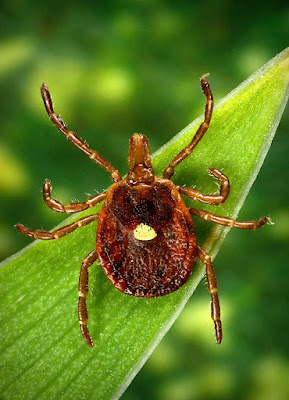
The lone star tick (CDC)

Named for a bright, yellowish-white spot on its back, the lone star tick is widely distributed in wooded areas across the Southeast, Eastern and Midwest United States. It is tiny —in the nymph stage it is about the size of a sesame seed and as an adult it is barely a quarter-of-an-inch in diameter as an adult.

Despite its tiny size, the lone star tick is aggressive in its quest for blood meals. “They can sense carbon dioxide from your exhaled breath and the vibrations from your movement in a forest,” Bellman says. “They climb up onto vegetation and reach out their legs to grab onto you as you pass by.” 

For the current study, Bellman led crews of Emory students, known as “the tick team,” in field surveys. They used “flagging” as a tick-collection technique. A white flannel cloth attached to a pole is swished in a figure-eight motion through the underbrush. Tweezers are used to transfer any ticks found on the flannel into a vial. 

Tick team members surveyed 198 locations at 43 state parks and wildlife management areas across the state, from March to July 2022. Analyses combined the site-sampling data with environmental variables — including type of vegetation, land use, climate, elevation and other factors — characteristic for six different ecoregions of Georgia. 

Lone star ticks were found in all of the ecoregions except for the mountainous Blue Ridge ecoregion in the northeast corner of the state. The majority of the ticks were found in forested areas of the Piedmont, Southeastern Plains and Southern Coastal Plains ecoregions. 

The researchers encourage people to follow the recommendations of the CDC for preventing tick bites. 

An array of ticks

And while the map for the lone star tick provides guidance on the likelihood of encountering the most prevalent human-biting tick in the state, there are other tick species that the researchers have yet to map. The black-legged tick (Ixodes scapularis), which can transmit the bacterium that causes Lyme disease, for instance, is also established in Georgia. Lyme disease, however, is relatively uncommon in in the state for reasons that are not yet well-understood. 

The researchers are also investigating the Asian longhorned tick (Haemaphysalis longicornis) in Georgia. Long established in China, Japan, Russia and parts of the Pacific, the Asian longhorned tick was first detected in the United States in 2017, in New Jersey, and has since spread to 19 states. It was found on farm animals in Pickens County, Georgia in 2021. 

The Asian longhorned tick (CDC)
The Asian longhorned tick reproduces asexually and a single female can generate as many as 100,000 eggs, rapidly producing massive amounts of offspring that feed on livestock. So many ticks can be covering a single sheep or cow that the loss of blood physically weakens or, in extreme cases, kills the animal. 

While it is often associated with livestock, the Emory research team recently found Asian longhorned ticks in the Buck Shoals Wildlife Management Area in White County, Georgia. 

The Asian longhorned tick carries bacterial and viral pathogens that can infect humans, including severe fever with thrombocytopenia syndrome virus (SFTSV), also known as Dabie bandavirus. Human cases of SFTS, a hemorrhagic fever, emerged in China in 2009 and have since been identified in other parts of Asia, although not in the United States. 

Also of concern is the fact that the Heartland virus shares genomic similarities with SFTS, which suggests the Asian longhorn tick could potentially transmit this emerging pathogen. The Emory team has been finding the Heartland virus in lone star ticks collected from central Georgia starting in 2019. They have continued to find Heartland virus in at least some of the ticks collected from that area nearly annually through 2023. (They did not perform collections in 2020 due to the COVID-19 pandemic.)

More than 60 cases of Heartland virus disease have been reported in the United States, according to the latest CDC statistics. Many of the identified cases were severe enough to require hospitalization, and a few individuals with co-morbidities have died. The actual number of people who may have been infected with Heartland virus is believed to be higher, however, since the virus is not well known and tests are rarely ordered for it. 

Complicating the issue is the fact that symptoms of Heartland virus are akin to those of many tickborne illnesses: fever, fatigue, headache, nausea, diarrhea and muscle or joint pain. 

“Human cases of Heartland virus are rare now, but we don’t know whether that could change,” Bellman says. “We need to gather more baseline data and learn how it spreads in the environment so that we have the evidence we need to potentially prevent, or limit, its spread.” 

Anne Piantadosi, assistant professor in Emory School of Medicine’s Department of Pathology and Laboratory Medicine, is co-author of the study. Co-authors also include five Emory students who conducted fieldwork: Ellie Fausett (who has since graduated with a joint environmental sciences/MPH degree); Leah Aeschleman and Audrey Long (who have since received master’s of public health degrees from Rollins School of Public Health); Josie Pilchik, (who graduated with a bachelor’s in biology) and Isabella Roeske (an Emory senior majoring in environmental sciences). 

Work on the current paper was funded by grants from the U.S. Department of Agriculture, National Institutes of Health, Emory University and the Emory MP3 Initiative and Infectious Disease Across Scales Training Program. 

Related stories: 


Friday, January 26, 2024

Spatial model predicts bumblebee exposure to pesticide use

Field experiments were conducted using yellow-faced bumblebees, a species native to the West Coast and an important pollinator.

By Carol Clark

It has long been known that agricultural pesticides are one of the greatest threats to bees and other essential pollinators. What farmers have lacked is an understanding of how different pesticides, applied at various times on a variety of crops, affect the risk of exposure to bees living near the fields. 

Researchers have drawn from real-world data to try to address this gap, developing and testing a spatial model for predicting pesticide exposure in bumblebees. The journal Science of the Total Environment published the work, based on the interactions of the yellow-faced bumblebee (Bombus vosnesenskii) with crops in California. 

“We were able to explain nearly 75% of the spatial variation in pesticide exposure among the bumblebee hives using our model,” says Eric Lonsdorf, first author of the study and assistant professor in Emory’s Department of Environmental Sciences. 

Relatively simple models were more effective at preventing exposures than the researchers expected.

“Our results suggest that simply data on where and when a pesticide was sprayed is all that you need to make a good prediction for the threat to nearby hives,” Lonsdorf says. 

Including data on how long a particular chemical lingers in the landscape or how attractive the flowers in a particular crop are to the bees did not make a significant difference in the model’s predictive power. 

“We found that even if a crop is not that attractive to the bees, the chemicals from that crop are still going to be found in their pollen,” Lonsdorf says. “The bees may be picking up the chemical due to drift of the pesticide onto nearby weeds where they are foraging.” 

Providing tools for conservation 

Lonsdorf studies natural capital, or nature’s contributions to humans. He translates ecological principles and knowledge into predictive models that enable industry leaders and policymakers to better manage natural resources. 

He’s currently using models he developed to help the U.S. Fish and Wildlife Service identify bee conservation priority areas in the United States. 

More research is needed, Lonsdorf says, to determine whether the bumblebee risk-prediction model will scale up across different landscapes and for different species of bees. The current study also did not delve into how the amount of a particular pesticide found in the pollen translated into toxicity for the bees. 

Co-authors of the paper include Neal Williams from the University of California, Davis, and Maj Rundlöf and Charlie Nicholson, who are affiliated with the University of California, Davis, and Lund University in Sweden. 

Drawing from fine-scaled data 

The researchers began with experiments set amid a variety of crops in northern California’s Yolo County. Fourteen pairs of yellow-faced bumblebee colonies were placed around the agricultural landscape. This species of bumblebee is native to the West Coast and the most abundant wild species of bee in this range, found in both urban and agricultural areas. 

Pollen that bees in each hive collected were sampled at six different times during the growing season. The pollen samples were then assessed for exposure to 52 different active ingredients encompassing a range of pesticides. 

Data from these experiments were combined with field-level data from the California Department of Pesticide Regulation on what pesticides were sprayed and what days they were sprayed. 

“California is unique in providing such fine-scaled, public data,” Lonsdorf says. “In most places in the United States, information on what pesticides are being sprayed is only collected at the county level and summarized on an annual basis.” 

The detailed data allowed the researchers to consider a range of factors in their predictive model to identify those factors with the most predictive power. 

“Our risk-prediction model marks another step toward evaluating pollinator-conservation issues to help guide policies for pollinator landscapes,” Lonsdorf says. “The next step is to do a field-toxicity assessment to get a better understanding of how pesticides are affecting bee health.” 

He and colleagues are now conducting such a study with honeybees, he adds. 

The current paper was supported by the National Science Foundation, California Department of Food and Agriculture, Almond Board of California, KIND Foundation Fund for Pollinator Health and the Swedish Research Council.

Related:

Analyzing ways to help golden eagle populations weather wind-energy growth

Antibiotic used on food crops affects bumblebee behavior, lab study finds

Pollinator extinctions alter structure of ecological networks